Aaron Tay · · 5 min read
Aviation is soaring to new heights, thanks to these new technologies


Photo credit: 123RF
There are more travelers in the world than ever before. What was once an indulgent luxury is now an affordable leisure activity for many. The Asian Trade Centre predicts that by 2030, the global tourism market will serve 1.8 billion people, compared to 1.2 billion in 2016.
A major reason behind this skyrocketing number is how flying has become cheap, thanks to low-cost airlines, which are particularly popular in Asia.
While such carriers account for “almost 60 percent of capacity in Southeast Asia,” it’s North Asia that bears watching because “penetration is still low but there’s lots of activity there,” explains Yeoh Siew Hoon, founder of Web In Travel, which focuses on travel technology, marketing, and distribution.
Given the industry’s seemingly unstoppable growth, the spotlight is now on its future. With all these changes in the way we travel, what lies ahead for the aviation sector? Tech in Asia asked three experts to share some insights.
Travel goes mobile
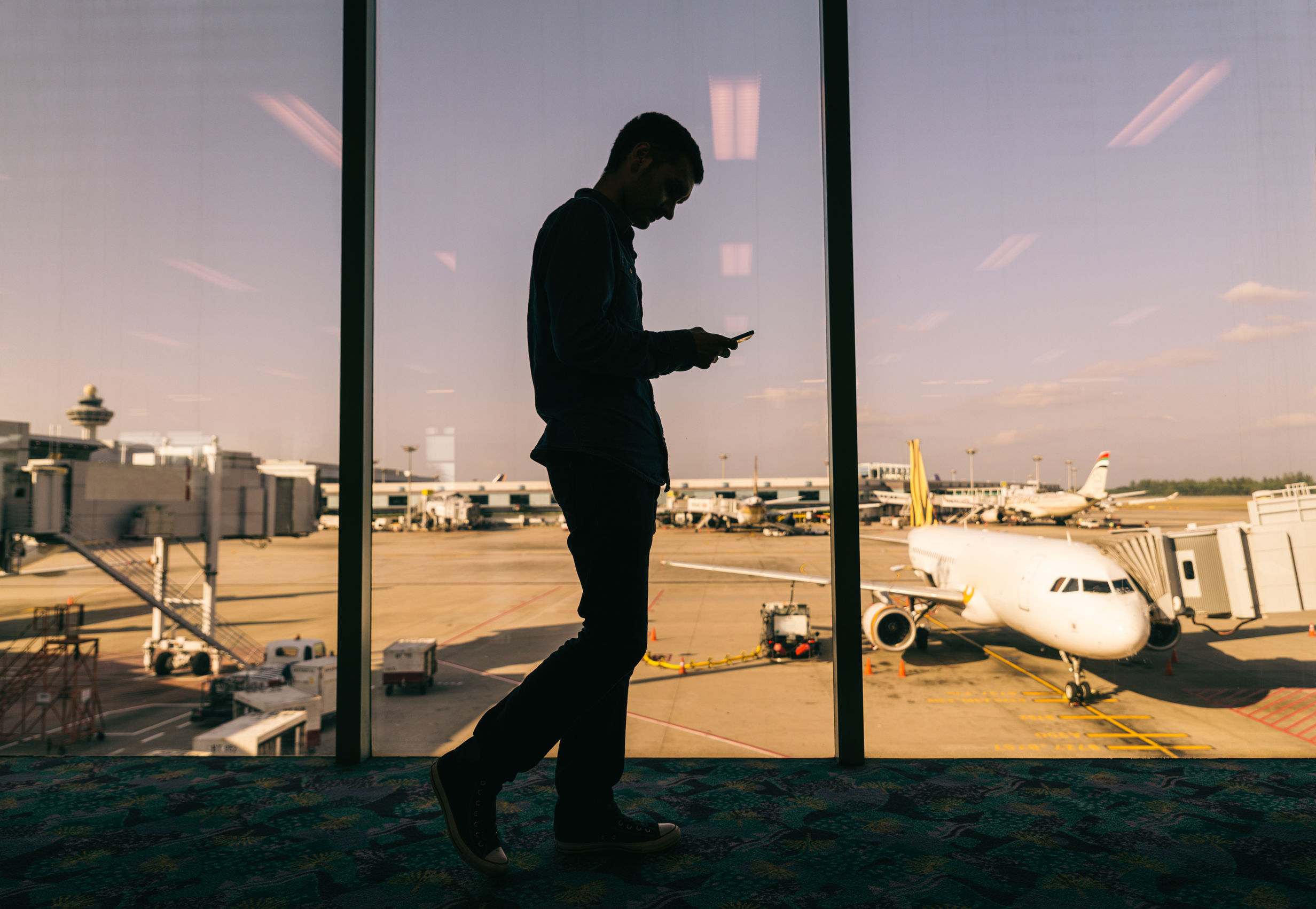
Photo credit: 123RF
Because smartphones and internet access have become ubiquitous in Asia, it’s common for the region’s travelers to do everything on their mobile devices, such as researching popular tourist spots, comparing prices, booking their flight tickets and accommodations, and paying for everything online.
Smartphones have “moved consumers online, and then to mobile,” notes Yeoh, “and now with on-demand apps, we are getting used to personalization and instant availability.”
She adds, “That means airlines have had to shift their focus from largely operations-based to customer-focused. Of course, operations will always be a big part of aviation. Safety is a top priority, but now they have to think like ecommerce companies that fly.”
Lily Chan, CEO of NUS Enterprise, agrees with this observation. “As air travelers, we are now increasingly turning to online travel sites for comparing prices as well as to book air tickets and accommodation,” she says. NUS Enterprise is the entrepreneurial arm of the National University of Singapore.
“We are now also using our mobile phones and computers to check in, as well as receive reminders and updates about our itineraries,” points out Chan.
The rise of chatbots

Photo credit: 123RF
Chatbots are the future, according to George Wang, senior vice president of information technology at Singapore Airlines (SIA).
The city-state’s national carrier recently introduced a chatbot called Kris. The bot is trained to provide conversational replies to the most frequent queries on SIA’s website and reservation offices, which are usually related to check-ins, online bookings, and travelling with infants and children.
Kris is part of the airline’s new Digital Innovation Blueprint, a multiyear program that will allow SIA to work with external partners such as startups, government bodies, and institutes of higher learning. It is projected to cost “several hundred million dollars,” says Wang.
The blueprint will help “foster a vibrant and innovative network and catalyze the agile development of a vibrant research and development ecosystem, allowing us to enhance the aviation sector’s capabilities and realize opportunities in the fast-growing travel sector,” he shares.
Getting on the blockchain

Photo credit: Pexels
Airlines and airports are also exploring ways to let their customers use blockchain technology to shop at certain retail merchants. For instance, travelers can now use cryptocurrencies such as bitcoin and ethereum to shop at Australia’s Brisbane Airport.
In August 2018, SIA launched the KrisPay digital wallet for its KrisFlyer miles program. Powered by a private blockchain, the app allows members to spend their miles points at participating retail outlets in Singapore.
Other major players such as UK’s British Airways and Heathrow Airport, as well as Geneva Airport in Switzerland and Miami International Airport in the US, have also used blockchain in innovative ways, such as managing flight information and resolving data conflicts.
While Wang has observed how the digital trend across the travel industry has helped businesses “to be leaner, more efficient and productive,” he also contends that “it takes a significant effort for companies to reinvent themselves and the way they design operations and processes.”
Taking flight
Photo credit: 123RF
Moving aviation into the future is a massive undertaking. That’s why SIA wants to tap an international talent pool by partnering with NUS Enterprise to organize the SIA AppChallenge.
Such programs have “a positive reinforcement effect in growing the community and bringing innovation to market,” explains Chan of NUS Enterprise.
“The industry insights and market access provided help to shorten the gestation period for startups, while solving challenges that larger organisations face. These win-win scenarios will in turn attract more talent and more partners onboard,” she adds.
SIA AppChallenge began in 2015 as an event for Singapore students only, but this year, it will be open to students and entrepreneurs across the world. The shift “mirrors the growing importance of digital innovation within the industry,” she says.
Participants are expected to develop and pitch smart solutions for five key areas of improvement identified by SIA. They will be mentored by the airline’s industry veterans and gain exposure to the global aviation industry. In addition to cash and non-monetary prizes, winners may get to work on commercial solutions in collaboration with SIA, win proof-of-concept projects, and gain entry to the SIA Accelerator Program that is expected to launch early next year.

Interested to join the SIA AppChallenge? You may sign up here.
Stay updated on the go with our mobile app.
Get latest insights with smoother, more personalized experience through TIA mobile app.
Recommended reads
 Tribe, Algorand Foundation team up for Web3 push in Asia
 Dash Living buys proptech firm to expand into Japan
 AirAsia to explore air taxis in Malaysia with UK firm
 Thailand’s central bank to pilot CBDC at end of 2022
 Zomato, Swiggy to be probed over anti-competitive practices
 Singapore’s co-living firms are on the rise
 Singapore-based co-living operator bags $1.3m in seed round
 Recession Watch: The bright spots in Southeast Asia
 Korea speeds crypto regulation talks amid Luna token scare
 MAS lays down new roadmap for SG’s financial services sector





Editing by Tan Wen Chuan, Eileen C. Ang, and Judith Balea
(And yes, we’re serious about ethics and transparency. More information here.)