 Samantha Cheh · · 5 min read
Here’s how Prudential is leveraging technology to boost its employees’ experience

When an industry flourishes, it’s easy to get lost in the noise and numbers. And when you get as big as the insurance sector – now a multitrillion-dollar market – it becomes even more challenging.
That’s why insurance companies need to focus on what’s truly important: being a “people business” that focuses on improving lives. For Neetha Nair, Prudential Singapore’s chief human resources officer, that includes employees.

Neetha Nair, chief human resources officer at Prudential Singapore / Photo credit: Prudential Singapore
“It’s really important to us that we are able to create value for our employees and make a difference in their lives,” she says.
In this regard, technology has become an “enabler” for the firm’s employees, she adds. To provide a positive employee experience, Prudential seeks to equip team members with the right tools to not only foster strong connections and well-being, but also support their growth and meet their learning needs in their careers.
Better and faster with tech
Since 2016, the company has been investing in tech and training employees on skills such as design thinking for problem solving, along with other agile processes. In 2020, Prudential began offering employees certification courses that focused on machine learning.
Thanks to the creation of this flexible and digital work culture, Prudential was able to “quickly pivot to remote work and client servicing” when the pandemic hit, says Nair. For example, its PRURemote Advice (PRA) video servicing solution was developed during the pandemic in just seven days, and it has since been embedded in the company’s regular business processes and enhanced with remote signing solutions.
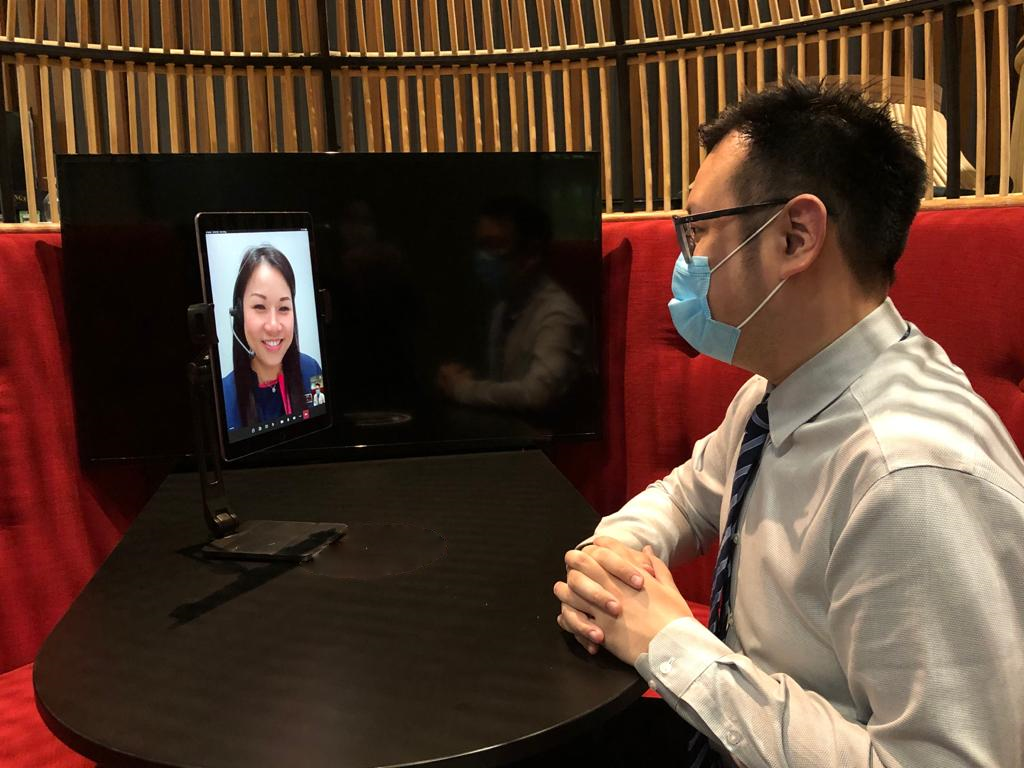
A Prudential customer service officer conducts video servicing for a customer / Photo credit: Prudential Singapore
Prudential has also been exploring opportunities with automation and AI. In 2019, it introduced an instant underwriting engine that can perform real-time risk assessments on policy applications and make underwriting decisions almost immediately.
In 2022, the company launched an AI-enabled talkbot called Grace, which it uses for processes such as payment reminders for customers. Additionally, for the past year, Prudential has been piloting the use of genAI tools like Microsoft Copilot to help employees improve productivity.
These are just a few examples of how digital solutions help the company automate and streamline work.
“Collaboration between people and technology can create value in many areas by allowing employees to focus on more important tasks,” Nair points out. In turn, this boosts productivity and benefits the customers.
Well-done wellness in the digital age
Employee well-being emerged as a flashpoint during the Covid-19 crisis, with mental health challenges rising in Asian workforces.
“Personal well-being in the workplace has become so important in recent years,” says Nair.
To tackle this, Prudential has built up an ecosystem that supports its employees’ well-being – both physically and emotionally. For one, it offers a network of well-being coaches to help workers cope with anxiety and stress.
This extends to the digital realm too – there are regular online wellness initiatives to help employees’ mental, emotional, and physical well-being. They can join online meditation and fitness sessions as well as webinars that focus on stress management, nutrition, and sleep hygiene.
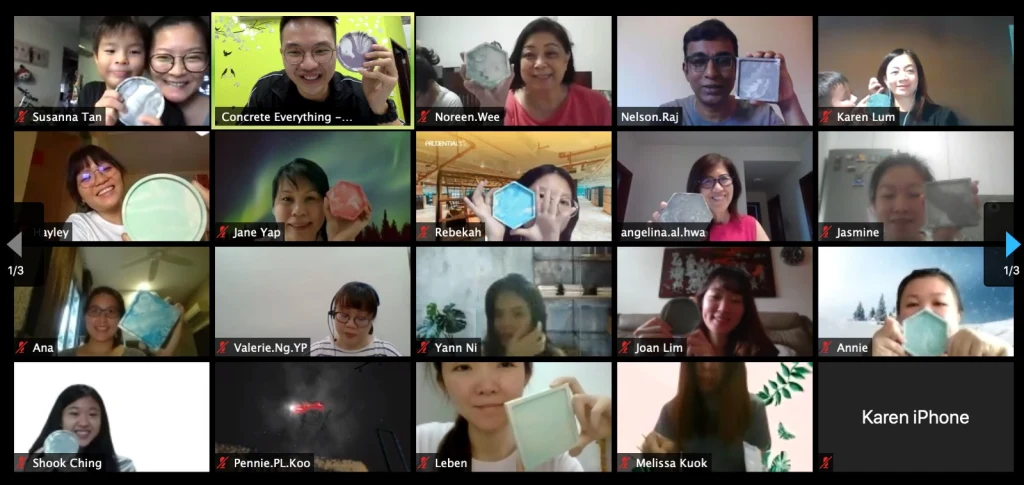
Prudential employees participating in an online engagement session with colleagues to promote physical, mental, and social well-being / Photo credit: Prudential Singapore
Technology is playing a role in improving employee well-being as well, with data analytics being used to better manage performance and identify healthier workplace practices. For example, data revealed that existing meeting practices were leaving less time for employees to focus on work that mattered, so Prudential moved to reduce the durations of meetings.
“These initiatives have led to an overall 8% increase in the company’s well-being index,” says Nair. “If you break that down, you’ll see a 12% improvement in employee’s ability to focus and be effective and a 15% improvement in personal energy management.”
Tech-enabled pathways to alternative careers
While tech has been instrumental in enhancing the employee experience, that’s just one aspect of workplace development. Prudential also looks to support its staff’s careers through various initiatives – one of which is the Career Conversion Program (CCP), an employee upskilling and reskilling course held over three to 24 months.
The program has already helped 150 employees, including Chrystal Ang, a sustainability manager who wanted to level up her skill sets in sustainability.
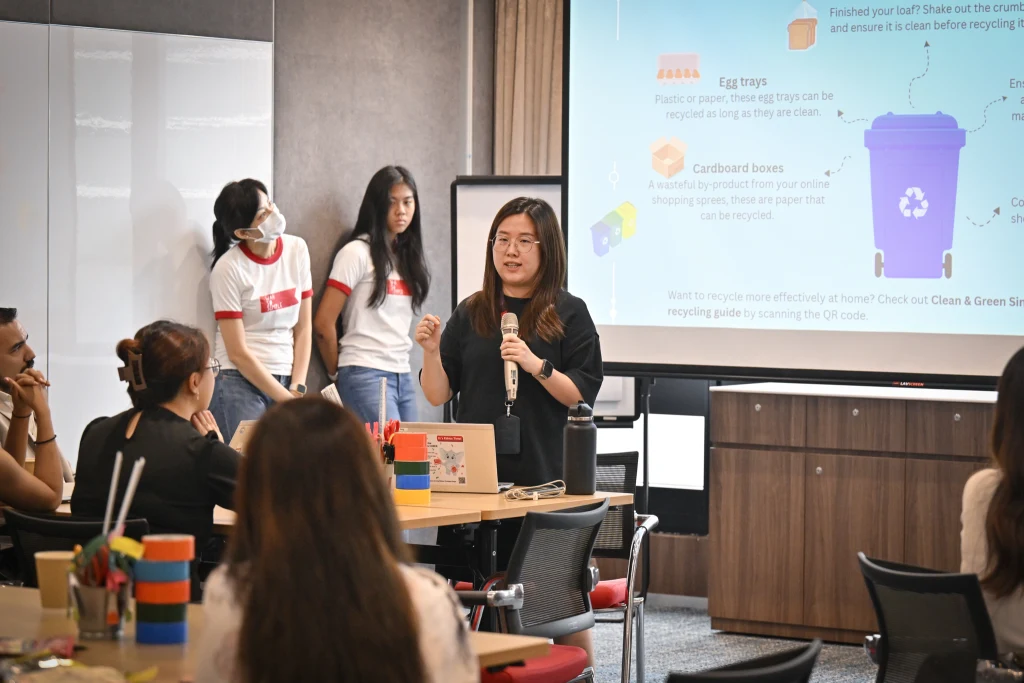
Chrystal Ang, a sustainability manager at Prudential Singapore / Photo credit: Prudential Singapore
“I was previously working on policy and research in the civil service, so this was an entirely new field to me,” Ang says. “The learning curve was rather steep at the start especially because sustainability is such a broad topic.”
Taking part in the CCP provided the necessary structure and discipline that enabled her to better focus on studying while learning on the job.
However, Ang says that juggling both work and courses could be challenging, especially during peak periods. To that end, Prudential supported her efforts with the tech to take charge of her learning.
“Digital tools like Udemy’s e-learning platform gave me the flexibility to attend many of the CCP courses at my own pace,” she explains. “I could phase out my coursework when work got busy and come back to it when time freed up.”
Remaining people-centric and inclusive
As Prudential invests in additional efforts – including tech-enabled ones – the company will continue to focus on inclusivity, which Nair says is an essential ingredient to great performance and well-being.
For example, the firm launched the Courageous Leadership program to support managers in creating a diverse and inclusive environment where employees can be themselves and thrive at work. Prudential has also removed the retirement age requirement and extended the duration of parental leaves.
Moving ahead, Prudential will continue to work on strengthening its human-centered, digitally enabled approach to help employees “connect with their colleagues and culture, and take ownership of their careers and performance.”
“Prudential Singapore is committed to creating a place where our employees can connect, grow, and succeed with us,” says Nair. “This commitment is closely tied to our company’s purpose: ‘for every life, for every future.’ It is important that we start living our purpose by making a difference in our employees’ lives.”
Prudential Singapore is one of the country’s top life insurance companies, having served the financial and protection needs of citizens for 92 years. It delivers a suite of products in areas such as protection, savings, and investments through multiple distribution channels.
To find out more about what it’s like to work there, visit its site.
This content was produced by Tech in Asia Studios, which connects brands with Asia’s tech community. Learn more about partnering with Tech in Asia Studios.
Stay updated on the go with our mobile app.
Get latest insights with smoother, more personalized experience through TIA mobile app.
Recommended reads
 Flipkart’s costly late push into quick commerce and food delivery
 Inside Singapore’s government team that kills its own products
 Once an IPO hopeful, SCI Ecommerce nears collapse
 Who’s betting big on ChatGPT ads? Not Asian brands
 VC tracker: Granite Asia launches US$50 million fund
 GCash trims IPO ambitions to meet market realities
 Igloo CEO eyes global M&A: ‘We have an appetite to grow more’
 Why SBI paid a premium for Ajaib amid a tough market
 OpenAI warns building for today will cause technical debt





Editing by Jonathan Chew, Winston Zhang, and Lorenzo Kyle Subido
(And yes, we’re serious about ethics and transparency. More information here.)




📅 Upcoming Events
22 October 2026
Payoneer x CSPN Summit 2026