
Smartphone-nation: a college student rents a electric scooter from Chinese startup Zeebike. Photo credit: Zeebike.
A ride down one of Shanghai’s streets reveals a surprising amount of diversity these days: skateboards, hoverboards, scooters, and of course, bicycles of all colors – thanks to the country’s bike-sharing app boom. Now, public transport of a different ilk is starting to emerge: electric bike-sharing.
“Shared bikes have limited coverage because they’re human-powered. They can only cover one to three kilometers,” Shi Yinfeng, founder of Xiangqi, tells Tech in Asia. Yinfeng’s startup, which distributes electric bikes around the city, is targeting distances up to 10 kilometers.
Riders have to return their electric bikes to virtual stations.
“We’re not promoting ourselves as the last mile of transportation,” he says. “We’re trying to relieve the pressure on public transit.”
Founded at the end of 2015, Yinfeng’s electric bike-sharing app comes at a time of fierce competition. Arch-rivals Mobike and Ofo have both raised multi-million dollar warchests from deep-pocketed investors, including Tencent, Sequoia Capital, and ride-hailing titan Didi Chuxing for their pushbikes. Millions of two-wheelers from multiple startups are pouring into cities in China – and abroad – and cash-burning tactics, such as renting out bikes for free, are common. Local regulations are also starting to take shape, as city governments struggle to manage the dramatic increase of bicycles.
Still, Yinfeng believes that there’s room for more options, especially for longer commutes. “We’re not competing on the same race course as bike-sharing companies,” he emphasizes.
Xiangqi’s bike-sharing model is similar to that of Mobike, but with a few key differences. In order to rent one of the startup’s bright green e-bicycles, users have to pay a deposit and use an app to locate nearby available bikes. Scanning a QR code unlocks and turns on the rental vehicle. By twisting the right handlebar, users can zoom up to 20 kilometers per hour – a standard limit in many Chinese cities.
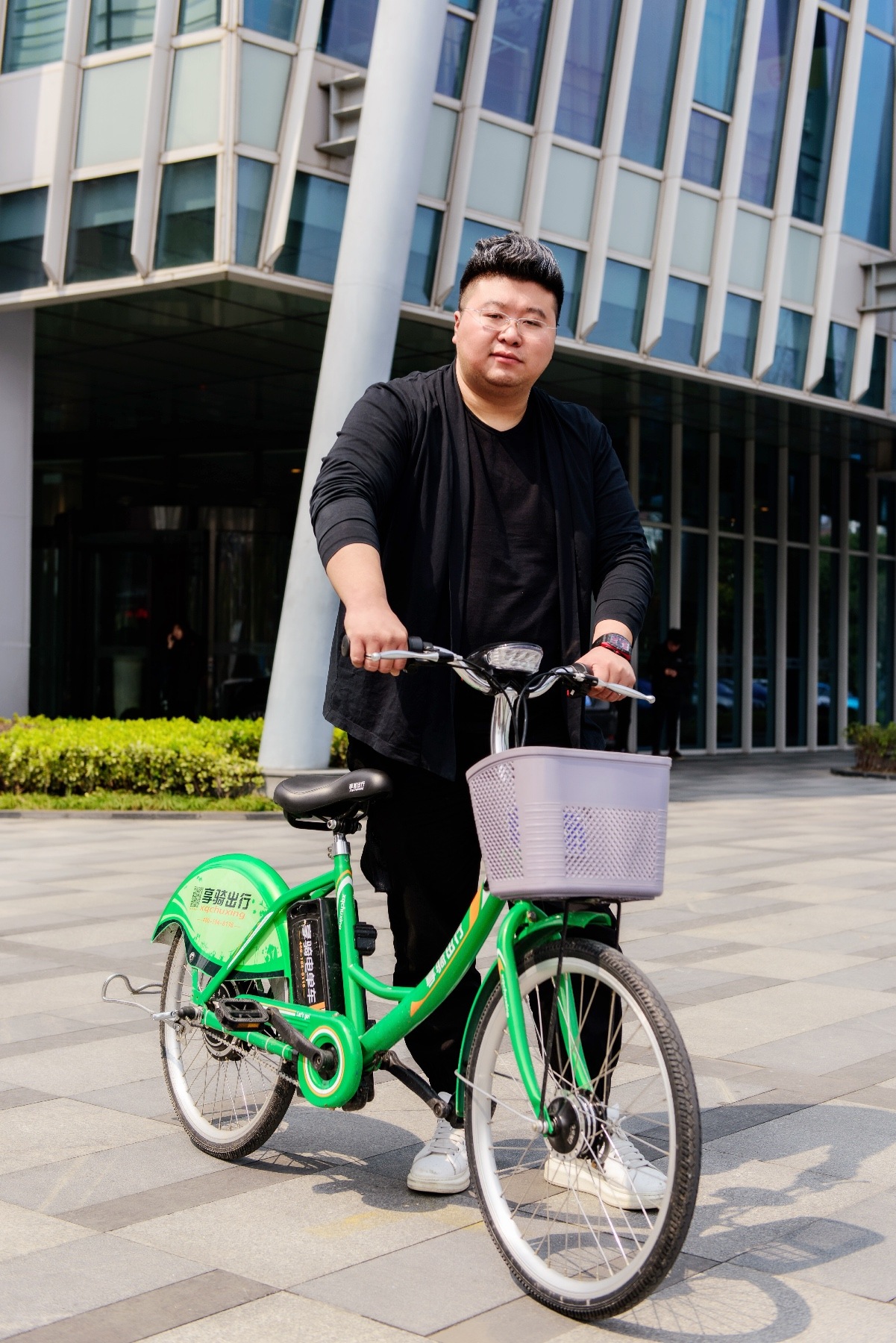
Shi Yinfeng, founder of Xiangqi. Photo credit: Xiangqi.
However, users have to return their electric bikes to designated virtual stations, which are geo-fenced. If the bike isn’t inside a certain area, it can’t be returned. This not only makes it easier for city officials to manage them – bike startups might have to adopt virtual parking lots too – but it also lets Xiangqi swap out batteries more easily.
A full battery can last 35 to 40 kilometers. Users can also request new parking stations through the app, which helps the Shanghai-based startup map and meet demand.
“It doesn’t matter if it’s Mobike or Ofo or us, we all have an offline operations team,” says Yinfeng, defending the added burden of batteries. “That includes the daily search and pickup of vehicles, maintenance of damaged bikes, […] placing bikes, managing bikes.”
Speed bumps
Charging batteries and maintenance is a huge concern for electric scooter-sharing companies. In addition to the operations cost, these two-wheelers can be prone to theft and vandalism. Zeebike, founded in 2016, also uses virtual parking lots to keep its electric bikes clustered in certain areas.





Stay updated on the go with our mobile app.
Get latest insights with smoother, more personalized experience through TIA mobile app.