- Premium Content It takes our newsroom weeks - if not months - to investigate and produce stories for our premium content. You can’t find them anywhere else.
 Owen Guo · · 6 min read
These ex-Ant Financial execs are building a Google for the blockchain world
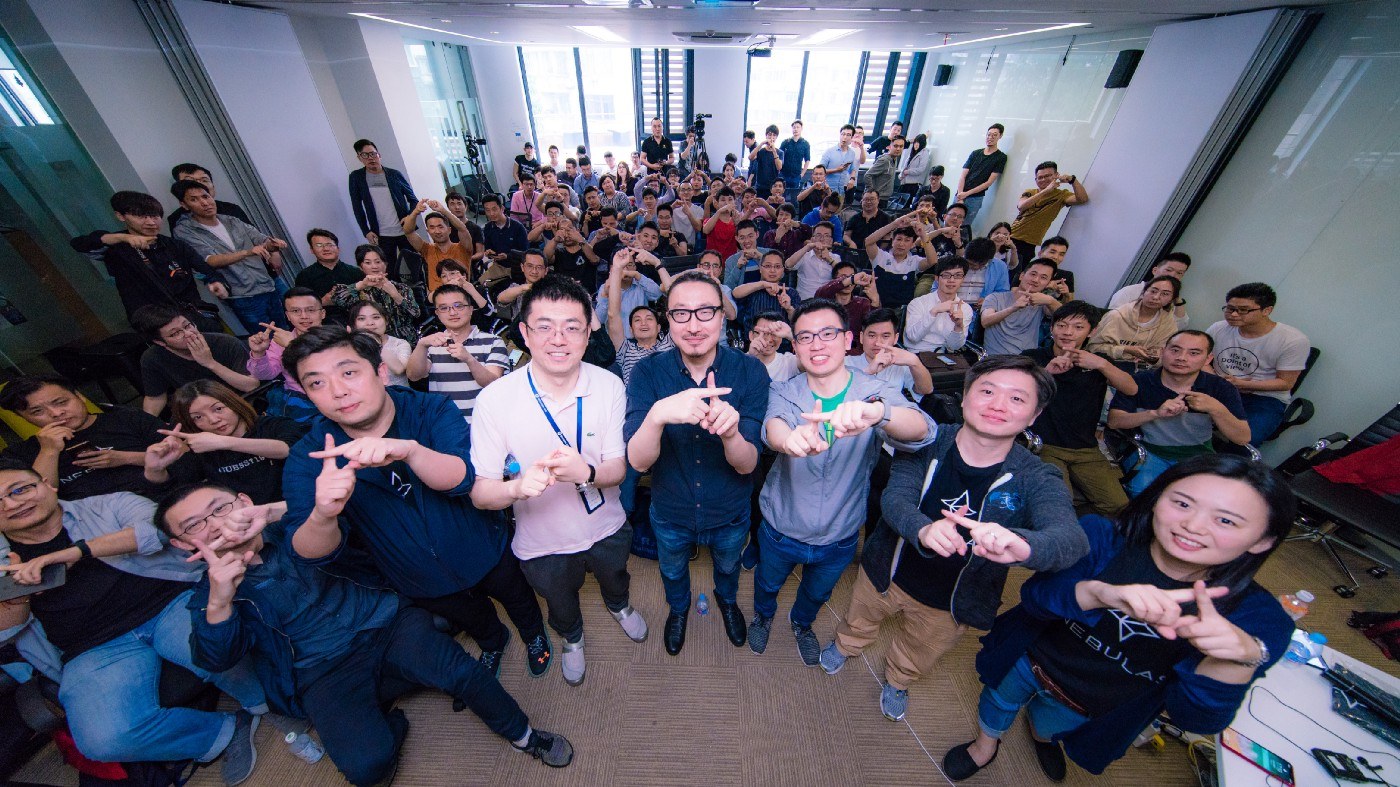
Nebulas COO Wang Guan (center) at the startup’s community meetup / Image credit: Nebulas
With a bachelor’s degree from one of China’s most prestigious architecture schools, Wang Guan’s career was on a roll. After stints at a few prominent Chinese property firms, he landed contracts to build properties in the Middle East.
Then the 2009 financial crisis hit. The economic shock torpedoed those projects and left his customers cash-strapped.
He was exhausted, but it wasn’t just about the economic meltdown. He was frustrated by the foot-dragging of the international payment system that delayed remittances.
“It would take two weeks for my customers to transfer the money, and sometimes it had to be transferred via Hong Kong, instead of going directly to the mainland,” Wang says. “There were a lot of frictions in between.”
As the property boom turned to bust, Wang pondered: Is there a way for businesses to reach a mass market without the unnecessary friction? Blockchain became the answer.
Nebulas, a startup he co-founded in 2017, is doubling down on the technology. If successful, it could upend business models and redefine how the Internet works. The company has raised over US$60 million worth of ethereum since its establishment.
The team is comprised of software engineers with deep experience in the field. Co-founders Hitters Xu and Robin Zhong worked on a blockchain platform for Ant Financial, Alibaba’s payments affiliate. Also, Xu and Wang collaborated on Antshares, which they claim is China’s first open-source blockchain.

CTO Robin Zhong (left) CEO Hitters Xu / Image credit: Nebulas
Wang saw the potential of blockchain when he first bought bitcoin in 2011. At the time, the digital cash challenged the conventional wisdom about the monetary system. The public became aware of the first generation of the underlying technology behind the cryptocurrency. Dubbed blockchain 1.0, it allows investors to trade virtual cash on a peer-to-peer network without a central authority.
But that is all it does. Ethereum, an open-source public platform, ushered in the second generation of blockchain technology, which allows entities to build decentralized applications (dapps) on top of its infrastructure. With smart contracts – computer protocols which automatically execute terms between a buyer and seller – blockchain 2.0’s value extends far beyond just exchanging digital currency.
Now, Wang and his team are stepping up their game by building what they call “blockchain 3.0,” which promises to tackle the constraints faced by the current technology. The first problem is scalability – Ethereum can only handle around 15 transactions a second, compared to Visa’s 45,000.
The second issue is a system rupture known as a “hard fork,” in which an update to the core code – often to fix a problem – splits the network into two.
Google for blockchain
As significant as electricity
Stay ahead in Asia’s tech landscape
This is premium content. Subscribe to read the full story.
The ambitious project also aims to solve blockchain’s most pressing problems in one fell swoop.
We know this is not ideal. ⌛ Sign up in 20 seconds. Cancel anytime.
Our subscriber community includes professionals from these companies:





Stay updated on the go with our mobile app.
Get latest insights with smoother, more personalized experience through TIA mobile app.