Malavika Velayanikal · · 3 min read
This grocery delivery startup wants to avoid the mistakes that led to PepperTap’s collapse
Photo credit: Pixabay.
Days after the closure of India’s third largest grocery delivery startup PepperTap, a younger sibling – Milkbasket – today announced seed funding of US$500,000 led by EVC Ventures. Chinese investors Zhu Dao Investments and YeahMobi Ceo Peter Zou participated in the round along with Vikas Banga and Manav Kamboj of Indian ecommerce leader Snapdeal.
The collapse of PepperTap had observers shaking their heads over the viability of grocery delivery in India. PepperTap CEO and co-founder Navneet Singh himself told Tech In Asia that “the path to profitability in the grocery business looked very distant, at least two or three years away.”
And yet, Milkbasket claims to have achieved positive unit economics within nine months of starting operations.
“Milkbasket represents the second generation of Indian ecommerce startups strongly educated by the mistakes of their large predecessors and relatives,” says Anjli Chopra of EVC, on why it chose to invest in this young startup.
Small is beautiful, for a beginning
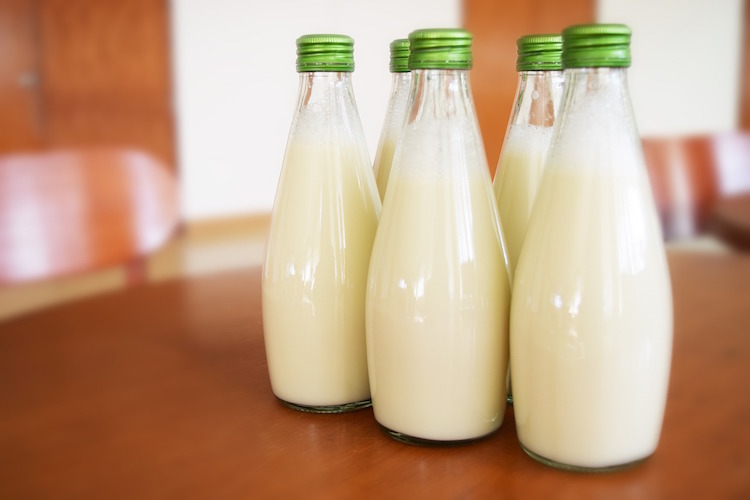
Photo credit: Pixabay.
Milkbasket started small on two counts. At first, it only delivered milk. Most Indian households have milk delivered at their doorsteps in the morning from local grocers. Milkbasket was able to do this at a fraction of the industry cost. Gradually, it added bread, eggs, and thousands of other everyday grocery items.
Secondly, it confined itself to Gurgaon, a tech hub near Delhi. Even within Gurgaon, it expanded from one cluster to another. Today it services 15 clusters with a user base of around 500 in each. This has kept marketing costs down, as it relies mostly on referrals and word of mouth. “We believe that customers are earned and retained on consistent service experience and not on discounts and hence we own the entire logistics all the way to a customer’s doorstep,” says Anant Goel, CEO and co-founder of Milkbasket.
The cluster model and morning delivery also keep distribution costs down. “We only deliver once a day, before 7 in the morning, and use latent capacity of people as the delivery team only works from 4 a.m. to 7 a.m.,” points out Anant to Tech in Asia. “Plus we deliver in clusters of households, so we can deliver a large number of orders at a low cost like a newspaper vendor.”
But now, with the funding, comes the challenge of expansion. Milkbasket aims to initially expand to 100 clusters within Gurgaon, before branching out to other cities. The funding will help it grow its workforce, 80 percent of which will be used for logistics.
“We are aiming for 10x growth in customers in the next 4 to 5 months and increase per customer spend by 2.5 to 3 times during this time,” says Anant, who has MBA degrees from INSEAD and Wharton. It appears this grocery delivery startup doesn’t want to take its eye off the traditional virtues of unit economics. “We are happy that our investors understand this and share the belief that customer experience is the most important factor that leads to success in a sustainable way,” adds Anant.
See: Amazon makes ‘express’ push to woo vendors amid India regulations worry
Editing by Meghna Rao and Nadine Freischlad





Stay updated on the go with our mobile app.
Get latest insights with smoother, more personalized experience through TIA mobile app.