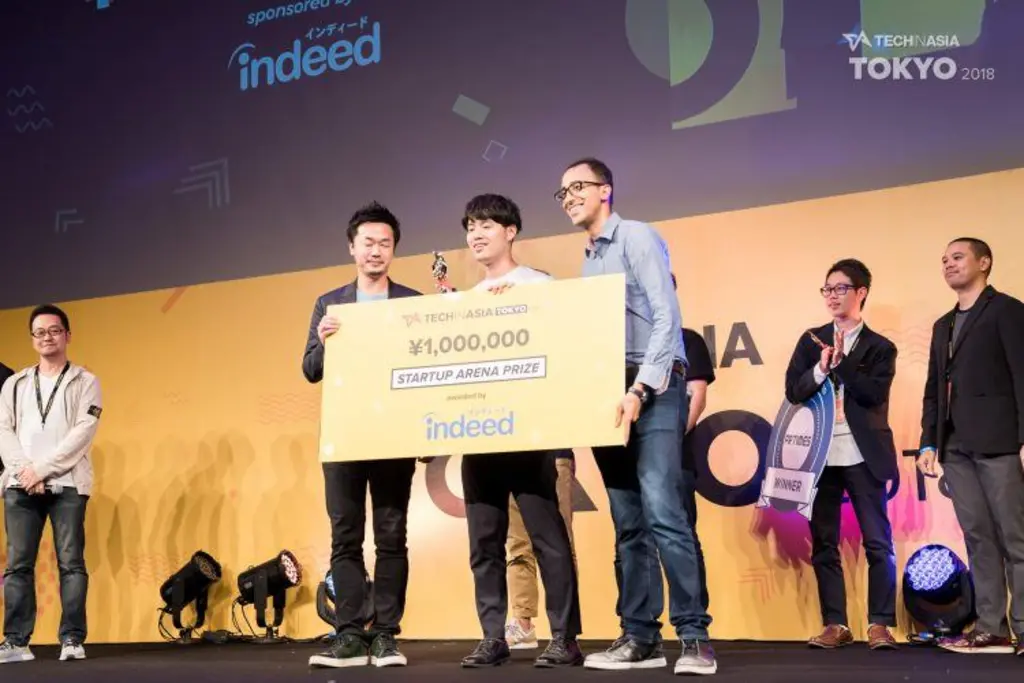
To Ginco, the spoils. / Photo credit: Tech in Asia / Michael Holmes
There was yet another mighty battle in the Arena at Tech in Asia Tokyo 2018 today. Cryptocurrency startup Ginco came out on top, claiming the winner’s prize of 1 million yen (US$8,870).
Second and third place went to Novars and Amegumi, respectively.
Ginco is developing a high-security cryptocurrency wallet to try to re-instil confidence in a crypto industry that has been rocked by hacks and plummeting prices. Its wallet allows users to store, trade, and send a wide range of tokens, including the usual suspects like Bitcoin, Ether, Litecoin, and Ripple. The startup is also engaged in cryptocurrency mining and provides consulting services to other companies that have crypto questions.
Here’s the lowdown on the other finalists, in alphabetical order:
Amegumi
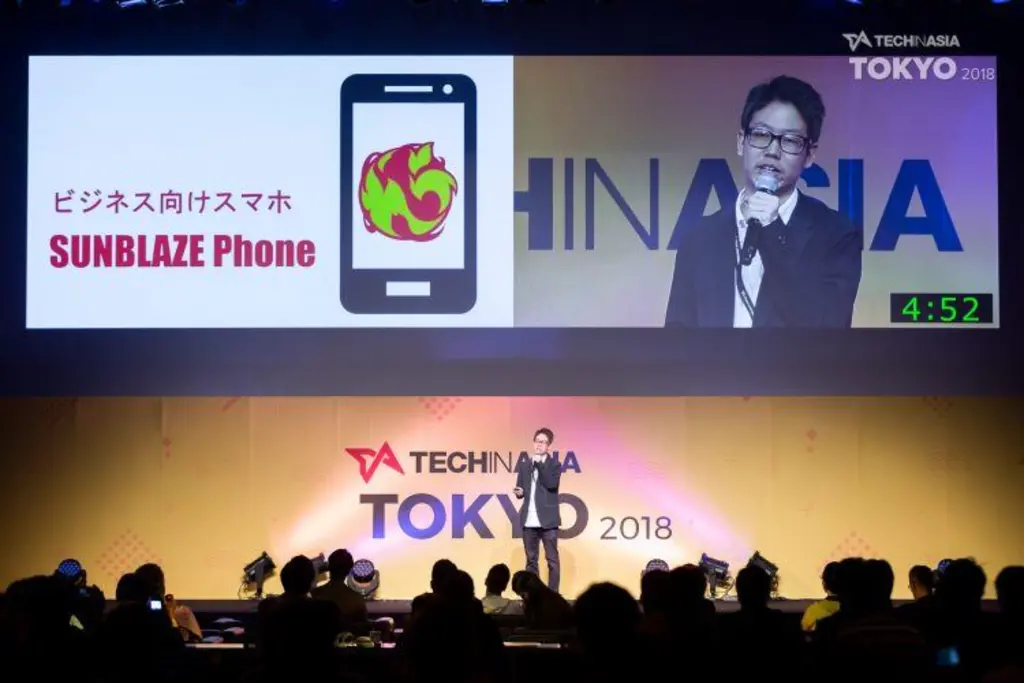
Photo credit: Tech in Asia / Michael Holmes
Amegumi is building Sunblaze, a smartphone operating system (OS) for business. Enterprise customers tend to want a stripped-down smartphone that’s dedicated to just a handful of relevant apps (in addition to operating as a phone, of course). Key features sought by businesses and workers are long life and low cost, and Sunblaze is designed to offer both. Amegumi is working with manufacturing partners to design devices that are optimized for Sunblaze, with time-saving and cost-cutting features like easily replaceable batteries. The startup is also developing apps specifically for use with its OS, including an agriculture-related work app that’s trialing in India.
GPUEater
Chief technology officers (CTOs) in tech startups and corporates are increasingly leaning on machine learning technology to achieve things like image recognition and classification. This requires a lot of processing power, and as such, it also comes with a hefty price tag. The other part of the CTO’s job is to work within budget and cut costs where possible; so at the same time, they want to avoid the high operating costs associated with most solutions on the market. GPUEater reckons it can slash those costs in half with its cloud-based deep learning platform for enterprises. It’s already being used by some large players in Japan and South Asia.
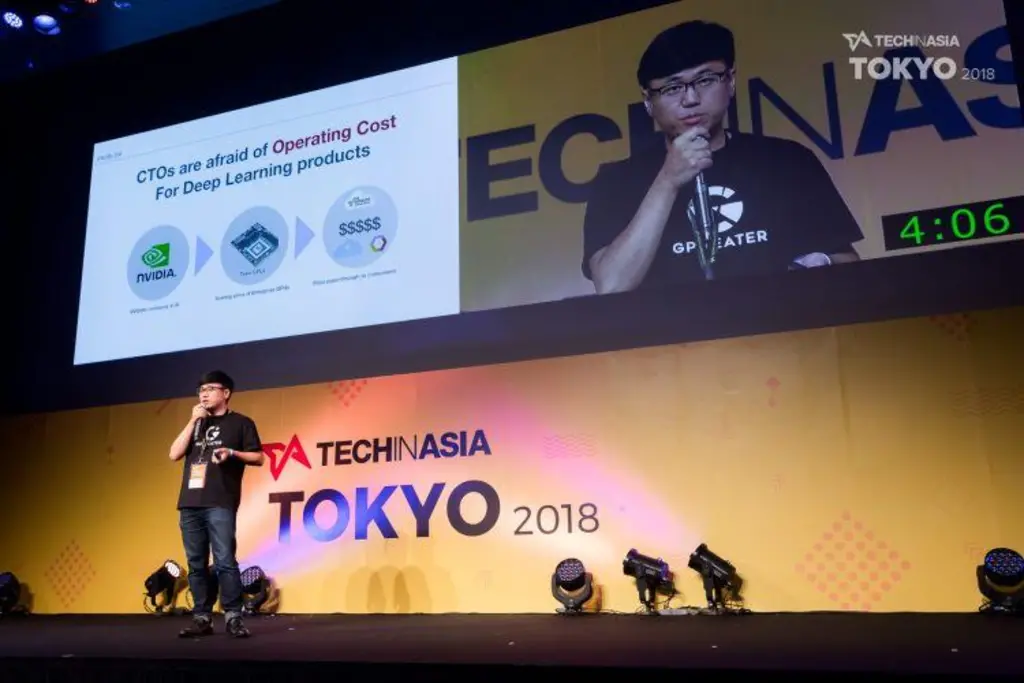
Photo credit: Tech in Asia / Michael Holmes
InsureVite
According to this startup, the global non-life insurance market is worth a whopping US$2.1 trillion. But that figure only represents 2.8 percent penetration of the potential market. Sensing opportunity, it has created Cherry – a chatbot for the insurance industry which allows users to submit claims directly to their insurance companies. While it has several competitors, InsureVite – which makes money from licensing and commission – says its advantage lies in its modular nature, meaning that a wide range of insurance providers could conceivably integrate it.
Mui
While mobile devices have indubitably done the world a lot of good, they are also causing addiction among some users. Some people even report withdrawal symptoms if they’re separated from their smartphone for too long and can’t browse their Instagram feed. Mui is built on the principle that internet-enabled consumer tech can be healthier for the mind and less invasive in our everyday lives. It’s an internet-of-things controller that looks like a simple block of wood (yes, it’s actually made from timber) with no obvious displays to look at or buttons to press. By having a simple item made out of natural materials in your home, the more nefarious aspects of the consumer tech revolution can be toned down.

Novars
Plen Robotics
Wika





Stay updated on the go with our mobile app.
Get latest insights with smoother, more personalized experience through TIA mobile app.










📅 Upcoming Events
22 October 2026
Payoneer x CSPN Summit 2026