Michael Tegos · · 6 min read
Singapore wants fewer cars on its roads. Here’s what it means for Grab and Uber
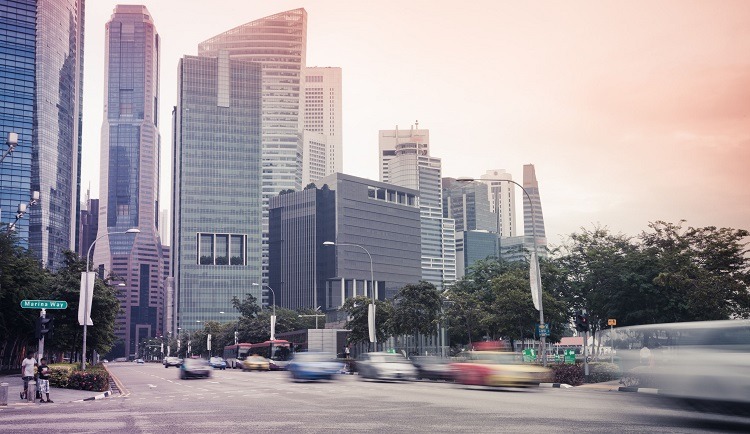
Photo credit: petunyia / 123RF.
Does fewer cars on Singapore’s roads bode well or ill for Uber and Grab? It’s a toss-up – on one hand, fewer people owning cars could mean more passengers for ride-hailing services; on the other, if owning and driving a car gets much more expensive, is it worth it for drivers to stay on the road?
It will likely be some time before this is put to the test – Singapore’s Land Transport Authority (LTA) just announced it will be curbing the number of new cars that make it onto the city-state’s roads next year and the changes will go into effect from February onwards.
Previously, the annual increment of new cars allowed on the road was 0.25 percent; it will now drop to zero.
According to LTA, there were 898,239 vehicles on Singapore’s roads at the end of 2016, with 601,218 of those being private cars.
Lean and green
The reasons why this is happening now range from the purely pragmatic to the aspirational.
In practical terms, the island nation simply doesn’t have enough physical space to spare. “Today, 12 percent of Singapore’s total land area is taken up by roads. In view of land constraints and competing needs, there is limited scope for further expansion of the road network,” says LTA’s announcement.
Grab measures success based on using existing cars as efficiently as possible before adding more.
With a growing population and finite room to grow into, Singapore has been hacking together a number of methods to accommodate everything and everyone – a limited number of vehicles being one of them.
But Singapore also wants to be a “smart nation,” one driven by constant inflows of data, efficient processes, and quantifiable metrics. By limiting the number of cars on its roads, it can push for more efficient public transportation networks, more sustainable energy consumption, and reduced pollution.
LTA’s decision follows the country’s bid for less reliance on private vehicles, mostly by boosting its public transportation capabilities (subway breakdowns notwithstanding). For example, its newest Mass Rapid Transit (MRT) subway line – the Downtown Line – has recently been extended to increase coverage. The country is also looking to improve its fleet of buses with electric vehicles – and is even experimenting with self-driving ones.
Sharing is caring
In all of this, where do operators like Uber and Grab – and, to a lesser degree, licensed taxi providers – fit in?
Jochen Krauss, managing partner at consultancy Simon-Kucher & Partners, thinks ride-hailers are among the parties that can benefit. “Many more people will rethink if they want to own a car or not,” he tells Tech in Asia. The trend of switching from owning cars to using shared alternatives is seen elsewhere in the world as well, he adds.
Uber claims its philosophy in Singapore is in line with LTA’s when it comes to a “car-lite” society. “Together with great public transport, ride-sharing platforms like Uber can create a credible alternative to private car ownership by allowing people access to a safe, reliable, and affordable ride wherever they are in the city,” an Uber spokesperson told Tech in Asia.
Fewer cars doesn’t mean less business





Stay updated on the go with our mobile app.
Get latest insights with smoother, more personalized experience through TIA mobile app.