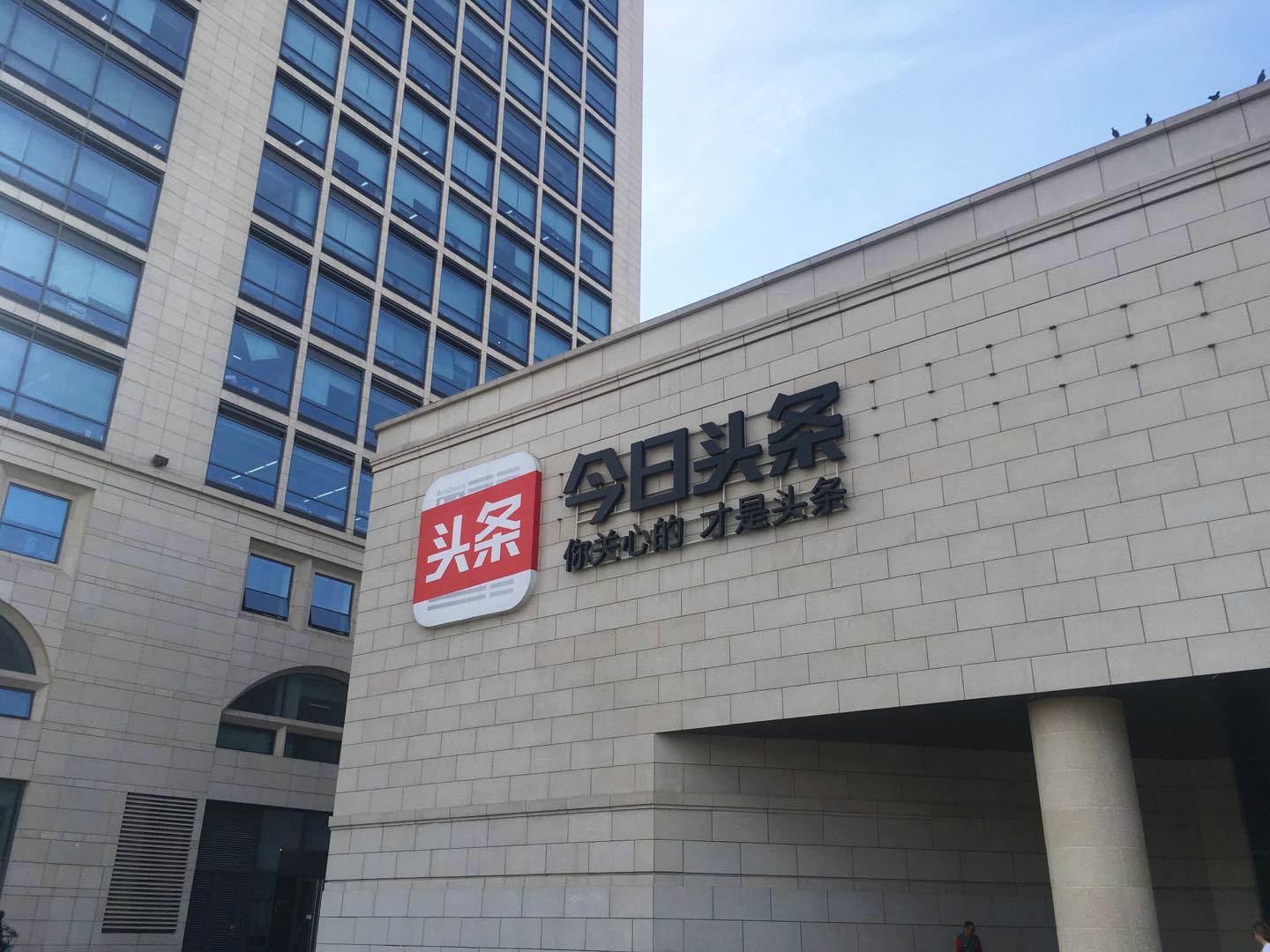
Toutiao headquarters in Beijing / Photo credit: Tech in Asia
As Chinese investors and entrepreneurs bet on artificial intelligence, the government is also busy plowing money and talent to turn the country into a world leader in AI. However, the technology could face a backlash once it touches a nerve with China’s ruling authority.
Last September, People.cn – the new media flagship of the party paper People’s Daily – published a series of editorials lambasting the news app Jinri Toutiao, which prides itself on using AI to make user recommendations from a myriad of news sources.
AI is a powerful tool to shape news selection, and the Chinese leadership wants to make sure it has a hand in deciding what people read.
Jinri Toutiao, which means “today’s headline” in Chinese, became a household name with its catchy tagline: “The only headlines are the ones you care about.” In its latest fundraising, Toutiao’s parent company Bytedance had set its sights on surpassing US$30 billion in valuation, a source told The Information last December. That would make the five-year-old startup about 10 times as valuable as the 166-year-old New York Times. However, Toutiao’s spokesperson told Tech in Asia that the company hasn’t determined its valuation yet.
The problem of Toutiao, the People.cn opinion piece says, is that it has allowed vulgar and clickbait content to flourish. “Whether the content gets to be displayed and whom it goes to relies solely on one rule by the machine: Is this something eye-catching? This simplified standard not only overlooks quality and diversity too easily but also increases the difficulty and cost of content auditing,” says one of the editorials.
See: China’s most addictive news app eyes world domination with AI feeds
The AI factor
In most cases, content in China falls under regulation for issues related to copyright and ethics – be it pornography, violence, or fake information. Media watchdogs also push for strict oversight during politically sensitive times to make sure that no one strays from core party values. Ahead of the Communist Party’s twice-a-decade reshuffle that happened last October, Toutiao archrival Yidian Zixun, along with conventional news portals like Sohu, NetEase, and Tencent, was summoned to private chats with internet regulators to work on “media cleansing.”
What’s new about the critique of Toutiao is the AI factor, with the semi-official media calling attention to the app’s “social responsibility” and the need for a human “editor in chief.”
“In any time, an ‘editor in chief’ cannot go missing in the process of content curation. A ‘doorman’ is required no matter how well the distribution channel works. Even in a time when technology is king, content cannot depend entirely on algorithms,” says the People.cn opinion piece.
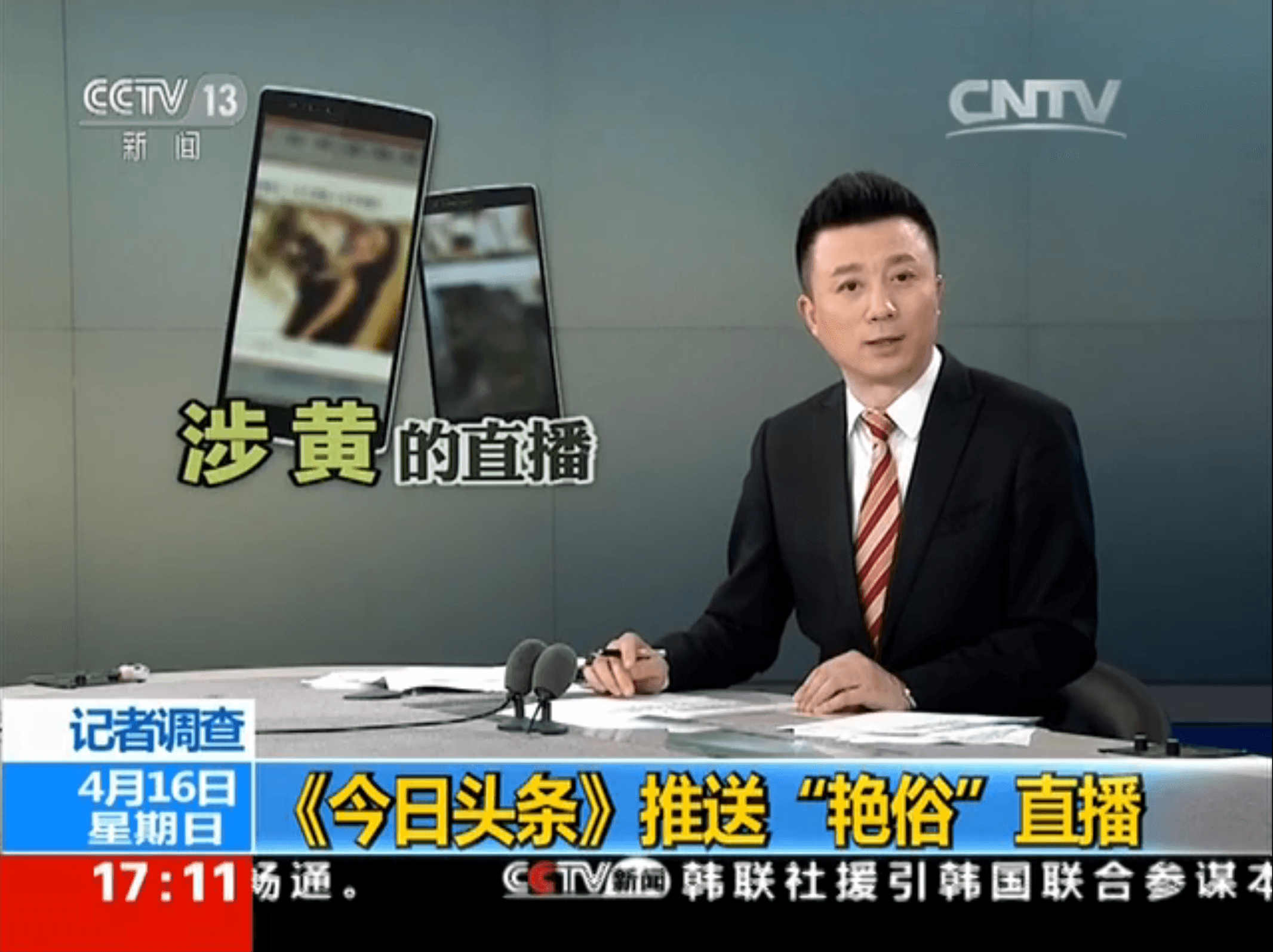
China’s state broadcaster CCTV probed into the pornographic livestreams on several popular apps / Photo credit: Tech in Asia
“The issue here is that AI is potentially a very powerful tool to shape news selection, and the Chinese leadership wants to make sure it has a hand in deciding how and what people read,” suggests David Bandurski, co-director of the China Media Project and a fellow of the Robert Bosch Academy in Berlin.
“It’s not just about sensitive news coverage anymore. There is a tidal wave of choices out there now for information consumers, and the Party is as eager to ensure its message isn’t drowned out in a flood of entertainment content as it is to ensure that a damaging story is kept under wraps,” adds Bandurski.
‘Low taste’
Censors: Human or AI?





Stay updated on the go with our mobile app.
Get latest insights with smoother, more personalized experience through TIA mobile app.