Grace Priscilla Teo · · 4 min read
Anthropic’s design lead on why the old process is dead
This article summarizes an episode of Lenny’s Podcast’s video series featuring Jenny Wen, head of design at Anthropic.
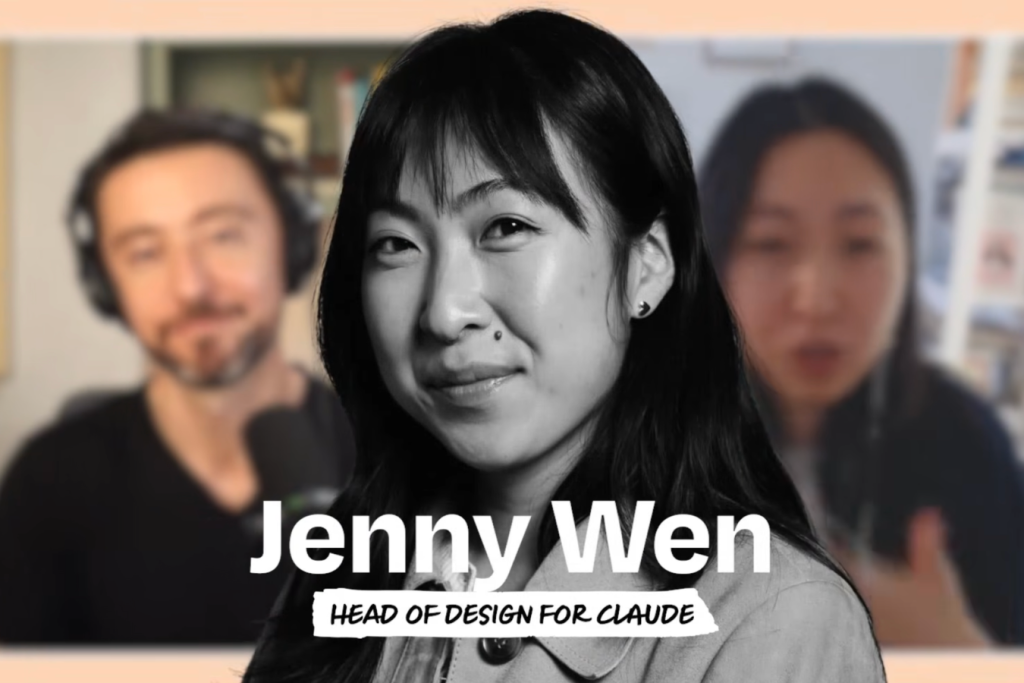
Jenny Wen, head of design at Anthropic/ Photo credit: Lenny’s Podcast
Jenny Wen, head of design for Claude at Anthropic, says that fast AI engineering has made the old design process useless. Instead of refining perfect mockups before development, designers now have to work alongside engineers in real time.
Wen believes designers must help in the moment instead of planning alone. By working together more flexibly, the team can build products that handle the unpredictable nature of AI.
The problem with the old way
For years, product design followed a set plan of research, testing, and improving. But AI is now built so fast that this process slows everything down, holding back engineers who are ready to build.
Wen says, “This design process that designers have been taught, we sort of treat it as gospel. That’s basically dead.”
She explains this change is happening because of how fast engineers can work. “As designers, we really have to let go of that process.”
As a result, everyone in the company feels this pressure to keep up. “It’s not just designers who are feeling like we have to keep up with engineers,” Wen notes. “I think even engineers are like, ‘How do we keep up with ourselves right now?'”
When engineers move faster than designers, the pressure to deliver perfect plans hurts the project. A designer’s job is to help, not get in the way.
“You as a designer actually do not have the time to make these beautiful mocks anymore,” she says. “You’re better off not blocking that process, letting them [engineers] cook.”
Dealing with unpredictable AI
The way AI works makes this broken process worse. Unlike normal software, AI systems give different and sometimes surprising results. This makes it impossible for designers to guess every way a person will use the product or how it will act.
This is why making fixed designs for an AI product is pointless. To see how it works, the team has to use the technology itself. “You can’t mock up all the states, you can’t theorize,” Wen says. “You sort of have to use the actual models underneath.”
This changes the goal of building products. Instead of releasing a complete product for a set purpose, teams now release products to see what they are used for. As she puts it, “You have to discover use cases as you see people using them.”
The new role for designers
As teams adjust to this new way of releasing products to learn, the old role of a product designer is splitting apart. The job is breaking down into two specific roles needed to keep up with engineering.
Hiring the right designers





Stay updated on the go with our mobile app.
Get latest insights with smoother, more personalized experience through TIA mobile app.