- Premium Content It takes our newsroom weeks - if not months - to investigate and produce stories for our premium content. You can’t find them anywhere else.
 Aditya Hadi Pratama · · 7 min read
How Shopee’s sleeping giant struck while its rivals fought fire
Mery, a bookseller on Shopee since 2018, has seen a drastic change in how her customers pay. Until last year, the majority of them were using bank transfers.
Today, almost all of them do transactions using ShopeePay or ShopeePay Later, the marketplace’s digital wallet and buy-now-pay-later service, respectively. Shopee is the ecommerce unit of Singapore-headquartered internet giant Sea Group.
According to Mery, the trend got a boost from the free delivery promo that buyers can get whenever they use those payment methods.
Tech in Asia spoke to six Shopee users who already use ShopeePay. The respondents, who are all women and homemakers in Indonesia, said they started using it because of the free delivery and cashback.
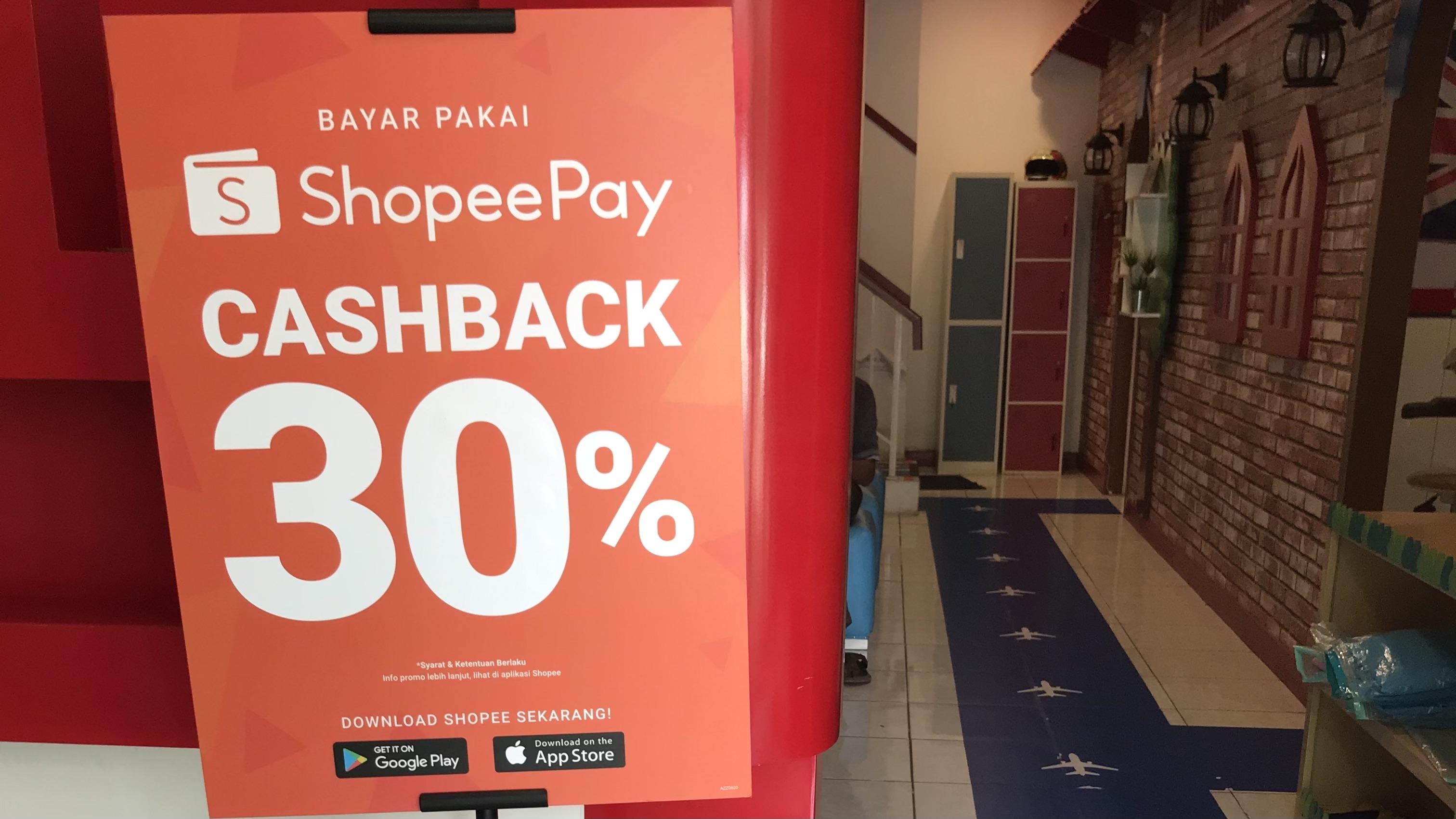
ShopeePay’s banner in a dental clinic in Greater Jakarta / Photo credit: Tech in Asia
In addition to buying goods and paying bills on the marketplace, they also use the e-wallet to transact with offline merchants, who would display a flashy orange banner from Shopee offering a 30% discount on each purchase.
Shopee banners are now a common sight in the Greater Jakarta area, but banners from competitors like Ovo – an affiliate of Grab and Tokopedia – and GoPay – the fintech arm of Gojek – seem to be few and far between.
ShopeePay is striking while its competitors are vulnerable and still reeling from the pandemic. It’s spending wads of money at a time when other players are on saving mode, allowing it to snatch the lead.
The heavy promotions seem to have propelled ShopeePay to the top by some metrics. According to a recent study from market research company Ipsos, ShopeePay has a 29% market share in terms of number of transactions and 32% in terms of total payments value (TPV). A similar study from MarkPlus and Snapcart also put ShopeePay in the leading position.
However, some executives from e-wallet firms say that Ipsos’ results, despite having a sample size of 1,000, may not be representative enough of the real picture.
Bank Indonesia, the country’s central bank, stated that the monthly e-wallet transaction value in the archipelago reached US$1.3 billion in October, with around 6% monthly growth.
Echoing what the ShopeePay users said, Sea Group admits that markdowns and promos are among the reasons for the mobile wallet’s rising popularity in Indonesia.
Sea Group has indeed been spending significantly more for sales and marketing expenses that’s not related to Shopee or its gaming subsidiary Garena, so we can assume that a lot of that money is being used to push ShopeePay. That’s US$118.5 million in the third quarter of 2020 alone, up from US$28.9 million in 2019.
A sleeping giant
Join late, win later
The long game
Stay ahead in Asia’s tech landscape
This is premium content. Subscribe to read the full story.
Garena’s profit may pave a path for ShopeePay to win the e-wallet race in Indonesia, but its competitors aren’t staying still.
We know this is not ideal. ⌛ Sign up in 20 seconds. Cancel anytime.
Our subscriber community includes professionals from these companies:





Stay updated on the go with our mobile app.
Get latest insights with smoother, more personalized experience through TIA mobile app.