- Premium Content It takes our newsroom weeks - if not months - to investigate and produce stories for our premium content. You can’t find them anywhere else.
 Melissa Goh · · 8 min read
How fintech pioneer 2C2P grew big by capturing the online travel market
The Facebooks and Apples of the world may serve well-carded areas like the US and the eurozone with relative ease, but in Southeast Asia – or emerging markets for that matter – where multinationals might find they need a little help, especially in the sphere of payment acceptance.
Consumer- and SME-facing payment gateway companies like Stripe and Paypal tout frictionless payments via their multimodal payment acceptance channels, as do their business-to-business (B2B) counterparts Adyen, Worldpay, and Global Payments. However, these companies don’t always address the myriad of local and alternative payment methods used by a vastly uncarded Southeast Asian population.

Photo credit: 2C2P
One pan-Asian fintech pioneer is winning with its hyperlocal approach: 2C2P, which stands for Cash and Card Payment Processor. The firm accepts a multitude of payment options including credit cards, digital wallets, bank transfers, over-the-counter cash payments, and domestic payment methods (such as Singapore’s SGQR).
Already profitable and on track to hit US$100 million in revenues next year, the company has landed clients like tech giants Facebook and Apple, online travel companies Agoda and Traveloka, national carrier Thai Airways, ecommerce platforms Lazada and Zalora, as well as Spanish apparel label Zara.
As companies bet big on digital services, 2C2P’s well-oiled regional payments network makes it an attractive acquisition target for multinationals as well as Southeast Asian companies looking to expand their footprint in the region.
So far, 2C2P has resisted. In June, the Singapore-headquartered startup was rumored to have turned down an acquisition offer from Grab that could have valued the startup at up to US$200 million.
The company’s founder and group chief executive, Aung Kyaw Moe, declined to speak to the media previously for fear of fanning further market speculation, but now he tells Tech in Asia that the company “did not decline” an offer from Grab. While 2C2P was in talks with a few strategic investors including Grab, he says those discussions “went nowhere” near a potential M&A offer.
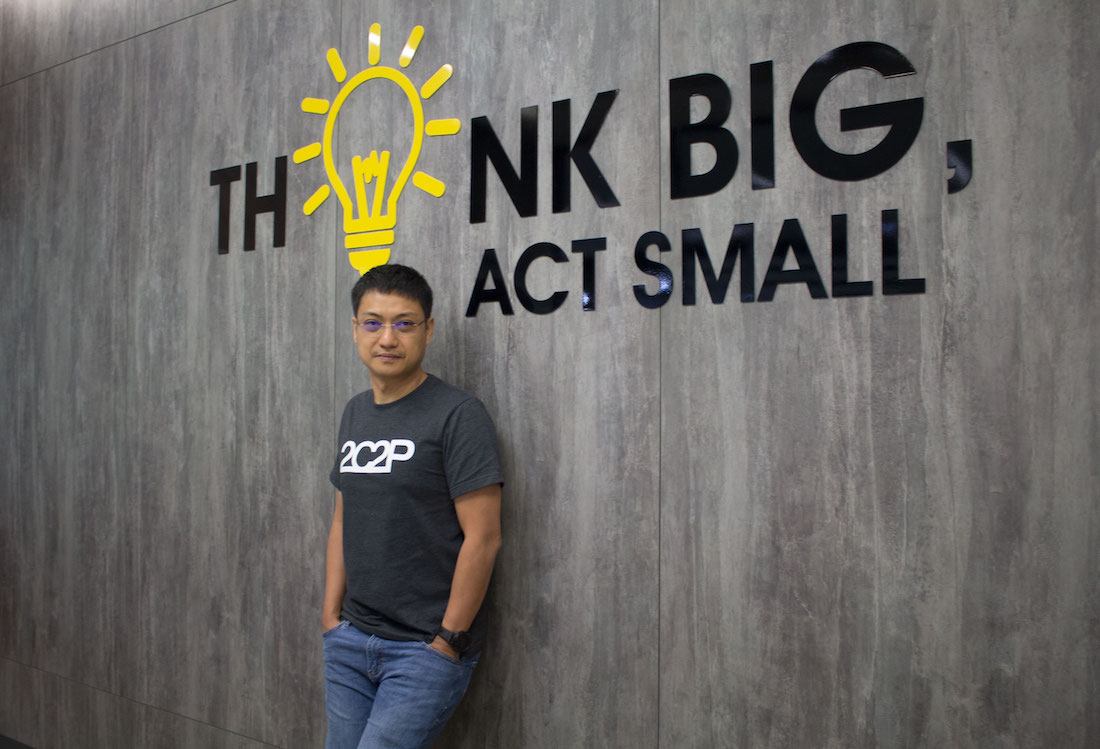
2C2P Founder and Group CEO Aung Kyaw Moe / Photo credit: 2C2P
“There were some strategic investors who would [have] liked to do more than a minority investment, where we entertained a discussion,” Aung Kyaw Moe says, but the startup – which has been profitable since last year – opted to stay independent.
Instead, 2C2P went on to raise US$52 million in an all-cash series E round from a consortium of financial investors including the International Finance Corporation – a sister organization of the World Bank.
Aung Kyaw Moe is cautious about putting a number on the firms’ current valuation, but he says its latest round brings 2C2P beyond the rumored US$200 million. The exec derived that number based on “traditional methods” like discounted cash flows and revenue multiples and compared it against the publicly available data of its industry peers.
Why is 2C2P worth so much?
Within the region, 2C2P goes head-to-head with Naspers-owned Red Dot Payment (RDP), targeting online transactions for large corporations. It also competes, to a smaller extent, with “Stripe-inspired” firms, including regional payment gateways like Thailand’s Omise, Indonesia’s Xendit, and the Philippines’ Paynamics.
An early pioneer
A “Paypal clone”
Not actively looking for a buyer
Stay ahead in Asia’s tech landscape
This is premium content. Subscribe to read the full story.
It serves as a payments gateway that allows companies to accept multiple payment modes.
We know this is not ideal. ⌛ Sign up in 20 seconds. Cancel anytime.
Our subscriber community includes professionals from these companies:





Stay updated on the go with our mobile app.
Get latest insights with smoother, more personalized experience through TIA mobile app.