- Premium Content It takes our newsroom weeks - if not months - to investigate and produce stories for our premium content. You can’t find them anywhere else.
 Melissa Goh · · 10 min read
Man behind the models: OpenAI’s research chief on the road to AGI
Mark Chen doesn’t call himself a workaholic. However, his choices suggest otherwise: He’s zipping across Singapore on a Saturday afternoon, rushing from a conference to an interview with Tech in Asia just three hours before he’s due to catch a flight.
Still, Chen thinks his work’s far from done – today or in the foreseeable future.
“I don’t think my personality would ever allow me to think that my work is done,” he admits.
In his seven years at OpenAI, Chen has steadily risen through the ranks from when he first joined as a research scientist. In March, he stepped up from his role as head of frontiers research to chief research officer, heading model development and overall research efforts at the AI firm.
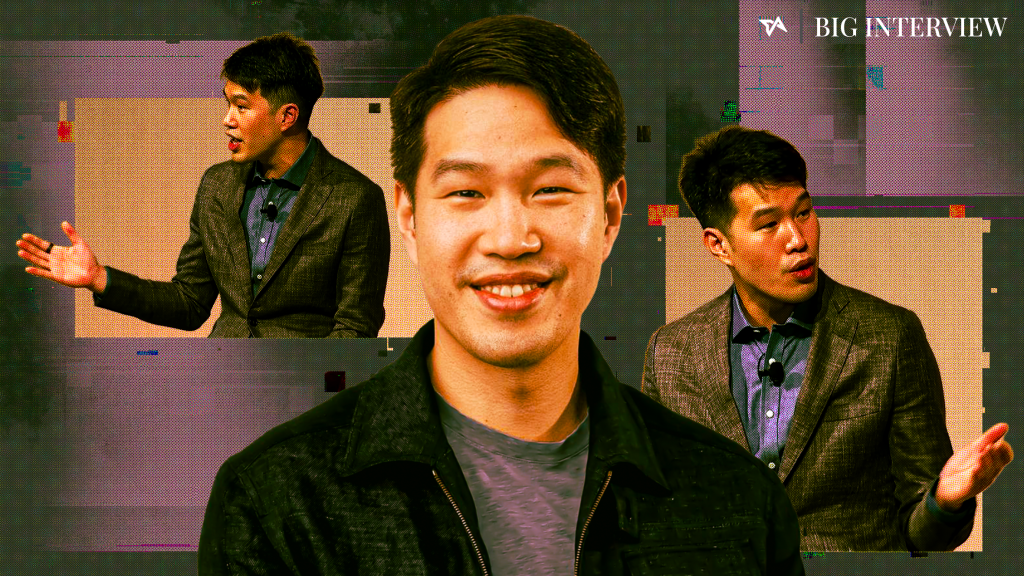
Image credit: Timmy Loen
With his boyish looks and black T-shirt and jeans ensemble, Chen effortlessly fits the image of the quintessential tech executive – though there’s little else at first impression to suggest he’s one of the top decision makers at the world’s second-highest valued private company.
At OpenAI, Chen has led the development of o1, a series of reasoning models trained to tackle more complex questions than previous models.
He also headed the teams that built the text-to-image model Dall-E as well as one that incorporated visual perception – the ability to understand and process images and videos – in GPT-4.
It’s a wild time to be in (one of) the driver’s seat of AI development. With US$57.9 billion raised to date, the stakes are high for OpenAI: Any breakthrough could bring humanity a step closer to the inevitability of artificial general intelligence (AGI) – if competitors don’t beat the company to it.
OpenAI’s AI models are among the most used in the world, with more than 400 million people using its products weekly. But equally high are the stakes for any potential missteps.
Chen is effusive in everything he talks about, from his early career to why he’s confident OpenAI will stay ahead of the competition. He shares that ChatGPT, in some ways, has become an extension of himself.
The chatbot has helped Chen overcome writer’s block – he’s used it to craft vision documents for OpenAI. He turns to it for conversation topics before meeting someone new, too.
Chen also frequently taps into Deep Research – an AI agent that can synthesize large data sets from the web – to prepare for lectures.
“Whenever I get stuck, it feels kind of like a friend that I can consult,” he says.
A lot of “luck”
Empowering the road to AGI
Open source is not a magic bullet
Defying competitive pressures
Tackling safety
Keeping pace with the future
Stay ahead in Asia’s tech landscape
This is premium content. Subscribe to read the full story.
Mark Chen shares why open source isn’t a magic bullet and why being overly reactionary in AI isn’t the way to go.
We know this is not ideal. ⌛ Sign up in 20 seconds. Cancel anytime.
Our subscriber community includes professionals from these companies:





Stay updated on the go with our mobile app.
Get latest insights with smoother, more personalized experience through TIA mobile app.











📅 Upcoming Events
22 October 2026
Payoneer x CSPN Summit 2026