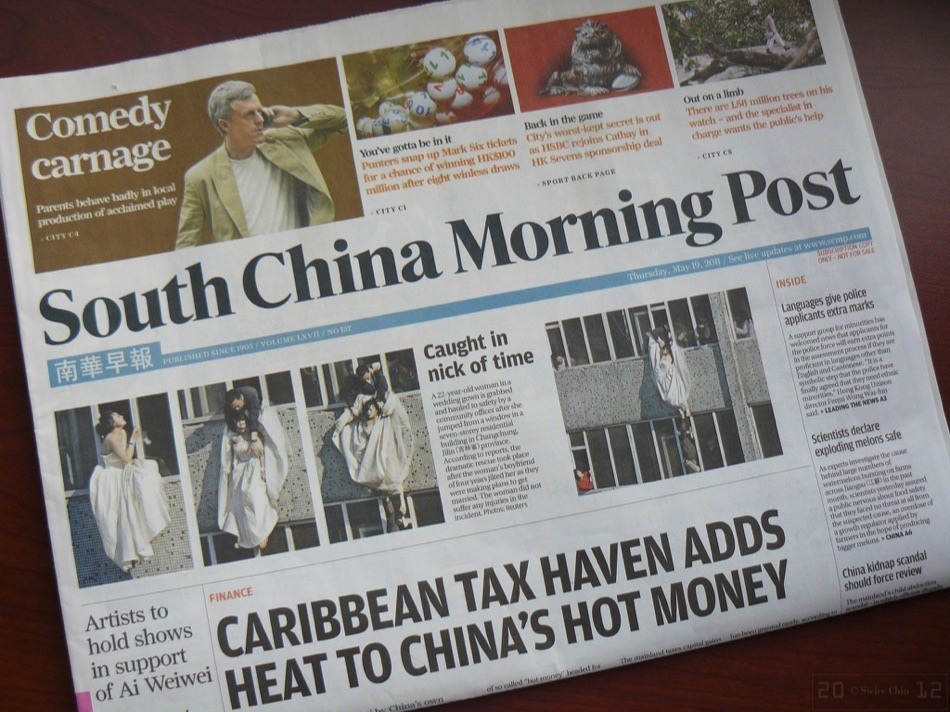
The newspaper was founded in Hong Kong in 1903. Photo credit: Canadian Pacific.
Nearly four months after Chinese ecommerce titan Alibaba paid out US$266 million to acquire the South China Morning Post, the Hong Kong-based newspaper today announced that its paywall is dismantled.
Many people think being free is how the internet should work.
“[O]ur focus now should not be on finding the right media business model. Our priority should be on how we should change to better adapt to the reading habits of our readers,” said Alibaba founder and chairman Jack Ma, quoted by the 113-year-old paper. “This is what we need to do as the media industry transforms for the future.”
Aside from continuing with online advertisements, there’s no clear plan for how the paper – which suffers a falling print subscription – will make money from its website. Alibaba also owns China’s top streaming video company, Youku Tudou, as part of its growing media empire. It also runs films studio Alibaba Pictures.
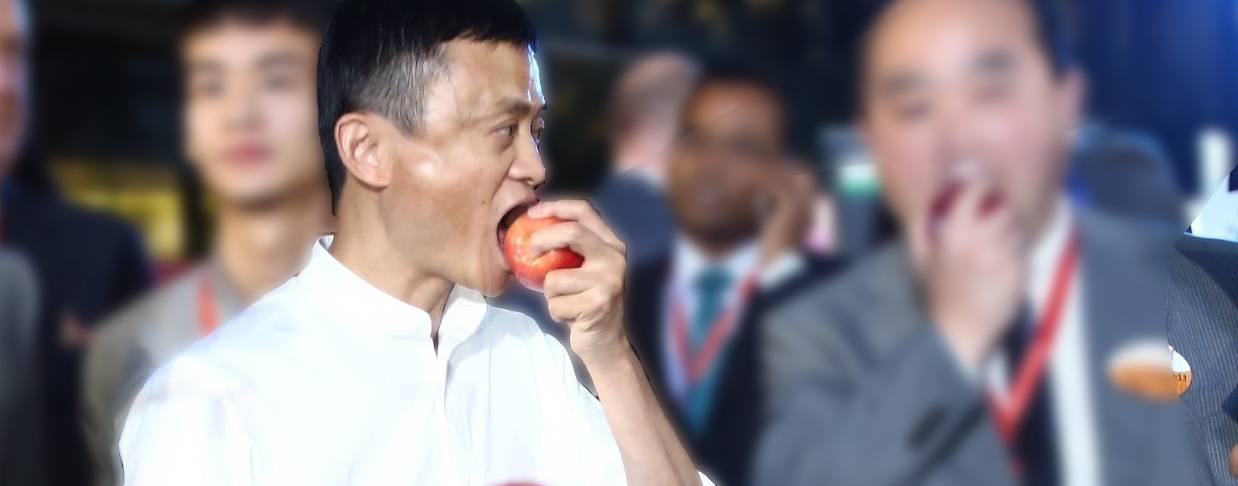
Jack Ma helms a growing media empire. Photo credit: Alibaba
“Many people think being free is how the internet should work, but this is not always a simple solution,” Ma continued. “Taobao was free for merchants in the beginning, but that is not how Taobao wins the market.”
When people don’t really understand China … they also have a lot of misconceptions about Alibaba.
“Our winning edge is to provide better services. Free services do not mean cheap services. Rather, offering free but quality services is how we can succeed and sustain our growth.”
The paper has relaunched its mobile apps in order to remove the paywall from those as well.
Quite apart from issues of monetisation, Alibaba’s buyout of the SCMP has also raised concerns of objectivity, with a mainland Chinese company controlling the most prominent paper in Hong Kong, a territory that is free of China’s extreme censorship of the media and free speech. Joseph C. Tsai, Alibaba’s executive vice chairman, told the New York Times in December that Ma and Alibaba’s top brass were motivated to make the deal by the fact that “when people don’t really understand China and have the wrong perception of China, they also have a lot of misconceptions about Alibaba.” It’s unclear how that will be balanced with promises of corporate and political objectivity.
“We’ll let the editors make their judgment on what to publish and not to publish. I can’t think of anything being off-limits,” Tsai added.





Stay updated on the go with our mobile app.
Get latest insights with smoother, more personalized experience through TIA mobile app.