- Premium Content It takes our newsroom weeks - if not months - to investigate and produce stories for our premium content. You can’t find them anywhere else.
 Steven Millward · · 4 min read
A trillion dollars, but Alibaba’s still got a problem
Alibaba’s shoppers are on course to spend a record US$1 trillion this year, according to a new study from Emarketer.
While that sounds good – it’s up from US$578 billion in 2016 – there’s a huge problem brewing: Alibaba’s grip on Chinese consumers is slipping as new competitor apps pop up.
Its share of China’s retail ecommerce market was 69.7% in 2016, but Emarketer projects Jack Ma’s firm will be down to 55.9% by the end of 2019, dropping again in 2020 to 53.6%.
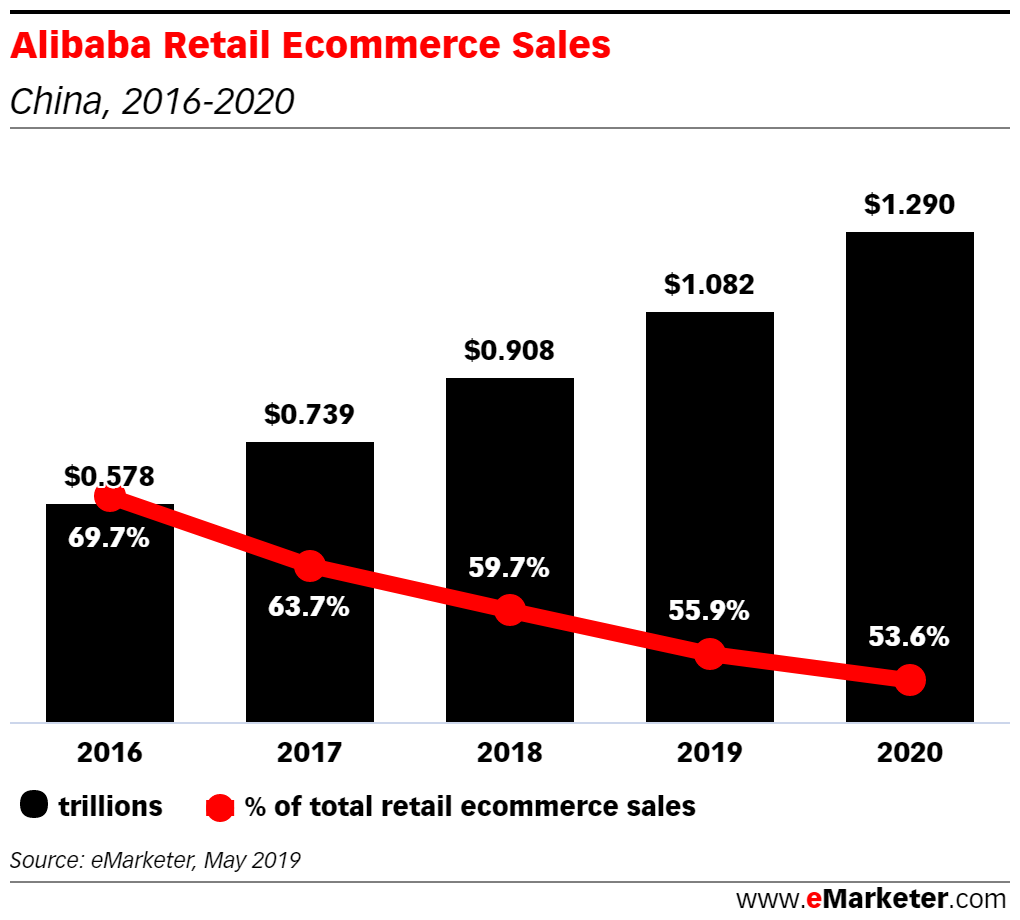
Image credit: Emarketer
Fast riser
While Alibaba is facing a number of headwinds like the ongoing US trade war and China’s economic slowdown, it’s only a combination of new challengers and consumers’ shifting preferences that can steal away market share in its core business, which is China’s online shopping industry. The sector is estimated to be worth US$2 trillion this year, and it’s expected to rocket to US$2.7 trillion in 2021.
Longtime rival JD.com isn’t much to blame for Alibaba’s travails, as its own slice of the pie has changed little for years: it was 16.6% in 2016, and it’ll be 17.1% next year.
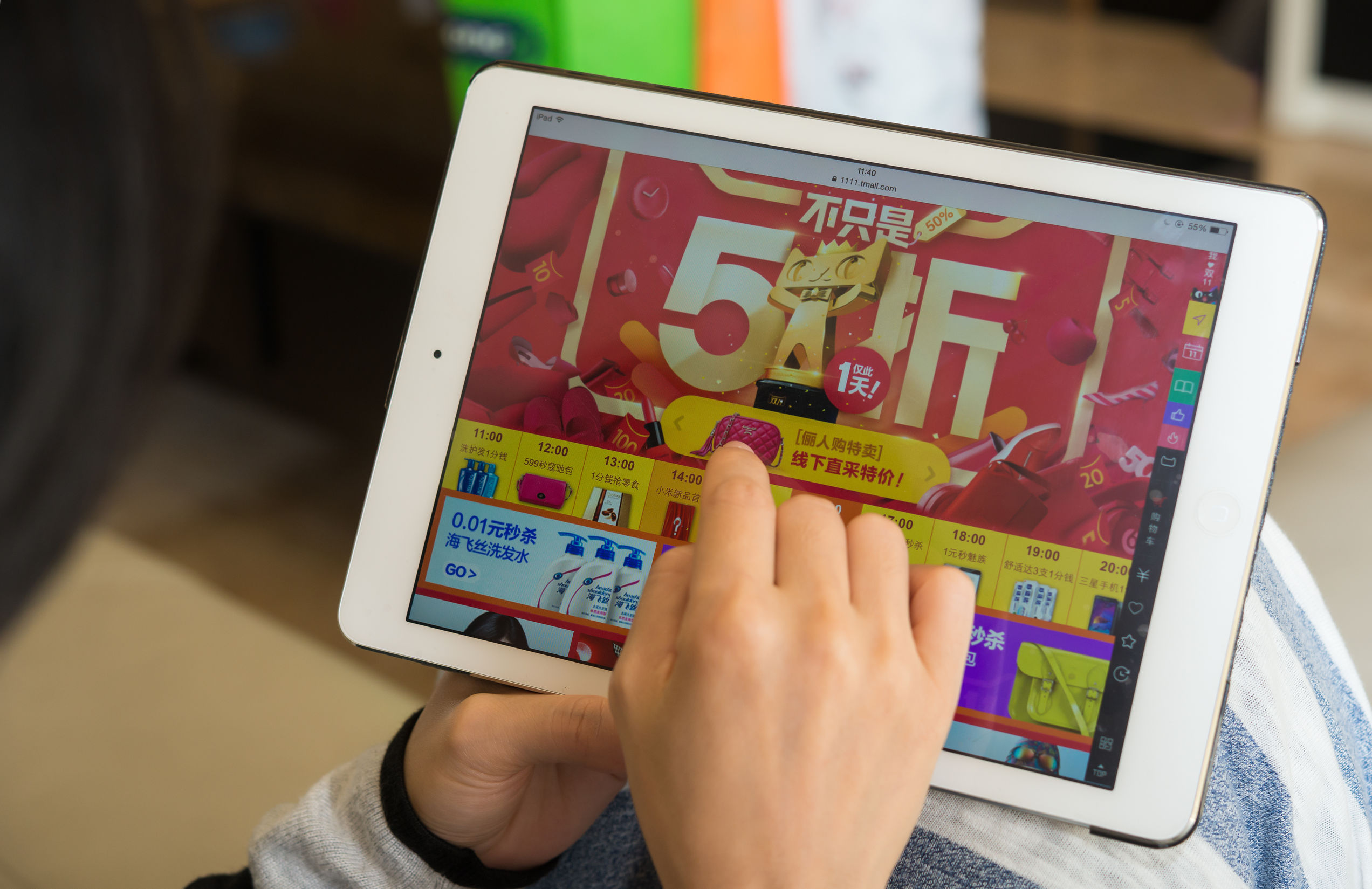
Alibaba’s Tmall store on an iPad / Photo credit: 罗 宏志
A newer app called Pinduoduo is what’s keeping Ma awake at night. Last year, Pinduoduo passed JD in terms of the number of daily active users, and its rapid growth – particularly in smaller cities – last summer propelled it to an initial public offering. It was able to achieve this by focusing on discounts and being very social. For example, it has a “team purchase” feature that lets friends share a link over WeChat to get a lower price when they buy as a group.
Here’s how the warring trio shaped up in terms of consumer expenditure in 2018:
- First: Alibaba, US$908 billion (Emarketer data)
- Second: JD, US$244 billion
- Third: Pinduoduo, US$69 billion
Social shoppers
Aside from Pinduoduo, the most significant threat to Alibaba is likely shifting consumer behavior, as people get lured away from its conventional marketplace apps, Taobao and Tmall.
Alibaba has already been tested in this arena with the rise of livestreaming in 2016, in which influencers sell their wares in their rambling, freeform broadcasts.
It’s relatively easy to build a livestreaming feature, so Ma’s company quickly added it as an option for merchants. It’s now a relatively small but growing part of Alibaba’s shopping repertoire, with its livestreamers selling US$15.1 billion worth of stuff in 2018.
Big spenders
Stay ahead in Asia’s tech landscape
This is premium content. Subscribe to read the full story.
Alibaba’s shoppers will spend a record US$1 trillion in 2019, but the tech giant is still shrinking.
We know this is not ideal. ⌛ Sign up in 20 seconds. Cancel anytime.
Our subscriber community includes professionals from these companies:





Stay updated on the go with our mobile app.
Get latest insights with smoother, more personalized experience through TIA mobile app.










📅 Upcoming Events
22 October 2026
Payoneer x CSPN Summit 2026