- Premium Content It takes our newsroom weeks - if not months - to investigate and produce stories for our premium content. You can’t find them anywhere else.
 Elyssa Lopez · · 7 min read
How SEA’s surviving EV bike operators stay on the road
In 2021, as capital flooded Southeast Asia’s startup scene, electric motorbike companies emerged with bold ambitions, convinced it was only a matter of time before they filled the region’s streets.
However, a string of shutdowns in the sector put the brakes on that momentum. Those that closed shop either struggled to get prototypes on the road or failed to raise enough funding.
“It’s been really difficult the last few years. I’ve seen my competitors go from 100 to just 10, so, it’s been brutal,” Joel CY Chang, CEO of Indonesia-based EV firm Charged Asia, tells Tech in Asia.
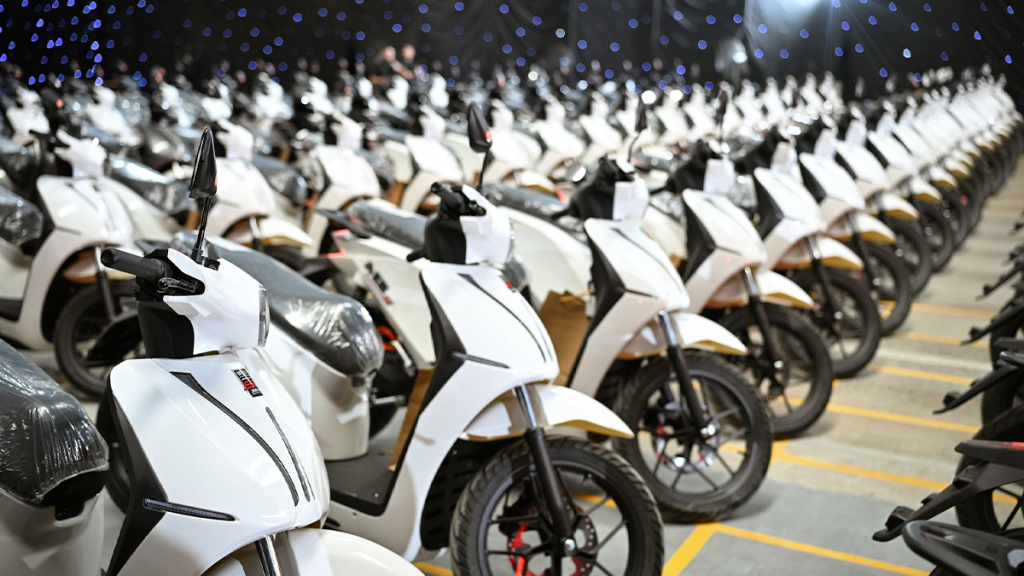
Dat Bike now sells its bikes across over 100 stores in Vietnam. / Photo credit: Dat Bike
The struggles of these firms have raised questions about whether the sector is only for deep-pocketed incumbents.
But a number of startups have stayed the course, with the help of a few incentivizing policies from the government and prudent use of their capital. Chang says Charge Asia has deployed about 10,000 bikes on the road, almost 10x the number of bikes it sold in 2023.
In Vietnam, electric motorbike adoption is now about 18%, according to Dat Bike CEO Son Nguyen. And his startup is cashing in. “I think EV bike adoption is hitting a point where nobody can stop it,” he says. “It’s like a snowball. By this year, I think it would hit 25%, maybe higher.”
Without sharing specifics, Dat Bike tells Tech in Asia that it has reached EBITDA profitability “from late 2025 until recent months.”
In Thailand, Sleek EV saw its revenue in 2024 jump 42% year on year to 90 million baht or about US$2.9 million despite slow adoption of electric motorbikes in the country.
All three players expect the recent increase in petroleum prices across the region – due to the US-Iran war – to drive more customers toward their bikes.
By and large, the survival of these startups isn’t thanks to luck. These firms slashed costs by building local supply chains, expanded reach through third-party dealer networks, and priced aggressively enough to compete with traditional bikes – proving the sector isn’t exclusively for the deep-pocketed.
Incentivized production
In Vietnam, Hanoi and Ho Chi Minh plan to gradually ban internal combustion engine (ICE) motorbikes in the next two years. The news has led to a mad buying rush of electric scooters.
Vietnamese EV giant VinFast said it sold more than 400,000 electric motorbikes in 2025, up by 400% year on year, making it the leading EV bike manufacturer in Vietnam, beating Japanese giants Yamaha and Honda.
While the Hanoi government has raised the possibility of providing a subsidy for purchasing EV motorbikes, consumers have made the switch even without it.
Dealerships for expansion
Operations remain “brutal”
Stay ahead in Asia’s tech landscape
This is premium content. Subscribe to read the full story.
As funding for EV startups wane, players get creative on how to stay in the market.
We know this is not ideal. ⌛ Sign up in 20 seconds. Cancel anytime.
Our subscriber community includes professionals from these companies:





Stay updated on the go with our mobile app.
Get latest insights with smoother, more personalized experience through TIA mobile app.