
Take a walk around a neighborhood in Indonesia, and chances are you’ll see many locally owned small businesses lining the streets, whether they’re hawking stylish local fashion or dishing up delicious kerupuk.
These micro, small and medium-sized businesses (MSMEs) are crucial to the Indonesian economy. From creating jobs to having the potential to alleviate poverty, Indonesian small businesses make up nearly 56% of business investment and 97% of domestic employment in the archipelago, driving the country’s economic growth.
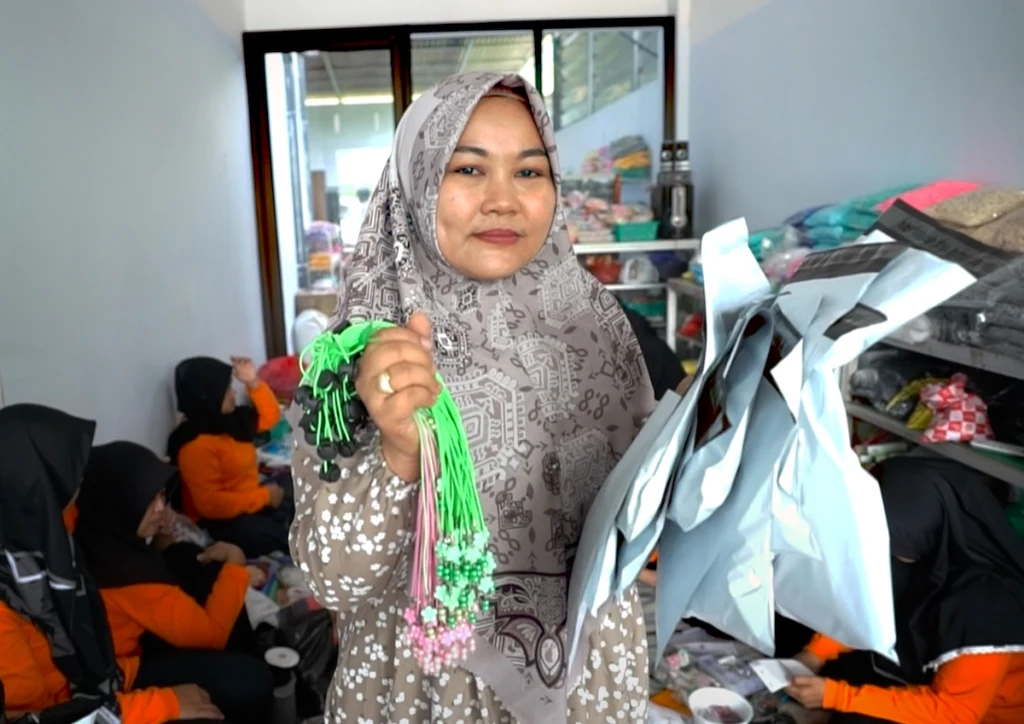
Photo credit: Shopee
These small businesses also have plenty of potential beyond the borders of their homeland. According to Ma’ruf Amin, vice president of Indonesia, in an interview with Okezone, the nation’s MSMEs contribute only 15% of its total exports, falling behind other countries such as Singapore and China, whose MSME exports account for 41% and 60% of their total exports.
“This means that there is more room for sellers and businesses [in Indonesia] to expand their reach to a global audience and compete internationally,” explains Radynal Nataprawira, head of public affairs at ecommerce major Shopee.
Indeed, the ability to export and bring goods and services abroad would help Indonesian MSMEs tap into a wider audience base, creating new opportunities for growth, revenue, and development.
However, this is far easier said than done.
Getting off the ground
For all the benefits that exports can offer, it is often an arduous task for small businesses. Many Indonesian MSMEs have reported difficulties, ranging from logistics challenges to navigating complex bureaucracy.
For Chitra Subyakto, the founder of Sejauh Mata Memandang (SMM), a slow-fashion textile label that uses natural materials and recycled fabric in its products, exporting and taking her brand overseas was challenging.
As a sustainable fashion business, Subyakto wanted to bring not just SMM’s products but also her mission to a wider pool of people, especially amid growing consumer awareness of the value of slow fashion.

Chitra Subyakto, founder of Sejauh Mata Memandang / Photo credit: Sejauh Mata Memandang
“We wanted to introduce the concept of Indonesian sustainable fashion to a global audience, which is something that hasn’t really been explored much before,” she says.
SMM started out by marketing its clothes overseas through its own website or via collaborations with acquaintances and business contacts in other countries. While the firm did have customers from abroad who were keen on its products, it faced several roadblocks on its journey to export.
“We faced administrative issues relating to licensing and regulations, as well as the lack of access to capital and business assistance, and the need for operational improvements,” explains Subyakto.
The firm faced long processing times in getting the necessary permits for exporting its products overseas and had trouble navigating the permit application process as well. It also struggled with high shipping and export costs due to the unpredictable number of orders it received on its website.
“Exporting in large quantities will be easier and cheaper than exporting in small quantities, but sales through SMM’s website were not stable, which made exporting in large quantities challenging,” Subyakto says.
In the face of this, Subyakto and her team decided to seek out alternative solutions to help address these challenges. They set up stores for SMM on ecommerce platforms such as Shopee, and turned to the firm’s Shopee Export Program for assistance.
From Indonesia to the world
The Shopee Export Program was developed to break down the barriers that merchants face when taking their products abroad. It enables Indonesian sellers to connect with customers across Asia and Latin America, in markets such as Singapore, Malaysia, and Brazil. The firm aims to offer sellers support across a variety of different areas, from helping them navigate the rules and guidelines around exporting to providing training and facilities to assist these small businesses promote themselves on a global stage.
SMM, for one, benefited significantly from Shopee’s assistance across all aspects of its export operations.
“The Shopee Export Program has really helped us take SMM to the next level,” says Subyakto. “It gave us easy access to a wider range of consumers and enabled us to create greater awareness around our products and mission.”
Specifically, the Shopee Export Program helped SMM improve its digital skills, developing the team’s understanding on how to use tools on Shopee’s platform to better promote products. The program also offered the firm access to an integrated logistics and payments system to easily fulfill orders and meet customer needs, as well as run specific marketing and promotional programs to help SMM’s reach a wider audience.

Photo credit: Sejauh Mata Memandang
“Through curated special collections such as unique Indonesian Product Collections, banner campaigns and product search features [on Shopee], MSMEs can widen their reach and bring well-loved Indonesian products to a global audience,” says Shopee’s Nataprawira. “SMM is a testament to how businesses can leverage Shopee to achieve success both at home and abroad.”
SMM also received assistance from a Shopee relations manager, who worked closely and consistently with Subyakto and her team to fine-tune operational, promotional, and overall business strategies to better transition into exporting.
This has streamlined the exporting process for SMM, as the firm was able to tap into Shopee’s warehousing, logistics, and payments infrastructure. It has successfully connected to customers in markets such as Singapore and Malaysia, bringing both its products and message to a bigger audience.
“Shopee has helped us stay up to date on consumer trends and supports us in using new solutions or tools available to help us further our business goals,” she shares. “We’re also thrilled that we have drummed up more awareness around the environmental issues we stand for – we are active in holding exhibitions related to climate change and environmental waste, as well as driving campaigns about sustainable fashion choices.”
Bringing more MSMEs to the global stage
SMM is just one of many firms Shopee has helped through its program. By bringing local MSMEs to the global stage, Shopee hopes to boost the quality of local products and enable Indonesian businesses to become competitive internationally, creating new opportunities for these companies and further stimulating the economy.
“A globally-competitive MSME scene also encourages entrepreneurship,” adds Nataprawira. “It paves the way for aspiring sellers and businesses to start their own businesses, grow with confidence, and contribute back to the local economy.”
According to Nataprawira, Shopee is committed to empowering MSMEs and helping them benefit from the digital economy, especially with the accelerated global digitalization in the wake of the Covid-19 pandemic.
“Ecommerce will continue to play a vital role in the future of MSMEs,” he says. “We want to continue our mission of helping more sellers and businesses start and scale with ease, setting them up for long-term success in the digital economy.”
Shopee is a leading ecommerce platform in Southeast Asia and Taiwan. Its Shopee Export Program aims to create the right ecosystem to help Indonesian MSMEs go global.
Learn more about the Shopee Indonesia Export Program here.
This content was produced by Tech in Asia Studios, which connects brands with Asia’s tech community. Learn more about partnering with Tech in Asia Studios.
Stay updated on the go with our mobile app.
Get latest insights with smoother, more personalized experience through TIA mobile app.
Recommended reads
 How financial infrastructure powers global startups
 SEA food delivery spending tops $16.3b in 2022: report
 Chinese fintech firm IceKredit gears up for SEA expansion
 4 misconceptions about growth that could hold your startup back
 Exclusive: RedDoorz breaks even in Indonesia, Philippines
 Market insights startup nets $1.5m seed money
 So you think you know startup growth
 How Singaporean SMEs can scale amid today’s uncertain global economy
 Lessons from the demise of two Chinese grocery delivery pioneers
 Tiger Global-backed Ula lays off 134 employees





Editing by Nathaniel Fetalvero and Arpit Nayak
(And yes, we’re serious about ethics and transparency. More information here.)