- Insights This article was written by a TIA community member. Insights pieces undergo the same rigorous editorial process that newsroom-produced articles have.
 Hans Tung · · 6 min read
China is a wild card in scooter-sharing, says Lime co-founder
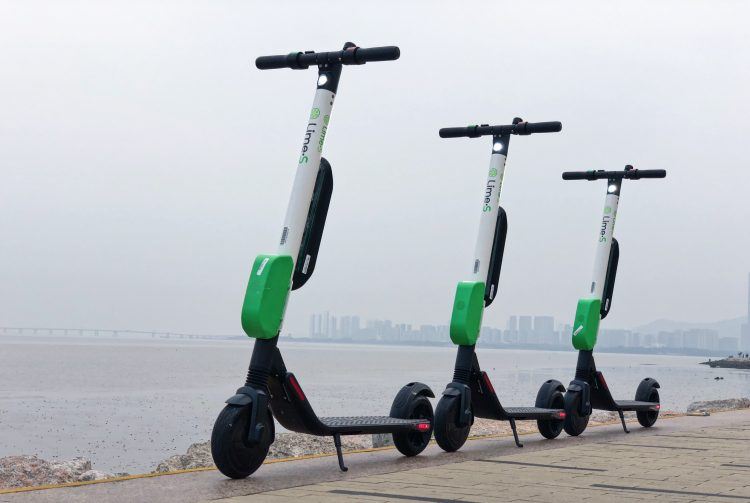
Photo credit: Lime
This article is part of Tech in Asia’s partnership with GGV Capital’s 996, a podcast about tech and entrepreneurship in China hosted by Hans Tung and Zara Zhang. This is heavily revised from the original show transcripts. For the full interview, go here. You can also listen to the 996 Podcast by searching “996” in any podcast app.
Disclosure: GGV Capital has invested in Lime.
In this episode, we interview Toby Sun, co-founder of Lime. A few months ago, we had the other co-founder, Brad Bao, on the show back when the company was still called LimeBike. At that time, the company’s operation included pedal bikes only, but a lot has changed since then.
LimeBike has expanded into 20 markets in four countries, changed its name to Lime, added other transportation modes including e-bikes and e-scooters, and announced a US$335 million funding round led by Google Ventures, with participation from Uber. Lime is currently working with Uber to co-brand its scooters and make them available on the Uber app.
Here, Sun discusses scooter-sharing in the US and China and how he sees things playing out for Lime in the future.
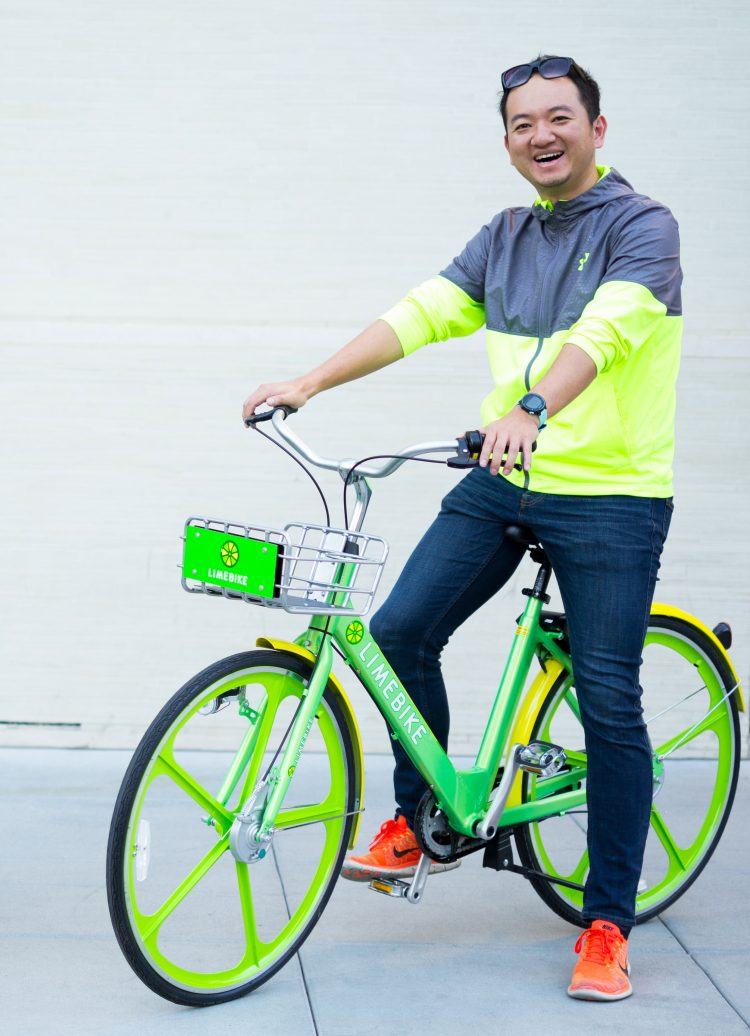
Toby Sun, CEO and co-founder of Lime / Photo credit: Lime
Tell us about your background.
I grew up in China and I started my career as a marketing guy at PepsiCo for about six years. I think that consumer product training was very helpful, being able to work on operations and product innovation.
After I came to the US, finishing my MBA, I spent a little bit of time in consulting, which got me a lot of exposure to different industries. I also spent four years as a VC before starting Lime.
At Lime, we now have close to 300 employees around the globe. About one-fourth or one-fifth is in China.
What prompted you guys to pivot to e-bikes and e-scooters?
If you look at our original plan from day one, you’d see that we never positioned the company as a bike-sharing-only company. We started with bikes and named the company LimeBike just to be more focused.
After learning about the potential of electric products from our user research, we started our innovation on e-bikes in Q2 2017. In Q3, we started looking into scooter-sharing and figured out the right market and product mix.
How did the cities react to scooters vs bikes?
There were actually differences. The cities are familiar with bike-sharing; people know how it works. We just need to educate them on how dockless bikes work. But scooters are a new thing for them, so it requires a little bit more education.
What makes scooters work well in the US? How do you think scooter-sharing will perform in China?
What are your thoughts on some Chinese bike-sharing companies like Mobike and Ofo that have expanded to the US?
What do you think of the competition presented by scooter-sharing company Bird? Do you think it will be like Uber vs Lyft?
How do you see your partnership with Uber playing out?
Do you see Lime becoming a super app of its own? What other verticals can you expand to?
As you expand beyond the US, what are the things you look out for and how do you make sure to localize the product?
What is your advice for aspiring entrepreneurs?





Stay updated on the go with our mobile app.
Get latest insights with smoother, more personalized experience through TIA mobile app.