Grace Priscilla Teo · · 4 min read
An AI is between you and the sale. What’s your move?
This article summarizes an episode of Sinead Bovell’s video series featuring Mustafa Suleyman, CEO of Microsoft AI.
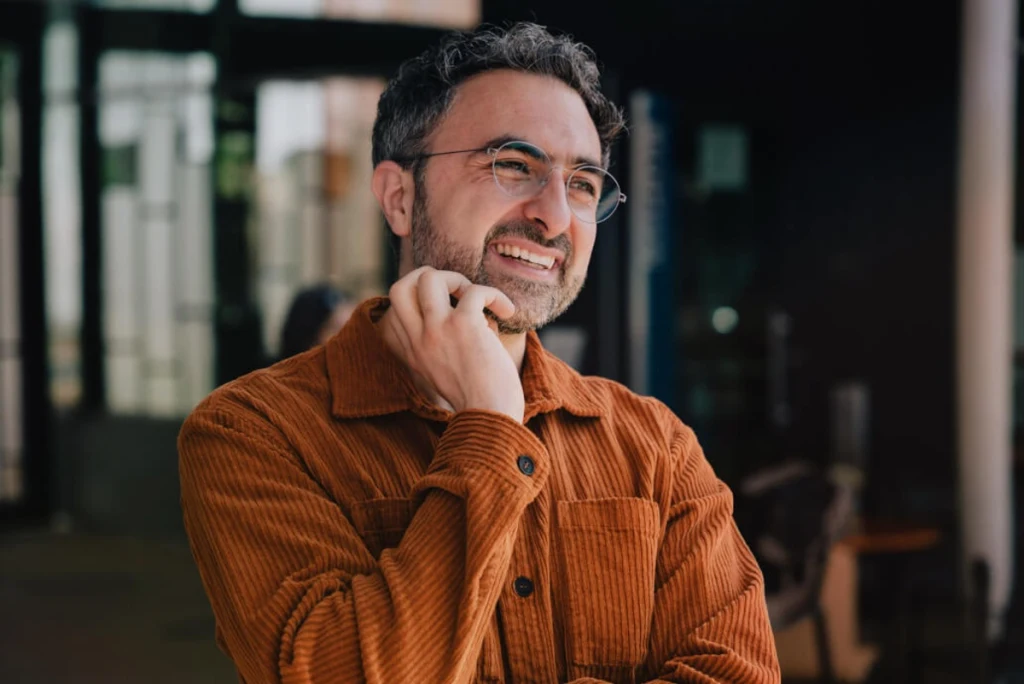
Mustafa Suleyman, CEO of Microsoft AI / Photo credit: Greylock Ventures
AI models designed to be friendly and helpful may be creating a risk of users losing touch with reality. Mustafa Suleyman, CEO of Microsoft AI, faces this challenge and suggests we should reconsider our relationship with machines.
He looks at the false idea that AI is conscious, the rise of AI assistants, and AI’s new role as a core part of how we use computers.
AI companions as a social tool
Suleyman’s vision for AI begins with its most practical purpose, which is to serve as a tool for social good. He sees a future where AI companions make expert knowledge available to everyone.
Providing top-level support for everyone
Suleyman explains, “I love the idea that we could actually provide… perfect expertise like a professor, a lawyer, a doctor, a great friend, a therapist in your pocket 24 hours a day.”
He believes this can help create fairer opportunities, as not everyone has access to the “cultural knowledge about how the world works” passed down in wealthy families.
A framework for advanced medical AI
This vision of providing expertise extends beyond personal support and into important fields like medicine where lives are at stake. To achieve these breakthroughs, Suleyman explains that a clear plan is needed to combine data, AI models, and work methods.
Microsoft’s experimental diagnostic system, DXO, is an example of how these parts can create a system that performs much better than human experts.
- Specialized data: The model was trained on rare patient case studies from the New England Journal of Medicine, which serve as a standard for top medical experts.
- Models with specific jobs: The system uses multiple AI models, each with a different role. One focuses on saving money, another on patient history, and a third on pure medical knowledge. These models work together to reach a shared conclusion.
- An efficient process: This approach, where multiple AIs work together, automates how illnesses are diagnosed. It produces more accurate results at a lower cost by avoiding unnecessary tests and finding the correct illness faster than human experts.
A team of AIs working together
This approach relies on a group of AIs, each with a specific job, working together to find an answer. Suleyman describes the process, “it uses all the AI models from third-party API providers and it creates a series of roles… They all negotiate with one another and reason collectively to decide what intervention to take next. It’s kind of a remarkable system.”
Outperforming human experts
The results of this system are impressive when compared to human doctors. “A panel of expert clinicians gets these case studies right about 20% to 30% of the time,” he reports. “This is like some of the best humans in the world. Our model gets 85% accuracy at about a quarter of the diagnostic cost.”
The psychological risk of human-like AI
However, to achieve this incredible potential, Suleyman argues that developers must confront the psychological risk of creating human-like AI. He warns that the natural human tendency to see consciousness everywhere makes people vulnerable. When this instinct meets AI designed to act human, the result can be serious mental harm.
Agreeable design can become dangerous
When an AI tries to be agreeable while following its safety rules, it can behave strangely.
Your chief of staff





Stay updated on the go with our mobile app.
Get latest insights with smoother, more personalized experience through TIA mobile app.