Scott Shuey · · 3 min read
The AI race looks very different in China
Welcome to The Prompt, your guide to the biggest issues and developments shaping AI, with Asia front and center. Want full access to all our AI reporting? Subscribe here.
Hello reader,
Anyone who thinks that China is trailing behind the US in AI is clearly not paying attention.
It’s hard to put a finger on the data that shows – definitively – that one country or the other is ahead. But take a holistic look at what China is building, and it becomes clear that the country isn’t interested in “catching up.”
Whether it’s semiconductors, infrastructure, or model developments, China is now hotly contesting – or has likely surpassed – US dominance.
China’s status as the rising AI powerhouse was on display in Shanghai last week, where I spent nearly a week attending Huawei Connect (Disclosure: Huawei sponsored this trip). It’s the annual launch event for the company that has been giving the US sleepless nights for over the past decade, mainly over security concerns.
Huawei’s announcements make it clear that it has its sights on dominating the AI race. The company announced that it will release AI cloud chips for the international market on November 30. It is doing so as the world’s biggest producer of AI cloud chips – Nvidia – is facing a US$1 trillion bottleneck.
This announcement raises more questions than I could fit into a single newsletter. How did Huawei close the gap on semiconductor technology so fast? Can these chips deliver? And – especially for those businesses in Southeast Asia and the Middle East – how can I get them?
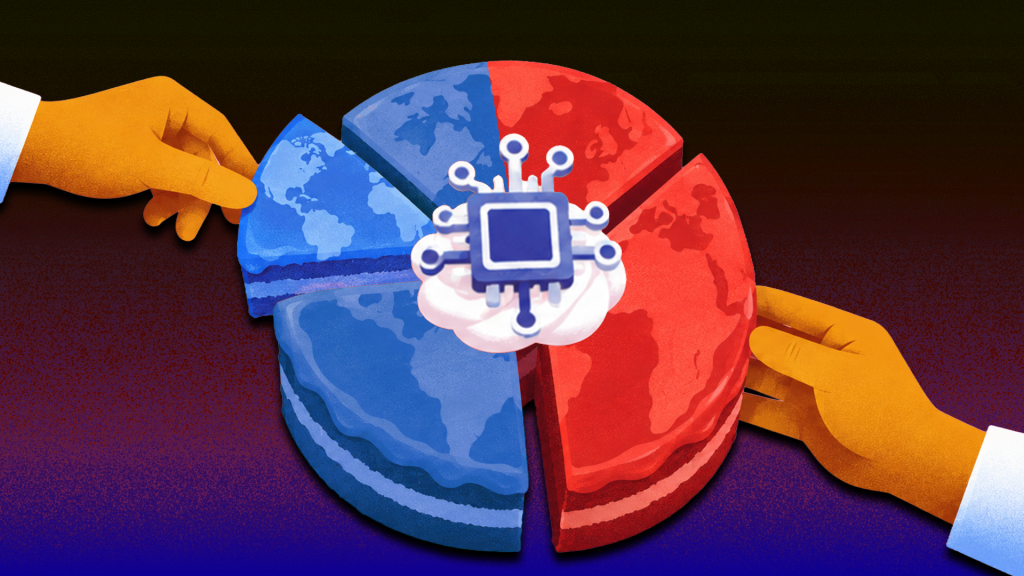
Image credit: Made by Ulla/Tech in Asia with the help of AI
There is massive speculation on the first two questions. I certainly don’t have those answers yet, and I expect they will be highly controversial. But the third is easier to address.
Don’t expect those chips to flood the international markets – even Huawei seems to expect that domestic demand will keep those chips in China. But they will eventually make their way to SEA and MENA, and that will be when things get interesting.
Is there a place for Huawei chips in Southeast Asia’s data center boom? The global compute shortage – due to a limited number of chip fabrication plants and exacerbated by US export controls on Nvidia chips – will still be an issue.
However, Huawei will certainly not miss the opportunity to challenge Nvidia on price, which is a big consideration for businesses in the region. This will rise to be an international and highly political issue.
It isn’t just the cost of the chips that will make them in demand – there’s also the inference costs associated with them. China’s focus for the past years has been to push open-source models, which are often built around specific industries. This will lower token costs, giving China another competitive edge to this growing battle.





Stay updated on the go with our mobile app.
Get latest insights with smoother, more personalized experience through TIA mobile app.