- Premium Content It takes our newsroom weeks - if not months - to investigate and produce stories for our premium content. You can’t find them anywhere else.
 Deepti Sri · · 3 min read
AI is not an artist, says court
The world of art and copyright law is undergoing a transformation as AI takes center stage in the creative space.
As artists increasingly turn to generative AI tools like Midjourney and Dall-E to enhance their works, a new conversation about copyright protection and AI-generated content is emerging.
A recent court ruling has ignited a heated debate over who owns art produced by AI and whether it deserves the same copyright protection as works created by humans. A US federal judge ruled that artwork solely created by AI, without any direct human involvement, is not eligible for copyright protection.
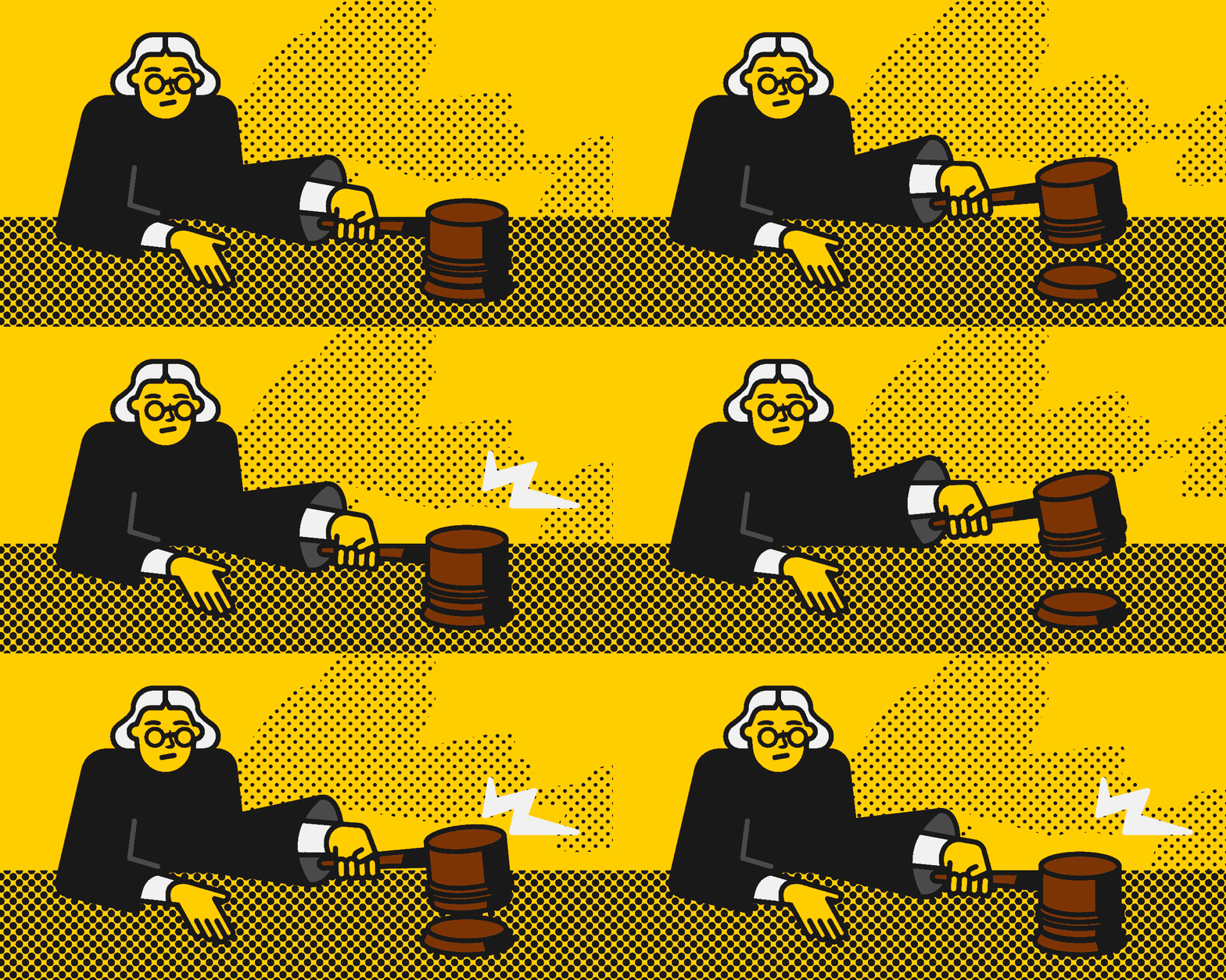
Image credit: Timmy Loen
This decision stemmed from a lawsuit involving computer scientist Stephen Thaler’s AI system named Dabus and an artwork titled A Recent Entrance into Paradise.
Thaler’s attempts to secure copyright for the artwork, listing Dabus as the autonomous creator, were repeatedly denied by the US Copyright Office. The court upheld the notion that copyright protection is designed to safeguard the contributions of human authors.
This is also not the first time such a ruling has come up.
In February, the US Copyright Office made a ruling against granting copyright protection to artwork produced using Midjourney. The case revolved around a graphic novel called Zarya of the Dawn, authored by Kris Kashtanova.
The office stated that the AI-generated images were “not the product of human authorship” and therefore not eligible for copyright protection. While parts of the novel written, selected, and arranged by Kashtanova received copyright protection, the AI-generated images did not.
A surge of cases are challenging the legality of images and texts created using AI. Comedian Sarah Silverman is suing OpenAI and Meta for using her writing without permission to train algorithms.
Meanwhile, GitHub and Stability AI face lawsuits alleging unauthorized scraping of artists’ content for AI products.
Traditional copyright law hinges on the concept of human authorship. The fundamental question in AI-generated content is: Who owns the copyright when the creator is an algorithm, not a human? This debate raises legal, ethical, and philosophical questions about the nature of creativity and originality.
Copyright laws, designed to protect the creations of human minds, don’t easily apply to content produced solely by AI. The law typically extends to original works that involve human creativity, skill, and effort.
Tech analyst Benedict Evans ignited a discussion on X (formerly know as Twitter) by posing a thought-provoking question: “If you put all the world’s knowledge into an AI model and use it to make something new, who owns that and who gets paid? This is a completely new problem that we’ve been arguing about for 500 years.”
Stay ahead in Asia’s tech landscape
This is premium content. Subscribe to read the full story.
A landmark judgement by a US court that AI-generated art can’t be protected by copyright has ignited a debate on the ownership of AI work.
We know this is not ideal. ⌛ Sign up in 20 seconds. Cancel anytime.
Our subscriber community includes professionals from these companies:





Stay updated on the go with our mobile app.
Get latest insights with smoother, more personalized experience through TIA mobile app.