- Premium Content It takes our newsroom weeks - if not months - to investigate and produce stories for our premium content. You can’t find them anywhere else.
 Scott Shuey · · 6 min read
Malaysia’s thirst for AI data centers could leave it high and dry
Malaysia’s data center boom is facing a threat that could push the country into a water crisis while increasing its use of dirty energy, such as coal.
Since opening its first data center in 2000, Malaysia’s capacity skyrocketed by 3.6x between 2022 and 2024. This surge followed OpenAI’s launch of ChatGPT in November 2022.
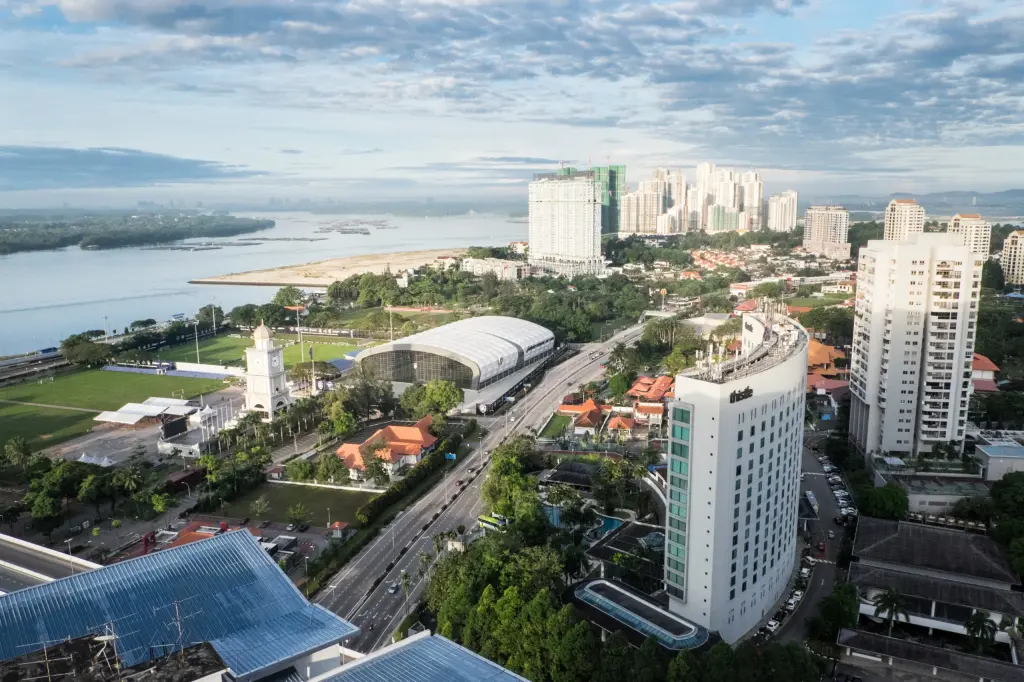
Aerial view of Johor Bahru City centre/ Photo credit: Shutterstock
As the demand for AI cloud computing began to rise, US companies started to look for inexpensive land, excess power capacity, and good tax incentives. The country provided all three, making it the second-largest data center hub in Southeast Asia in 2023, second only to Singapore.
Overall, Malaysia has attracted US$31.8 billion in investments for data centers in the first 10 months of 2024 – 3x more than a year earlier. These investments are projected to create over 41,000 jobs.
But this boom has sparked fears that Malaysia is quickly running out of an important resource needed by both its people and data centers: clean water.
It may seem odd that a country that receives over 3 meters of rain annually would experience water issues. But in reality, most of the water in it is unsuitable for data centers as untreated water can shorten equipment lifespan.
Malaysia is already an unusual place for a data center boom, given its hot climate. These centers are simply large buildings filled with heat-producing servers that require water for constant cooling.
Almost all data centers use heat exchangers that bring in cool water to absorb the server’s excess heat. According to the Washington Post, a 100-word email written by an AI chatbot using GPT-4 consumes over half a liter of water.
Water everywhere and not a drop to drink?
The Malaysian government needs to conduct an environmental impact assessment on any future data center projects or risk a water crisis, Charles Santiago, a former member of the country’s parliament and chairman of the National Water Services Commission, tells Tech in Asia. He also suggests that any such assessment should cover a period of 10 to 15 years.
“You can’t have a situation where there’s water for data centers and not for people. This will lead to problems and confrontations,” Santiago explains.
He shares that the government is looking at all possibilities to ensure that there’s sufficient electricity and water for data center expansions. A new tax for AI companies is also being considered.
Yet, Santiago says the country needs to expand how it reclaims water, either from rain or desalination of seawater.
The last thing Malaysia should do is use its supply of drinking water for future data centers, he says, adding that the country currently has abundant water to meet its needs.
Fastest growing data center market in SEA
Dirty energy making a comeback
Out of the frying pan…
Stay ahead in Asia’s tech landscape
This is premium content. Subscribe to read the full story.
The country’s data center boom due to AI could put a strain on its water resources, which could disrupt its dominance.
We know this is not ideal. ⌛ Sign up in 20 seconds. Cancel anytime.
Our subscriber community includes professionals from these companies:





Stay updated on the go with our mobile app.
Get latest insights with smoother, more personalized experience through TIA mobile app.