- Premium Content It takes our newsroom weeks - if not months - to investigate and produce stories for our premium content. You can’t find them anywhere else.
 Putra Muskita · · 7 min read
As agritech startups look to unlock Indonesia’s farming potential, one startup is leading the pack
In 2017, agriculture contributed more than US$130 billion to Indonesia’s gross domestic product, but comparatively, the agritech scene has been quiet.
That stands in contrast to markets like China – in 2017, tech giants Baidu, Alibaba, and Tencent collectively invested more than US$700 million in the space, while Meicai, a startup that connects vegetable farmers with restaurants, is reportedly on the verge of becoming a decacorn.
Granted, compared to ecommerce or fintech, agritech may not be the sexiest space. But there are signs that it may be changing.
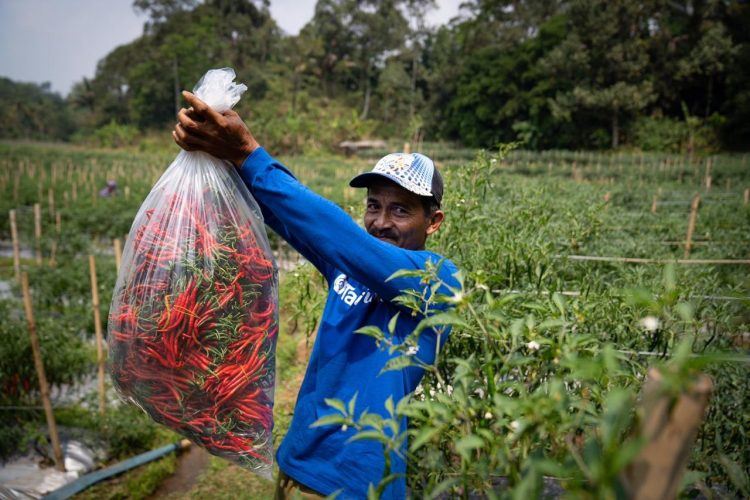
Photo credit: TaniGroup
“The image of agriculture is of poor and uneducated farmers – a very inefficient sector with low penetration of technology and communications,” says Pamitra Wineka, co-founder and president of agritech startup TaniGroup. “But people forget there’s a lot of progress going on, too. It was easier to catch the fintech wave, but [investors] will get to agritech soon.”
TaniGroup, in particular, has become somewhat of a breakout in the space. Based on public data, it is the only one among similar firms to have progressed to the series A stage, with a US$10 million round led by Singapore’s Openspace Ventures.
Other players in the industry include Indonesian marketplaces Sayurbox, which has gained interest from the likes of Tokopedia, and Limakilo, which was recently acquired by fellow East Ventures portfolio company Warung Pintar.
Still, challenges remain. The agritech space is a long-term play that may not suit every investor’s appetite, and the government’s active involvement in the space – whether through policymaking or subsidies – brings both benefits and drawbacks.
Making an ecosystem play
Indonesia’s agritech startups typically aim to solve problems in access to market, financing, or both. Sayurbox and Limakilo operate marketplaces where consumers can purchase produce directly from smallholder farmers – individuals or families that run small-scale farms, as opposed to big corporate plantations – thus cutting out inefficient middlemen. IGrow, which raised seed funding from 500 Startups and East Ventures in 2016, focuses on financing through a peer-to-peer model that matches producers with individual investors.
TaniGroup is among the players that offer both market access and financing. Another that does this is Eragano, an East Ventures portfolio company.
TaniGroup operates TaniHub (its marketplace business) and its financing arm TaniFund. Established in 2016, TaniHub claims to have more than 35,000 farmers on its platform, while TaniFund has disbursed over US$6 million in loans.
TaniHub charges a commission out of every sale – the company doesn’t disclose its rates, but Wineka says producers earn an overall increase in their income by more than 50%. TaniFund, on the other hand, implements a profit-sharing model. While the percentages vary, the most common type is 40% for the producer, 40% for the investors, and 20% as commission for TaniFund.
Agriculture has traditionally been a major sector in the Indonesian economy. Aside from being interwoven in the country’s culture, it has also contributed 13% to 15% to the country’s economy in the past 10 years and is a key beneficiary of government subsidies.
But it has also been plagued by inefficiencies, some of which are a result of government-directed initiatives. As an example, Indonesia imported over 2.2 million tons of rice in 2018 despite a domestic surplus of 2.9 million tons. Just last month, the government announced that it was disposing of 20,000 tons of rice because the stock had gone bad from being stored too long in the warehouse.
The government’s role
Stay ahead in Asia’s tech landscape
This is premium content. Subscribe to read the full story.
TaniGroup and its peers look to level up the country’s agriculture sector, which contributes over US$100 billion to Indonesia’s GDP. Still, challenges remain.
We know this is not ideal. ⌛ Sign up in 20 seconds. Cancel anytime.
Our subscriber community includes professionals from these companies:





Stay updated on the go with our mobile app.
Get latest insights with smoother, more personalized experience through TIA mobile app.