Benjamin Cher · · 4 min read
Surging demand from Asian startups tests OpenAI’s capacity
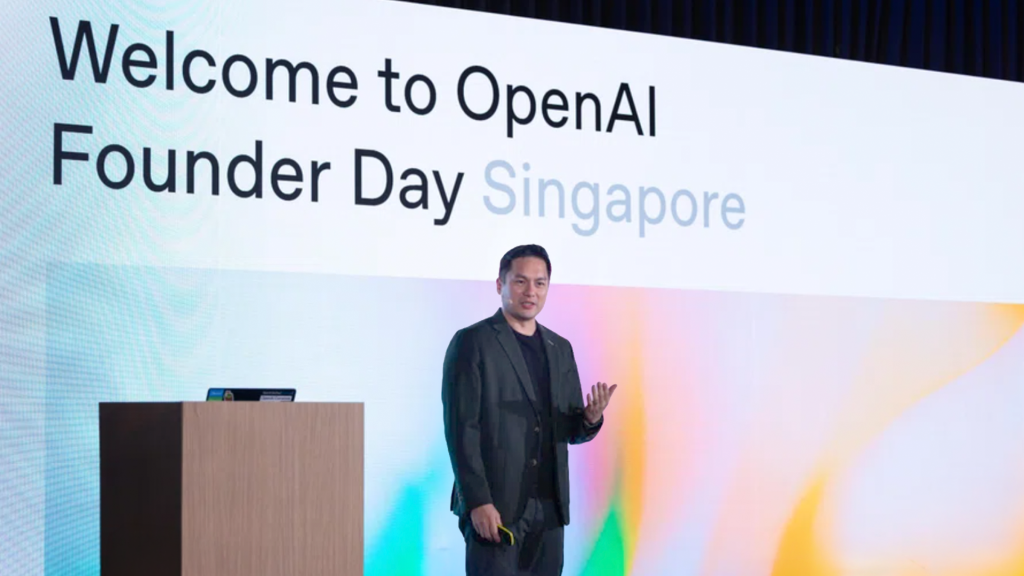
Thomas Jeng, head of startups, Asia Pacific at OpenAI / Photo credit: OpenAI
As companies race to adopt AI, managing demand from startups across Asia Pacific has become the biggest challenge for Thomas Jeng, OpenAI’s head of startups for the region.
“We have so much demand that a lot of my day is spent triaging and re-prioritizing,” he tells The Business Times. “I stepped away from work for a week, and there were… 800 emails in my inbox.”
Jeng also notes that while AI can help with sifting through the emails, human judgement is still needed at the end of the day.
He says this at a time when OpenAI is looking to grow – and his own team of 10 is expanding.
In May, the company inked a partnership with the Singaporean government to commit more than $300 million (US$234 million) in the city-state, including over 200 roles, in the next few years.
Instead of relying on sales pitches or branding, Jeng prefers to let the tech speak for itself. His team focuses on showing its model’s performance directly to startups to drive engagement.
“What we do is spend time with them, make sure they have access to the latest models, run side-by-side comparisons, and when that happens, they end up adopting our models,” he shares.
That process has helped OpenAI get more customers in recent months, according to Jeng. Although he declined to disclose figures, Singapore has emerged as a top-five market globally for its coding agent Codex.
“Adoption has grown something like 17x since we’ve released Codex toward the end of last year,” Jeng adds.
Creating an ecosystem
Some of OpenAI’s engagement with startups comes through VC firms and their portfolio companies.
The firm also runs workshops and community events, including technical and roadmap discussions on AI models. Participants are able to spend some time using the models OpenAI has.
“I personally take pride in making sure we… create an ecosystem; it’s not about OpenAI at the center, but rather, we are an enabling layer for startups to go out and build,” Jeng says.
OpenAI supports startups’ use of their AI models in several ways. The most scalable one is the credits program, which distributes credits via VCs and accelerator programs.
Availability over competition





Stay updated on the go with our mobile app.
Get latest insights with smoother, more personalized experience through TIA mobile app.