 Paul Bischoff · · 4 min read
Adblock Plus wants to rid the internet of bad ads, has its work cut out for it in Asia
144 million web browsers have some sort of advertisement blocking software installed, according to PageFair (PDF), and Adblock Plus makes up nearly one third of them. But of its nearly 60 million monthly active users worldwide, ABP only has about 6.5 million in Asia. In its home country of Germany alone, it has 8 million.
But Eyeo, the startup behind ABP, has its eyes set on the entire world, and Asia presents a huge opportunity for growth. It’s especially interested in China, not just because it has the largest population, but because it’s the home country of the company’s regional manager, Vicky Yu.
"Tolerance of ads is actually different in China compared to Europe," Yu explains, saying Chinese users are "far less apt to be annoyed" by display ads on the web.
That makes convincing Chinese netizens that they need an ad blocker difficult. Yu polled Chinese forum users and found that many simply ignore ads, and wouldn’t take the extra steps to block them, even if it’s free to do so. The border between ads, promotions, and content can also be quite confusing in China.
But in a market of over 600 million internet users, there’s bound to be a few who don’t like ads. A few homegrown rivals to ABP have sprung up in China, and the number of overall users is growing as awareness goes up.
What’s in a name
"As an ad blocker, we can’t really market our product in the traditional way," says Ben Williams, ABP’s public relations manager. Instead, the startup is active on social media and forums, where it’s quick to answer questions and concerns of users. Williams says this grassroots strategy combined with what he says is a higher-grade product will ultimately win over users, but ABP will likely run into the same problem as it does everywhere in the world.
"Normal users won’t recognize the difference between one ad blocker and another," he says. Branding and standing out is a major challenge for ABP. Its biggest competitor shares an all-too-similar name: AdBlock. Not only that, they both use red octagonal stop signs in their icons, making them nearly indistinguishable to a user who isn’t paying close attention (I admittedly assumed Adblock Plus was just a premium version of AdBlock when I began this interview).
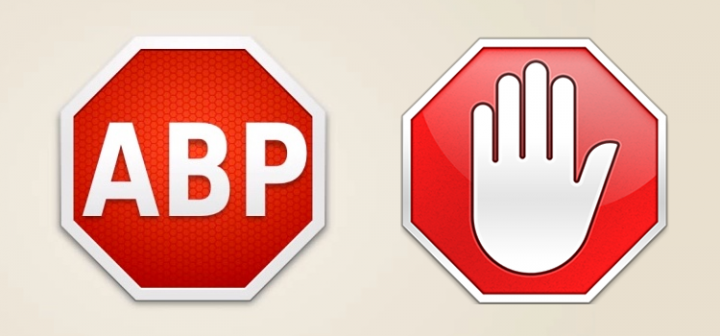
Logos for Adblock Plus (left) versus AdBlock (right)
In fact, they are two entirely different companies. The consensus among most experts is that ABP is the superior product due to its open source nature and more transparent privacy policy. ABP also came out prior to AdBlock, but can’t file a trademark lawsuit because the name is too descriptive to claim.
In China, however, this is less of a problem. Yu has opted to brand the product as "ABP" in lieu of its full name, making it both distinctive and easier to remember for non-English speakers.
There are still local competitors, but Yu calls them "incomplete" – meaning their filter lists might not be up to date and other features like blocking social media buttons and privacy protection aren’t included. Last year, ABP switched from a volunteer-curated filter list to a professionally-maintained list to improve user experience and screen out more ads. The startup will have to trust in the discretion of users to make the better choice.





Stay updated on the go with our mobile app.
Get latest insights with smoother, more personalized experience through TIA mobile app.









