- Premium Content It takes our newsroom weeks - if not months - to investigate and produce stories for our premium content. You can’t find them anywhere else.
 Melissa Goh · · 10 min read
A new accelerator’s pro-founder solution to investor ‘bad behavior’
For Mikaal Abdulla, founder of Hong Kong-based personal finance startup 8 Securities, raising venture capital can be “miserable,” no thanks to flaky investors who disappear after signing term sheets or indiscreet backers who share confidential data with competitors, just to name a few.
“It’s a seemingly benign characteristic that seems to run deep in so many VCs in Asia. That characteristic is a lack of empathy. Empathy deficiency is what really makes Asia’s venture capitalists special… and not in a good way,” wrote Abdulla, whose firm was acquired by US-based Social Finance (SoFi) in April 2020.
Abdulla says he has raised a total of US$70 million in the past decade and has been in “at least 150 investor meetings.”
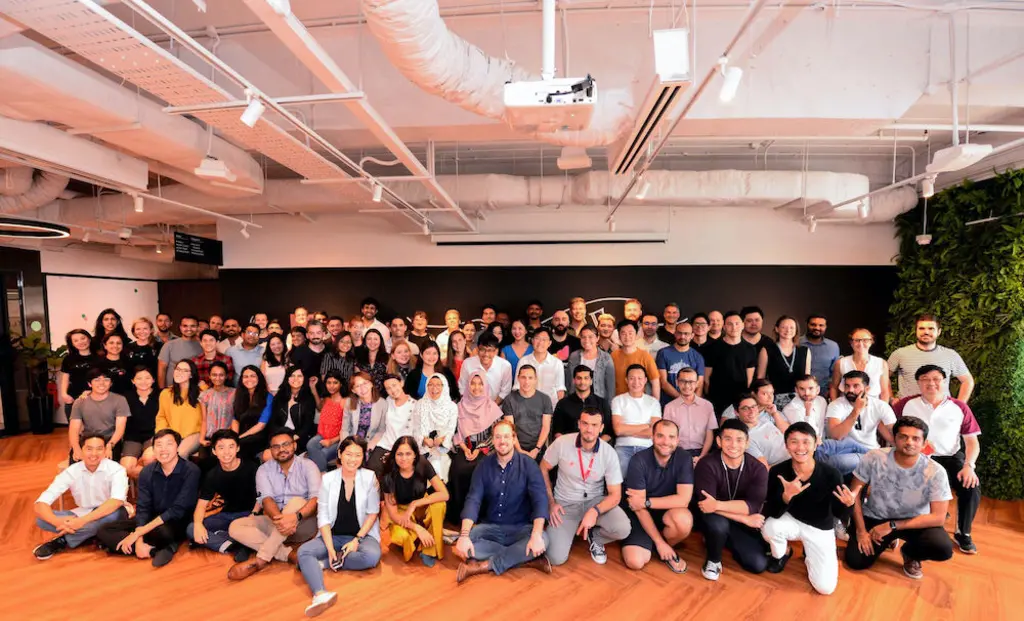
Antler Singapore’s second cohort / Photo credit: Antler
Asia’s flourishing tech scene has drawn an influx of venture builders, accelerators, and VC firms to the region, but between the numerous accelerators that have folded and the proliferation of new ones, their success has been called into question.
Conversations with founders reveal an undertone of unhappiness about how the balance of power is often tilted in favor of investors. Many acknowledge – and even accept – that between accelerators, investors, and entrepreneurs, a misalignment of incentives is a given.
Adding to that, a lot of investor advisors are former management consultants or banking and finance professionals who haven’t established startups before. Their lack of experience has placed startups at the receiving end of unfavorable deal terms and poor advice.
To change that status quo, a trio of former founders set up Iterative, an accelerator designed to be operator-led and founder-friendly.
A pro-founder approach
Iterative is finalizing its first cohort of nine startups, says managing partner Hsu Ken Ooi, who started the company with Brian Ma and his brother Hsu Han Ooi.
The three serial entrepreneurs established machine learning company Decide, which was acquired by Ebay in 2013. Divvy Homes, a home ownership startup that Ma co-founded, recently raised US$43 million from investors including GIC, Singapore’s sovereign wealth fund.
It’s hard to empathize with the founders you’re working with if you’ve never been in their shoes.
Iterative is modeled after the principles of California-based Y Combinator (YC)’s principles – the golden standard for startup accelerators, as far as Hsu Ken is concerned.
This includes a large, active alumni network of founders helping other founders and deals structured to benefit startups as well as pro-founder policies such as an internal blacklist and a review system of past and existing investors who are screened by other YC founders.
Effectively, this precludes investors with a poor track record from working with other YC startups in future. “There are specific rules. If you have a term sheet and [the investors] don’t follow through, they get blacklisted and [can] never invest in a YC company again,” Hsu Ken says.
A lonely road
Are program fees necessary?
A good or bad deal?
A well-trodden path
Stay ahead in Asia’s tech landscape
This is premium content. Subscribe to read the full story.
Some founders in Southeast Asia say that many investors in the region lack empathy and experience, creating a host of hurdles that complicate their startup journey.
We know this is not ideal. ⌛ Sign up in 20 seconds. Cancel anytime.
Our subscriber community includes professionals from these companies:





Stay updated on the go with our mobile app.
Get latest insights with smoother, more personalized experience through TIA mobile app.








📅 Upcoming Events
22 October 2026
Payoneer x CSPN Summit 2026