- Premium Content It takes our newsroom weeks - if not months - to investigate and produce stories for our premium content. You can’t find them anywhere else.
 Nikki Natividad · · 7 min read
Are Malaysia’s startup efforts finally paying off?
“When is the best time to invest in a unicorn?” Thomas Tsao, co-founder of Shanghai-based venture capital firm Gobi Partners, asks in an interview with Tech in Asia. He answers his own question: “five years ago.”
That’s exactly how much time has passed since Gobi Partners invested in Malaysia-based used-car marketplace Carsome’s series A fundraise.
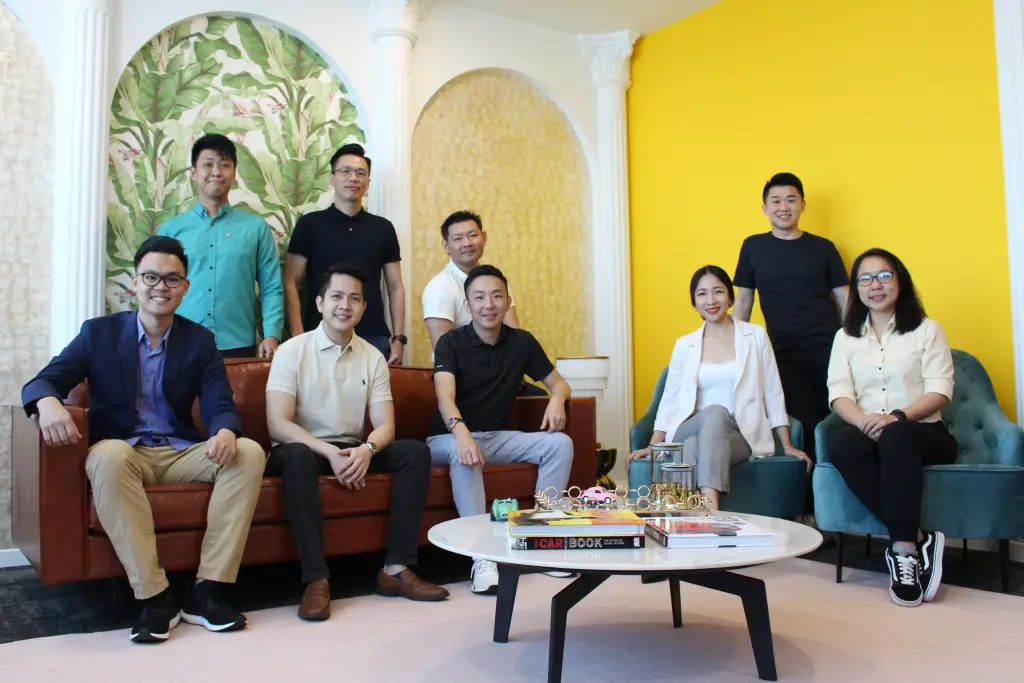
CEO and founder Eric Cheng (center) with the Carsome team. / Photo credit: Carsome
At the time, the country’s tech startup ecosystem left much to be desired: Among other issues, it was recovering from the loss of super app Grab, which had moved its headquarters to Singapore in 2014 after reportedly struggling to raise funds in Malaysia.
Still, Gobi Partners took a shot on the relatively young Carsome, and it paid off. In January 2021, the latter became Malaysia’s first tech startup unicorn since Grab.
Though the Malaysian government’s efforts to spur the nation’s startup ecosystem have copped criticism for bearing little fruit, Carsome’s ascent to unicorn status may signal a new chapter for the Southeast Asian country. Still, its ecosystem may need even more changes to see sustained success.
A gem that needs more polishing
Victor Chua, managing partner of Vynn Capita and former Malaysia Venture Capital Management (MAVCAP) council member, calls Malaysia a country of “undiscovered gems.”
The country has talents who can run and scale businesses, advanced infrastructure on par with Singapore, and is the world’s leading Islamic economy, which gives it easier access to other high-growth markets such as Indonesia. The Islamic digital economy is one of the “biggest untapped opportunities in the world,” Gobi Partners’ Tsao says.
The Malaysian government has been pushing the startup agenda since the early 2000s when it set up MAVCAP, the country’s largest venture capital fund, and Cradle Fund, a grant-giving agency focused on early-stage tech startups.
Later, it set up MaGIC, the country’s answer to Silicon Valley, and Malaysia Digital Economy Corporation (MDEC), a dedicated government body to lead its digital economy.

The Malaysian Global Innovation and Creativity Centre (MaGIC) / Photo credit: Jason Lee
These initiatives sound great on paper but could not keep Grab from moving its headquarters out of the country.
Experts say Malaysian companies are leaving in search of greater market accessibility, a wider variety of funding options, and a high-quality talent pool.
Funding gap no more?
Reaping the fruits of the harvest
All eyes on Malaysia
Stay ahead in Asia’s tech landscape
This is premium content. Subscribe to read the full story.
After years of playing catch-up with Singapore and Indonesia in the startup race, Malaysia may finally be ready to emerge from the shadows.
We know this is not ideal. ⌛ Sign up in 20 seconds. Cancel anytime.
Our subscriber community includes professionals from these companies:





Stay updated on the go with our mobile app.
Get latest insights with smoother, more personalized experience through TIA mobile app.