Paul Bischoff · · 4 min read
What Hong Kong’s new visa rule means for China’s grey market iPhones
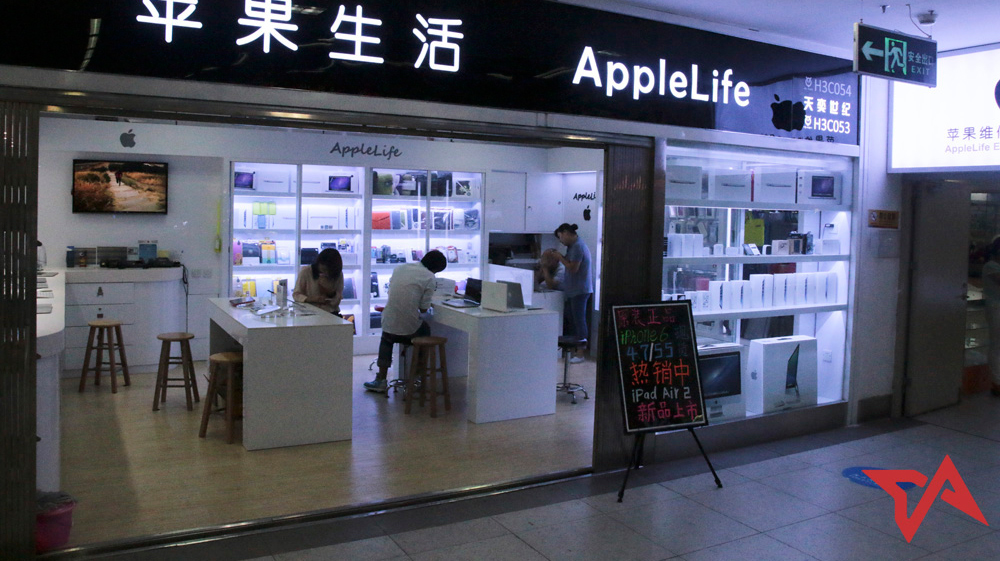
A fake Apple store in Shenzhen.
A new law announced today scraps unlimited-entry visas for residents of Shenzhen visiting Hong Kong, according to the BBC. Shenzhen residents are now only allowed to visit Hong Kong once per week. The implications of that seemingly simple law are broad, and it will have a large impact on one product that matters to Tech in Asia readers: the iPhone.
The border between the mainland boomtown of Shenzhen and the not-quite-part-of-China Hong Kong is the busiest land border crossing in the world. Chinese mainlanders made 47 million visits last year, many of them from Shenzhen. Grey market importing from Hong Kong to Shenzhen has become an industry in itself, with hundreds and even thousands of these "visitors" from Shenzhen buying up stock in Hong Kong and trucking it back over the border on foot, every day. The practice has even earned its own colloquialism, goudai, which means to buy and bring back.
The reason? Taxes, mainly. Taxes and tariffs on imported items are much lower and in some cases nonexistent in Hong Kong. Among the most popular items are baby formula, luxury fashion items, and electronics – most notably, iPhones.
Not only are iPhones cheaper in Hong Kong, the latest models are usually released there earlier than on the mainland. As a result, Apple stores in Hong Kong are often packed end-to-end with hours-long queues of people just waiting to get their hands on an iPhone only to scalp it minutes later to a smuggler standing outside the store for well above what they paid in-store. China’s demand for iPhones is so insatiable that this goes on well beyond even the China launch date for the newest iPhone, though prices are most inflated when new models hit the shelves.
Easy money
The business is so lucrative that it’s more than worth taking the risk for many smugglers, leading to humorous but revealing situations like this one, where a man is caught with 146 iPhones taped to his torso. This was his fifth such offense.
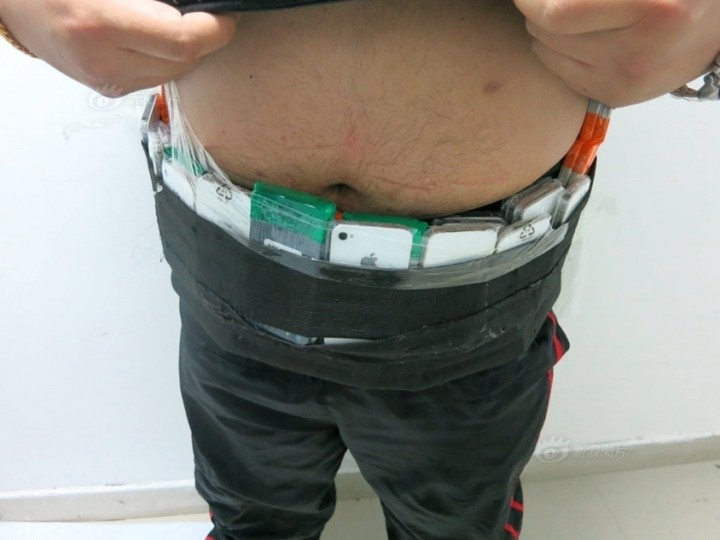
That man got caught, but keep in mind this is his day job. He and many others make their way through the border every day without being searched. Typically, only large bags go through a scanner, but small bags and anything kept on your body are usually not searched whatsoever, unless you’re walking funny due to the weight of 146 iPhones.
As someone who lives in Shenzhen, I use this border quite often, and it’s common to see people getting their stuff confiscated at security, but it’s also plain to see that most people make it through without any interference at all. Sometimes there’s a metal detector to walk through, but the security staff never stop anyone to wand them or pat them down despite an alarm sounding on almost every single person who walks through it. (I would take pictures to show you, but snapping photos at immigration is the one surefire way to actually get your phone taken away.)
Not the right kind of tourist
Shenzhen residents have enjoyed more relaxed regulations for going in and out of Hong Kong than residents of other mainland cities. But with the new once-per-week limit in place, China’s grey market could take a huge hit.
Hong Kong was lax before because it wanted to profit from well-off Shenzhen residents (Shenzhen is one of China’s richest cities) visiting the city and injecting some cash into the local economy. But the nature of visits has largely shifted from actual tourists to those in the goudai industry, who enter the city with a singular purpose and don’t contribute much beyond buying as many borderline-illegal goods as they can carry.





Stay updated on the go with our mobile app.
Get latest insights with smoother, more personalized experience through TIA mobile app.