 With the recent Standard and Poor’s credit rating downgrade and the possibility of a double recession in the US, the global economy is heading into a period of uncertainty, with even Singapore’s finance minister bracing his countrymen for a “tough ride of slow growth and occasional recessions” in the next 3 to 4 years.
Despite the turbulence, both of the economists who spoke at the 51st ACE BlueSky Exchange, held on July 26, remain optimistic about the prospects for business owners in Asia.
According to David Carbon, DBS bank chief economist and managing director for economic and currency research, Asia recovered from the recession in 2008 with little help from the US, which was still just experiencing the beginning of their economic woes. This can be attributed to rising consumption in Asia, whereas the US and Europe have stagnated in that area.
He predicts that the next few years leading up to 2017 will look a lot like the years before the Asian Financial Crisis, with lots of capital inflow and investment from overseas, as well as faster than average inflation and GDP growth.
What this means is that while Asian businesses can expect more consumer dollars to work in their favour, they might also see greater competition as more businesses move to Asia to be part of the growth. Costs of doing business will go up as well, and this might squeeze out enterprises struggling with a low profit margin.
All these will be driven by what David calls a “realization factor”, where business owners ditch the old paradigm that the West are the spenders while the Asians the savers. The situation might actually be reversing. With this change in mindset, businesses and investors start to see the potential in Asia.
Song Seng Wun, CEO & Regional Economist at CIMB-GK Research, trotted out some unconventional signs to show that economies in Asia have long recovered: Auto sales, cargo traffic, and tourist arrivals are “excellent proxies” for economic activity, he says.
“Head down to a car showroom and see how many cars are sold,” he said. “Or see how high the containers at the port stack.”
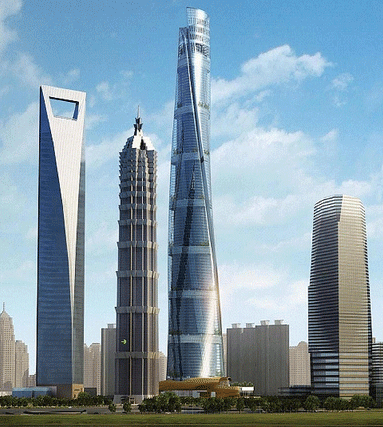
The economist ended his presentation on an ominous note though, noting the “curse of the skyscraper”, a trend where the great economic recessions of the world seem to follow the construction of tall buildings. These monuments could be taken to be a sign of economic excess and extravagant spending, or a sign of hubris.
According to the Architectural Record, half of the ten world’s tallest buildings under construction are being built in China.
Image: The Shanghai Tower. By 2DEFINE Architecture





Stay updated on the go with our mobile app.
Get latest insights with smoother, more personalized experience through TIA mobile app.










📅 Upcoming Events
22 October 2026
Payoneer x CSPN Summit 2026