Apoorva Dutt · · 6 min read
JD’s founder reveals the 6 pillars of the company’s strategic model
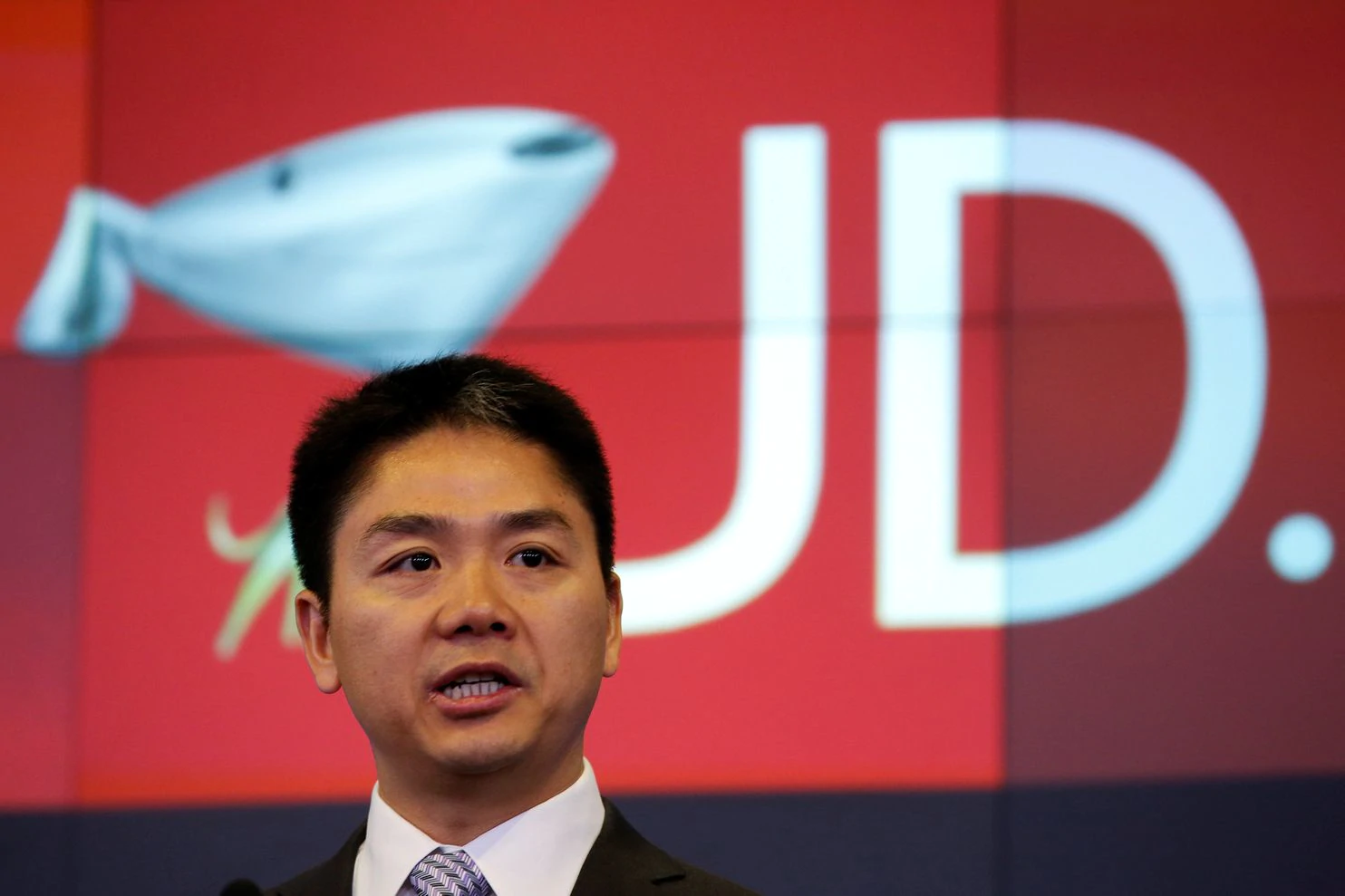
The following is an edited excerpt from The JD.com Story: An E-commerce Phenomenon by Lhi Zhigang. The excerpt is provided by LID Publishing. You can buy a copy of the book here.
(The following is a lecture given by Richard Liu, founder of JD.com, on the six core values behind JD.com’s strategy)
For JD, strategy is not empty talk or a slogan. Our strategy tells us what to do, how to do it, where to go, and what is most important.
Basic level – team
The success of a company is the result of many factors, but the most important and most crucial element is always the team. Motorola, once the overlord of mobile phones, was acquired by Google and is suffering through mass layoffs and cutbacks globally. Products from the Japanese brand, Sony, used to represent “high-grade, precision and advanced.” Every new model released by Apple seems to be snapped up by immediately by avid customers…. Why?
The hidden factor is the team. The success or failure of the future of JD has nothing to do with our competitors, the media or investors. It is the team that matters. If the company succeeds, 99 percent of the credit goes to our team. I take 1 percent. If the company fails, 99 percent of the responsibility is on me and the team, only 1 percent. We send the executives to earn MBAs, recruit management trainees, train new managers, launch the “ten/hundred/thousand” delivery project, develop our “Great Wall” customer service plan and so on, all because “team” comes first.
Supply chain – information system, logistics system, financial system
After building an excellent team, we’ll continue investing in the three critical systems for our supply chain, specifically: information, logistics and finance. I will explain each of these three key areas. First, information. The information system is a line that links the huge businesses, numerous suppliers and the 311 cities across the country where we have teams. This is vital. What I feel proud of is that today in our system, we can still find all the data going back to when we started the company: Our first transactions, first wage statements, first customer etc.
While other sellers in Zhongguancun still operated manually, we were already using scanning guns that we had bought at high prices and we were recording serial numbers and customer and transaction information. We also developed our own employee payroll system. Despite being ridiculed, we stuck to it. As it turns out, apart from our most excellent team, JD’s success is inseparable from our attention to the information system. Second, logistics. In 2007, after we received our first VC investment, we said we wanted to use the funds to build out logistics. It felt to me like the entire world laughed at us for this. Today, our delivery teams are in 311 cities, and will be in 360 cities by the end of the year. Some said JD’s delivery represented excessive service, saddled with excessive costs. But now Amazon is copying our model in the US. In the ecommerce field around the globe, we are the first company to provide same day delivery. More and more ecommerce companies began to see that the logistics system is a major constraint of the ecommerce industry.
Our same-day and next-day service has set an industry benchmark. The third key component is our finance system. We think of JD as a supply chain service company. And the exchange between cash flow, material flow and information flow in the supply chain is the most important, because their quick exchange is the root for us to gain profit. Thus retail companies in the world also attach great importance to the financial system. Cash flow can be far more important than profits. With positive cash flow, the company is less likely to collapse; if the company has net profit, but it does not maintain the cash flow, then the money will run out, and the capital chain will rupture sooner or later.
Key KPI – cost and efficiency
What are our core assessment indicators?We have only two. The first is cost, and the second is efficiency. Every year, we make horizontal comparison with others and vertical comparison with ourselves. The purpose is to see whether each of our systems operates at minimum cost and highest efficiency. For example, we are very excited about the trend in logistics cost. The cost of our entire supply chain logistics has dropped by almost half over four years but is still not yet optimal.
We must continue to build our “Asia No.1” project and strive to bring the 13 warehouses in Beijing together to improve our order processing and work efficiency. In addition, our IT system and financial system also must address the challenges of cost and efficiency. We need to achieve the lowest cost and highest efficiency of the three core systems of the company and become the world’s leading experts on retail supply chain management.
Brand – product, price, and service
We believe that the vast majority of customers are most concerned about three things: product, price and service. Regarding product, we mean two things: first, availability. With the constant efforts of our direct sales and marketplace businesses, we aim to facilitate all the daily necessities to meet customer demand. Second is product quality. We are committed to selling only authentic goods, quality goods. That means no fakes, no smuggled goods or refurbished goods. For price, that means offering consumers low price.
Through eight years of hard work, we have successfully established a reputation of consistently offering low prices. This must be cultivated and maintained through cost and efficiency control. For service, we are referring to the pre-sale, sale, and after-sale experiences. We have pre-sale advantages, because below each item on our platform we feature many consumer reviews and photos. Even consumers who do not shop on JD will visit our site to browse these reviews. The advantage we offer is the logistics system, same- or next-day delivery guarantee, and so on. In contrast, our after-sales does not have as many advantages. That is why we need to build out our Customer Service Center to concentrate all the after-sales services in one place. We must do it for our customers. We are constantly trying to innovate on services.
In the past, we competed for the customers who shopped in large malls and chain stores, but now we also want to win over the customers in community convenience stores. If we can succeed here, then we can have a huge and positive impact on the daily life of the common people. We believe there will be innovations on other services as well.
Users – customer experience
With regard to profit





Stay updated on the go with our mobile app.
Get latest insights with smoother, more personalized experience through TIA mobile app.