Phoebe Magdirila · · 3 min read
5 ways to help victims in the aftermath of super typhoon Haiyan in the Philippines
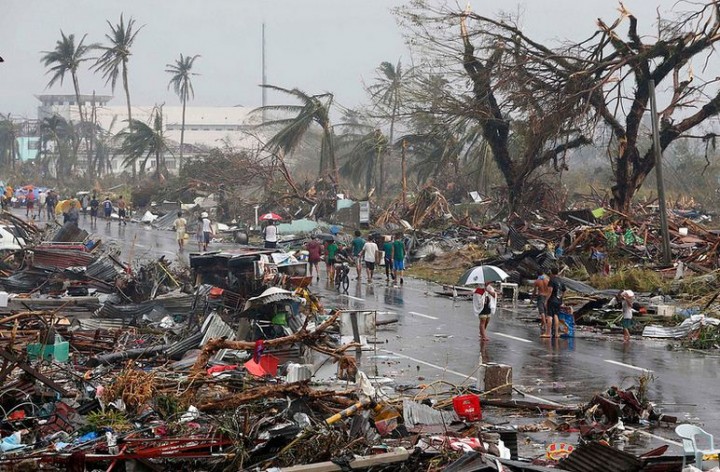
The Philippines has been hit by a terrible typhoon, and some areas have been left completely without any food, water, or means of communication. We earlier noted that Google prepared its crisis response map the night before super typhoon Haiyan (also called Yolanda) hit the Philippines. Of course, Google isn’t the only organization leveraging the power of the internet to help pick up the pieces. Below are five different types of resources that Filipinos and anyone around the worls can access in order to help restore and rebuild the devastated areas.
1. Crisis maps
In addition to Google’s map, the Philippines’ Department of Social Welfare and Development (DSWD) has created a disaster mitigation and response situation map. It’s quite similar to Google’s map, showing the affected areas, as well as pinpointing evacuation centers, free internet and call spots, command centers, and hospitals.
In addition, David Overton has created the Bangon Pilipinas website. It’s a tool that tracks death tolls, missing people, and affected families in each province. It also gives an overview of the needs of the people in these provinces. It’s not a map like Google’s and DSWD’s, but it basically gives observers an idea of the situation in each of the affected locations. Users can also help by providing information on affected locations to bangonphils(at)gmail.com.
The availability of three maps, rather than just one, should incentivize users to check all the maps and make comparisons in order to determine the best course of action.
2. Person Finder Services
Philippine authorities are estimating that there could be around 10,000 people following the heavy downpour and floods caused by the typhoon. For people who have not heard from a family member or a friend as of yet, people finder services are available, like the Philippine Red Cross’ people tracing form
and Google’s person finder.
Google’s person finder lets people declare information on a person’s location – those who might’ve lost contact with family members. Google also has a mobile version. Concerned parties can send the keyword “search” plus the name of the person to specific numbers posted on its site. This is especially useful for areas with no web connection as it only needs SMS.
3. Provide help, or request it
#RescuePH is a Twitter hashtag that’s always active whenever a calamity hits the country. Apart from that, it also has a website where people can input details of those who need to be rescued. The #RescuePH team forwards this information to local authorities to perform the necessary rescue operations.
Philippine online news site Rappler also has a list of relief operation centers. The list notes what each relief centers needs, such as food, water, clothing, etc. Those who have put up relief centers can add their information to the list so others who want to help can reach out to them.
4. Free calls and SMS
It’s not just Philippine-based institutions that are trying to help. Israel-made chat app Viber is now allowing Filipino users to call regular (non Viber) numbers outside of the Philippines for free. Or, people who do not have access to smartphones or desktop computers can use the DSWD map to find spots where internet centers are available.
Likewise, local telcos Smart Communications, Sun Cellular, and Globe Telecom have set up free calling stations in affected areas to help people who want to keep in touch with their relatives and peers.
5. Online donations
Here are some of the institutions and their websites where people can reach out and offer help:
- World Vision – This international organization lets users donate a minimum of $50 to fund its relief efforts. It also breaks down the impact of donation sums so users understand how their money can reach victims of the storm.
- DSWD – The Philippine government is providing an online donation platform through DSWD.
- UN World Food Programme – Similar to World Vision, people can donate Php 1,500 ($34), Php 3,300 ($76), Php 5,000 ($115), or specify any other amount.
There are other organizations reaching out to help, as well. Twitter’s #YolandaPH and #ReliefPH hashtags are still being used by citizens and organizations to crowdsource information.





Stay updated on the go with our mobile app.
Get latest insights with smoother, more personalized experience through TIA mobile app.