- Insights This article was written by a TIA community member. Insights pieces undergo the same rigorous editorial process that newsroom-produced articles have.
 Paulo Joquiño · · 8 min read
How to build a global AI marketing company: 5 lessons from Appier’s road to IPO
This article was co-authored by Yinglan Tan, founding managing partner of Insignia Ventures Partners.
Taiwan-based Appier has made its initial public offering on the Mothers market on the Tokyo Stock Exchange (TSE), marking a new chapter for the global AI solutions company. It’s been almost 10 years since Appier was founded, and with this milestone comes a great opportunity to look back at its story and piece together some of the important lessons that founders and tech companies can take away from its journey.
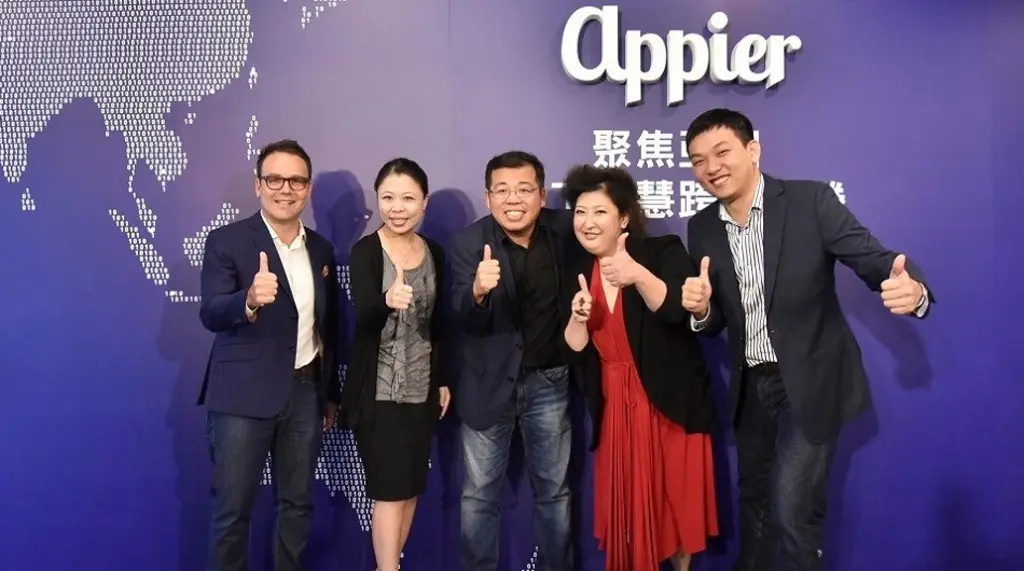
The Appier management team / Photo credit: Appier
Investing in AI expertise
In much of Appier’s press throughout its history, CEO Chih Han Yu’s decade-long background as an AI and robotics researcher at Harvard University and Stanford University is often mentioned – and for good reason. What has made Appier into what it is today is less about a single product, market, or person, and more about the AI expertise that Yu and his co-founders brought to the company. That’s the DNA of Appier.
Although the firm initially found its footing as a scalable tech company with CrossX, a cross-platform advertising engine, it wasn’t always focused on marketing technology, and this wasn’t the limit of Appier’s repertoire either.
Yu and Joe Su, Appier’s chief technology officer, originally banded together to develop games. But after learning about the founders’ backgrounds, the publishers they pitched to were more interested in AI and how the duo’s skill set could help them with their advertising.
Yu talks about the experience in this Tech in Asia article, which was published after Appier’s series A round from Sequoia Capital:
“Back when we were making games, we would use a pitch deck and show it to different publishers. In the last slide, I would talk about my experience in AI just so I could talk a little about some of the cool things I did. But everyone we pitched to became curious and started asking questions about AI. Eventually, we realized our publishers and media partners were relying on us to help with their advertising problems. We started to study the advertising world and realized that it’s basically a playground for big data guys like us.”
While this experience brought Yu and Su to what we’ll call founder-market fit (i.e., discovering that founders are best suited to solve a certain market problem), launching CrossX in 2014 was not easy. Winnie Lee, Appier’s chief operating officer and co-founder, told Digitimes that it took eight unsuccessful product iterations before the team finally found product-market fit with CrossX. This strengthened their resolve that leaning on their AI expertise was the way to move forward.
As Appier expanded globally with its AI-based advertising product across 12 cities over the next three years, it found great success with consumer brands, ecommerce players, and mobile game developers. In 2017, the company recognized that the demand for AI services was rising beyond advertising pain points and sought to expand its target market segments by introducing AI-based data science platform Aixon.
In 2018 and 2019, Appier began expanding its product offerings through acquisitions. The first was with Indian startup QGraph, which led to the launch of AiQua, an AI-driven proactive customer engagement platform. A year later, Appier acquired Japan-based Emin and rolled out AiDeal, an augmented marketing and customer targeting solution.
As Appier’s suite of products and value propositions grew throughout the years and reached different types of companies across the globe, one thing remained constant: its AI expertise. Investing in this brought a certain stability and longevity to the company – something that wouldn’t have come by had it invested in, say, only an AI-driven marketing product or in a certain market like the US or Taiwan.
And part of investing in this expertise was also investing in the ability to communicate it. While tech solves the pain points, sales is what gets customers on board to solve that pain point with that particular technology. When Lee guested on the podcast 14 Minutes of SaaS, she shared why Yu and Su brought her into the team, even though she was a biomedical scientist by profession:
Riding the long wave on the right beach
Sometimes all it takes is the first check
Directing AI expertise with market insight
Building a moat with “localized tech”





Stay updated on the go with our mobile app.
Get latest insights with smoother, more personalized experience through TIA mobile app.