Nivedita Bhattacharjee · · 4 min read
5 tips on what to do when thousands of people suddenly hate your startup

Image credit: Joe The Goat Farmer
This morning, a Change.org email in my inbox caught my attention. It was a plea to join a petition asking Zomato chief executive Deepinder Goyal to please run background checks on delivery boys.
Now, Zomato orders are typically fulfilled by restaurants themselves, so in all likelihood, this is the restaurant delivery boy going rogue. Tech In Asia was not able to connect with the person who started the campaign, so we don’t know the details. What we do know, however, is that this brings to the fore a problem that runs deeper than this Zomato incident.
Harassment of female customers by delivery men and cab drivers hired by various app-based startups is a recurrent, if not yet frequent, problem in India. It is also one that needs to be addressed immediately.
Stories about delivery men pinging female customers on messaging apps like WhatsApp is not routine, but they are becoming more common.
While most incidents are cases of harassment where customers have been able to avoid further nuisance by simply blocking the miscreants on their phones, there are extreme cases that raise questions on the kind of background and quality checks startups run while they hire their foot soldiers.
See: Bad business: how India’s startups are chasing growth but messing up customer serviceFlipkart was in the eye of a storm last year over an alleged molestation case, Zomato has other complaints lodged against it, and Uber is infamous for the Delhi rape incident.
The Change.org petition aimed at Zomato has gathered over 14,000 supporters online as of publishing. Zomato, Flipkart, and Uber did not respond to emails seeking comment.
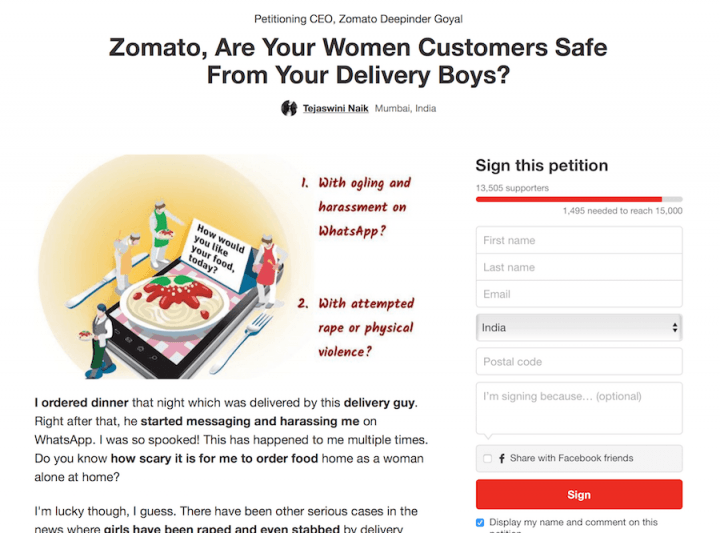
The petition on Change.org
Tech in Asia spoke to Ravi Kiran of accelerator VentureNursery about this problem, and asked how startups should deal with it. Here are the five points he raised.
1. Don’t make excuses
“Most startups hide behind the curtain of being marketplaces, saying they aren’t responsible for the glitches,” Ravi said. “That is a mistake.”
In India, most on-demand startups are platform businesses that bring buyers and sellers together. This gives them an out, because they can always claim that the misbehaving person – such as a delivery guy – is the problem of the other company.
When customers use your app, they are placing their trust in you. Hiding behind excuses won’t make anything better. The right thing is to man up, apologize, and fix things.
2. People, people
3. Repeat after me: we shall use internal checks
4. Making good
5. Do a stress test





Stay updated on the go with our mobile app.
Get latest insights with smoother, more personalized experience through TIA mobile app.