Paloma Ganguly · · 5 min read
This Indian couple helps companies go green with a stylish, upturned umbrella

ThinkPhi founders Priya and Samit Choksi.
At first glance, they look like art installations. Gleaming rods sprouting from the ground and staring at the sky with gaping mouths, like upturned mushrooms.
The Ulta Chaata – Hindi for ‘inverted umbrella’ – is an aesthetic piece of work in stainless steel. You would be hard put to guess it’s green tech for industrial use, that is, a device that generates clean water and energy.
It collects rain from the sky, filters the rainwater, and converts it into potable water. When it’s not raining, the device is a source of solar energy. You could even sit in its shade for a cup of coffee.
“In India, green technology for industrial use is dull and has zero design aspect to it,” says Samit Choksi, founder of Mumbai-based sustainable products firm ThinkPhi, which makes the Ulta Chaata.
“Companies spend money on green technology, but it is not visible. Solar, for instance, is a norm now, but you don’t ‘see’ it. Customers and employees will not climb onto the roof to see the solar panels a company has installed!” he tells Tech in Asia.
ThinkPhi, started by Samit and his wife Priya Vakil Choksi in 2015, is hoping to change that.
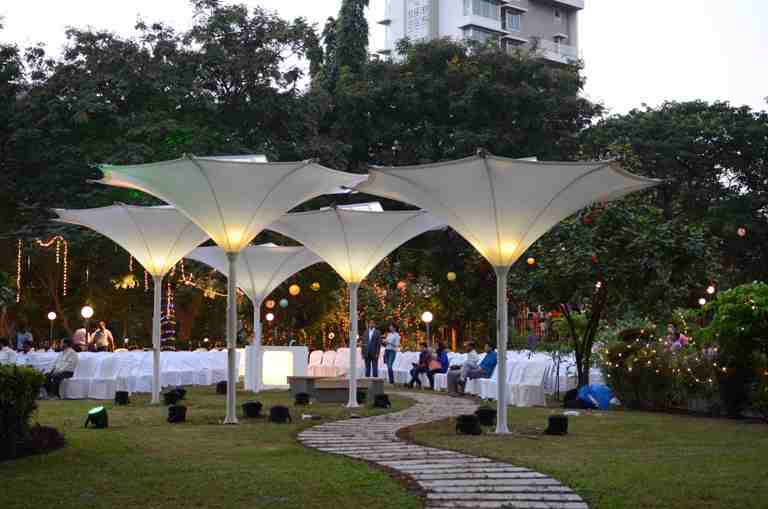
The Ulta Chaata at a Mumbai park. Photo credit: ThinkPhi.
Since the company started marketing in November last year, it has bagged eight clients, including five blue-chip companies. Its projects are coming up in Pune, Gujarat, and Hyderabad, and it is in talks with a global furniture chain (take a smart guess, which one!) to set foot in the US.
Designs on green tech
Samit, a software architect and developer who studied at United World Colleges in Singapore, has no qualms admitting that Ulta Chaata was really Priya’s brainchild. Priya worked at architecture firm John Portman before starting her own green building consulting firm EdEn.
The couple have variously lived and worked in Singapore, the UK, the US, and India. The Ulta Chaata was born out of their passion for reducing climate change.
Samit says the initial model just allowed the harvesting of rainwater, which means it was useful only in the monsoon months. “We wanted to create a structure that was good looking, would require minimum area on ground and maximum area on top.”
That – and some inspiration from canopies at international airports – led to the umbrella-like shape.
From industry to consumer





Stay updated on the go with our mobile app.
Get latest insights with smoother, more personalized experience through TIA mobile app.