Kylee McIntyre · · 5 min read
The US blocked their biobank project. Now their startup serves hospitals around the world
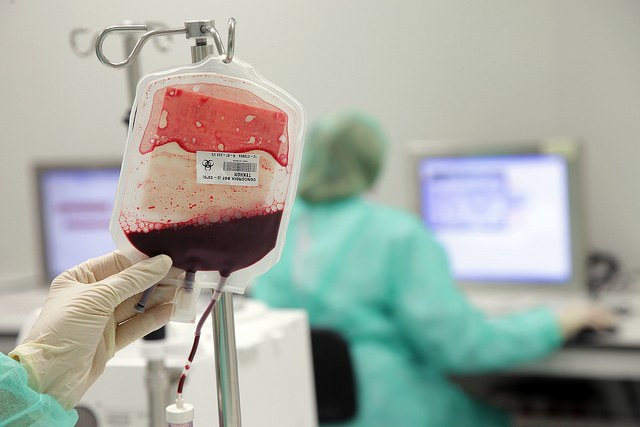
OpenSpecimen helps organize biomedical samples into several categories to quickly meet users’ needs. (Photo by Jordi Play)
In 2004, the National Cancer Institute funded a project using open-source software to supply biobanks with storage systems for biological samples like blood or plasma, for use in research. In 2010, the U.S. government ceased funding of the project. That’s when the team that would later become known as OpenSpecimen stepped in.
“They said basically [they didn’t] have any more money to do it, but a lot of people were already using this software, and they had nowhere to go. We saw an opportunity,” says Srikanth Adiga, CEO and founder of OpenSpecimen, a product under his company Krishagni Solutions.
Based in Pune, India, Srikanth owes a lot of OpenSpecimen’s ease of use to its open-source software, which he views as the key to several of the firm’s successes. Open-source software, as opposed to software like Microsoft’s or Apple’s, is free to download and use. Examples include the Firefox web browser and the Libre Office suite. It allows for more creativity, because once it is downloaded, the user is free to modify the software for his or her personal needs. Sure enough, OpenSpecimen made some updates to the project, then turned around and made the software available for the international market.
With OpenSpecimen software, one can organize thousands of biomedical samples by type, age, request, consent, collection, distribution, and other factors. For example, if one needs to study a blood sample from a 43 year-old woman with a history of heart disease on her father’s side, OpenSpecimen categorizes all of that information so that a user can obtain the sample quickly and easily.
An open business model
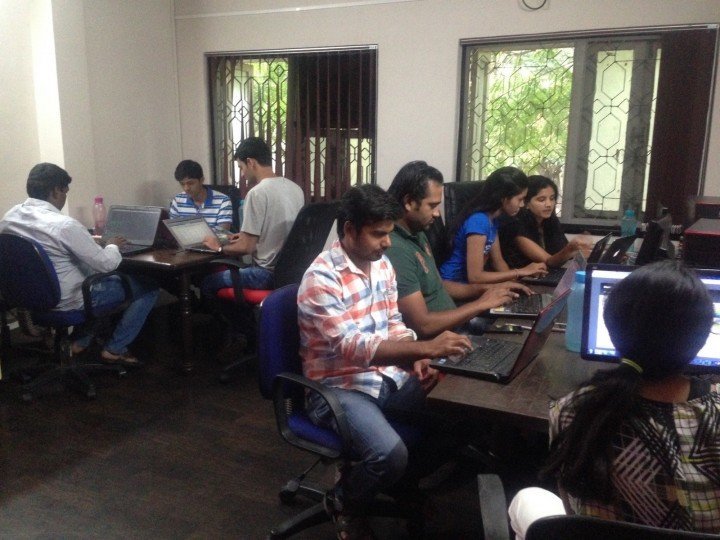
The OpenSpecimen team’s office days emphasize results—the atmosphere is laid-back and friendly.
The next question is so obvious that Srikanth segues right into asking it of himself: If you’re a private company, how do you make money, and how do you give away a product for free?
Though OpenSpecimen’s software is free, it requires time-saving expertise to make it work. Clients come to Srikanth and his colleagues for this kind of assistance.
“This is not like Facebook, where people can just log in and start using the software. There are a lot of things to configure, a lot of things to install – that’s where we come into the picture,” Srikanth says.
Of course, if something were to happen to OpenSpecimen or to Srikanth’s team, the software would still be free and available. OpenSpecimen simply offers more technical and operational know-how.
It’s an attractive model. Though started by Srikanth, Vinayak Pawar, and Poornima Govindrao, OpenSpecimen has grown into an international business, though its main markets are in the U.S. – half of OpenSpecimen’s market. Its second largest market is Australia but also includes outlets in Singapore, Sweden, the UK, Egypt, and Jordan. The software is available in English, Spanish, and Chinese. Despite its international presence, OpenSpecimen’s team is small—it currently has about 15 people who do multiple jobs. Srikanth, for example, is CEO but also deals with sales, marketing, and finance.
How does one market blood and saliva samples, you might ask? About the same way as one would market any other product in the modern market, though the audience is slightly different. OpenSpecimen’s primary audience consists of academic research stations like Stanford University, Johns Hopkins, and Singapore General Hospital. Srikanth has experience in the academic sphere himself, having previously worked at Washington University.
Marketing OpenSpecimen works mainly through lead capture through its website, conference appearances related to the biomedical field, and email campaigns.
Small and savvy





Stay updated on the go with our mobile app.
Get latest insights with smoother, more personalized experience through TIA mobile app.