Yesterday, Tech in Asia (and probably a lot of other blogs) got a link to the following infographic in our mailboxes. It concerns the comparative integration of technology in China and the United States. As you can see below, it states that Chinese schools have better integrated technology and Chinese students use technology more often than their American counterparts. That’s quite a dramatic claim, but I immediately suspected that the survey this infographic is based on suffers from one of the most common misunderstandings when it comes to China and technology.
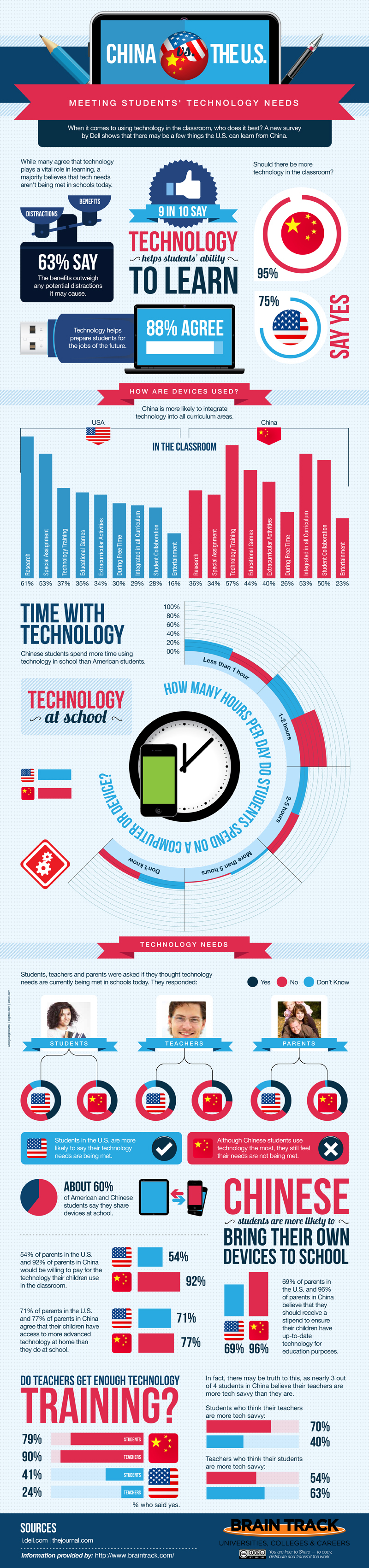
So what is the misunderstanding that plagues this handsome infographic and the Dell survey that it is based on? Sampling bias. Because while the infographic talks about “China”, here’s who Dell actually talked to:
[525] respondents in China [that] came from predominantly major cities and are mostly urban respondents.
It’s not clear exactly what “major cities” means here, but I’d bet the ranch that Dell spoke to very few people outside Beijing, Shanghai, and maybe Guangzhou. I’d also bet quite a bit that they didn’t speak to any migrant worker parents or their children and teachers in those cities. So when the infographic says “China”, what it actually means is a very select group of people from China’s most developed and prosperous cities.
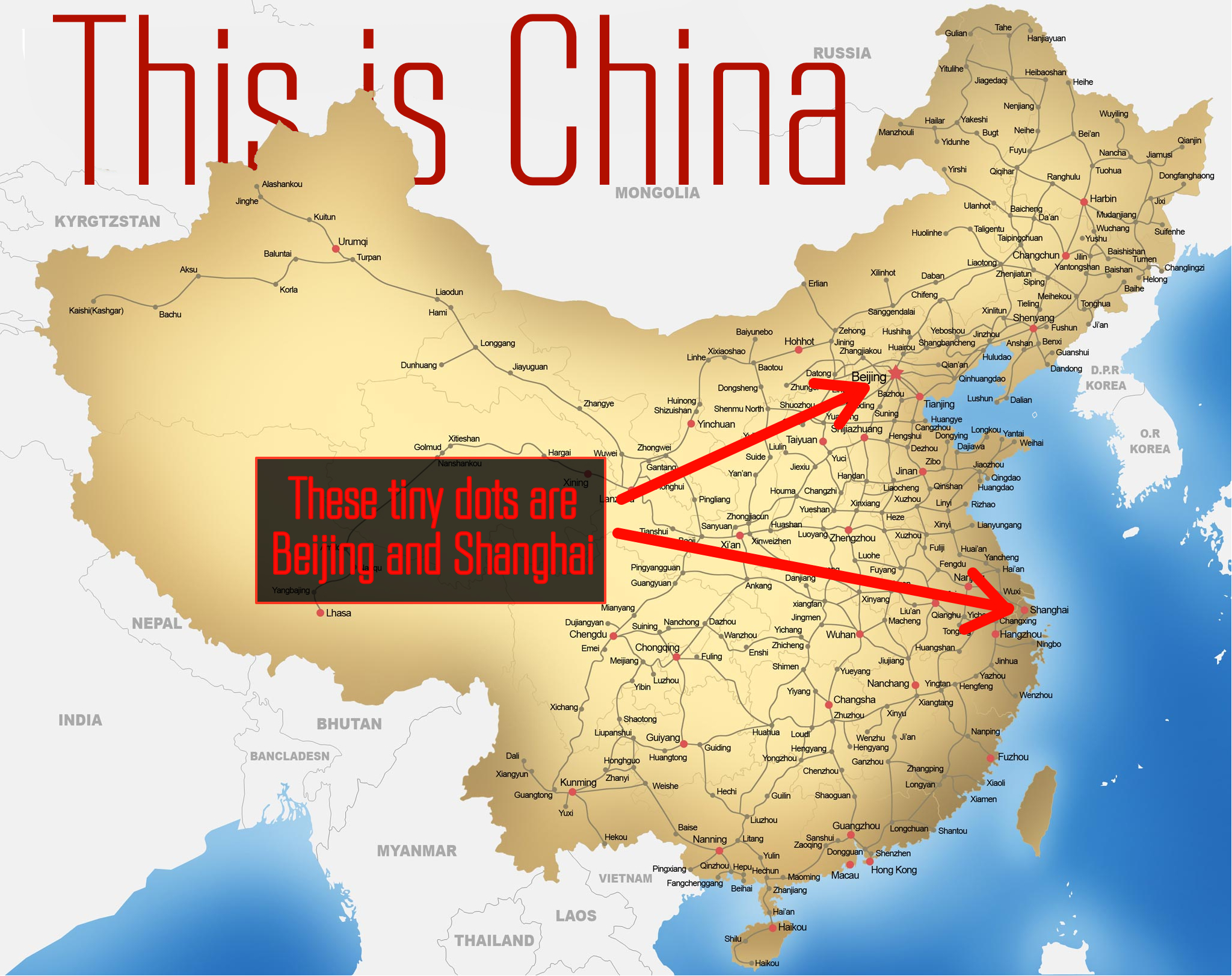
Now, I don’t dispute that technology needs to be better integrated into classrooms, nor that the U.S. education system is, to put it lightly, a mess (though I would argue that China’s system is equally problematic, though in completely different ways). But the fact is that far too often when we talk about technology in China, we do this. We say “China” when we mean “Beijing and Shanghai”. Those cities are massive, but they don’t even account for four percent of China’s total population, yet we use them all the time as though they represent the whole of the nation. They don’t.
Returning to technology and education, for example, I spent a year teaching at schools in Harbin, China, and most of the classrooms that I saw didn’t have anything more high-tech than a podium, a blackboard, and some chalk. Harbin is not the sticks, it is a relatively cosmopolitan city with a population of more than ten million, and I was not teaching at schools for migrants. That’s just what most classrooms in China are like.
Of course, that is changing fast, and that’s a good thing (for example, broadband coverage is now available in most of China’s rural villages). But while we should celebrate China’s technological development, we should also be cautious not to fall into the trap of thinking that whatever is true of Beijing and Shanghai is true of China as a whole. It is a vast nation, and the degree of technological development varies by region, sometimes even by district or street! It would be foolish to look at elite schools in Shanghai and then conclude that China is doing well at integrating technology in the classroom when many students in other areas don’t even have basic access to computers in school.
To help out with this, I have put together a special infographic of my own that people can refer to when needed:
(Infographic via BrainTrack)





Stay updated on the go with our mobile app.
Get latest insights with smoother, more personalized experience through TIA mobile app.