 Vani Kola · · 7 min read
Should India adopt policies to level the playing field?

Photo credit: Gratisography.
In 1835, Charles Darwin went to the Galapagos, leading to his theory of evolution.
In the Galapagos, there are no predators. As a result, various kinds of species have evolved — the marine iguana, the Galapagos tortoise, the flightless cormorant, and the great frigatebird. The animals and birds there are bereft of the fight-or-flight syndrome that defines the animal kingdom. (Trivia: It is said the newly elected chairman of Tata Sons, N Chandrasekaran, went to the islands back in 2005 with his team members at TCS for a strategy offsite.)
When we think of Darwin, we think of the ‘survival of the fittest’, suggesting that the natural world is a boxing ring where the strong will vanquish the weak. It’s often used to justify the cutthroat competition in business, and even to argue that predators are needed in an ecosystem to keep its inhabitant fit. But, Darwin himself never used the term ‘survival of the fittest.’ It was, in fact, English philosopher Herbert Spencer who did so. The Galapagos Islands show that animals adapt to their surroundings. A protected ecosystem nurtures a different type of species.
What do we learn from the way nature evolves? Do we get the best outcomes for the world through ‘survival of the fittest’ philosophy, as is generally believed?
The question was triggered by concerns raised about capital dumping by large foreign companies to the detriment of Indian startups. It set off an intense debate in the Indian startup ecosystem. Some arguing that companies such as Amazon and Uber had an unfair advantage over their Indian competitors such as Snapdeal, Flipkart, and Ola. Others argue that this is the way free markets work — the strong will annihilate the weak — and any intervention by the government would only make things worse for the consumer at large.
See: India’s unicorns want government help to fight Amazon, Uber
Free markets and market fundamentalism
I have always wholeheartedly believed in the value of free markets until I started thinking about it more deeply. In our own lifetimes, we have seen free markets trumping economies that built walls around themselves. Those within those walls lost out to those outside, and they knew it. And when the walls fell — as did the Berlin Wall in 1989 — everyone celebrated. Yet, it’s important that we don’t get too ideological about free markets and insist on taking it to the extremes.
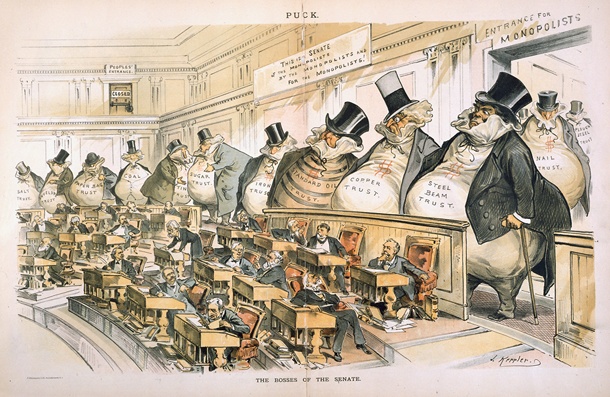
Market fundamentalism can be dangerous, especially if some players come with an unfair advantage.
In What Money Can’t Buy, Harvard philosopher Michael Sandel makes a strong case for why we shouldn’t think markets can solve all problems. We need to be wary of market fundamentalism and our blind trust in the idea that only good will emerge when different entities fight it out in the market. Market fundamentalism can be dangerous, especially if some players come with an unfair advantage.
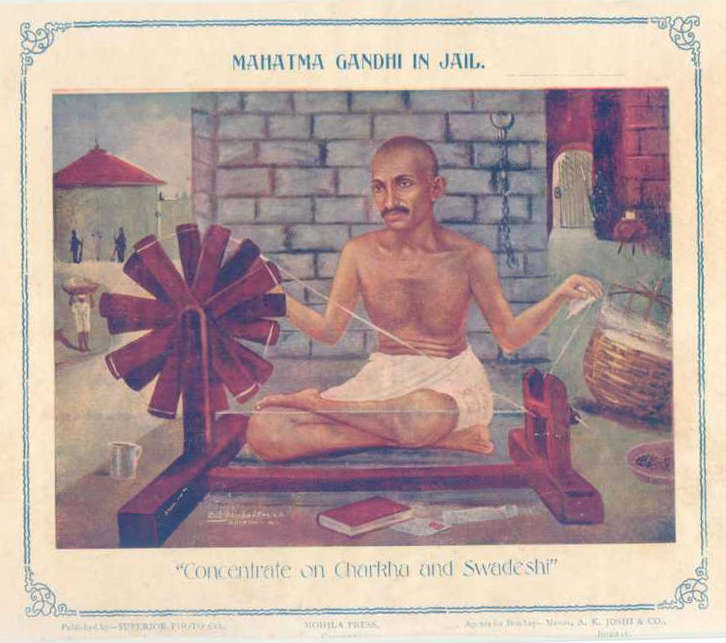
A poster for the Swadeshi movement. Photo credit: Wikimedia.
We can look at our own economic history: take the Indian textiles industry, for example. It has a long history stretching back to centuries (its admirers included Alexander the Great). Over the years, it developed a rich variety in terms of techniques, style, design, and material — not to mention a thriving economy around it. Yet, during the British era, the entire sector was pushed to the brinks of extinction by the machine-made clothes imported from England. Swadeshi, as a strategy, was a key focus of Mahatma Gandhi, who described it as the soul of Swaraj (self-rule). The resistance against such imposition became one of the enduring symbols (the Chakra) of the independence movement. Swadeshi as a purely economic measure for the growth of Indian industry is an important legacy to remember even in today’s times.
Breaking monopolies, building businesses
Toward long-term viability
The consequences of not providing a policy response may include:
What is the way ahead?





Stay updated on the go with our mobile app.
Get latest insights with smoother, more personalized experience through TIA mobile app.










📅 Upcoming Events
22 October 2026
Payoneer x CSPN Summit 2026