You’ve got a problem to solve, and you’ve got a great solution in mind that you’re putting into action. Boom, success!
Okay, maybe not just yet.
The startup life is all about problem-solving, but just because you think you’ve got a great solution doesn’t mean you actually have one.
In order to test your idea and see if you’re building something that meets people’s needs, you’ve got to put together one of the most valuable players of the startup journey: the minimum viable product (MVP).
Photo credit: Tech in Asia
An MVP is the simplest form of your product. It’s built efficiently with the fewest resources possible in order to drill down and understand if there’s demand for your solution – without having to spend large amounts of time, manpower, and money.
Building an MVP can seem daunting, so here’s some advice from someone who’s built his fair share of products and has definitely had to figure out several MVPs in his time – Tech in Asia’s very own founder and CEO, Willis Wee.
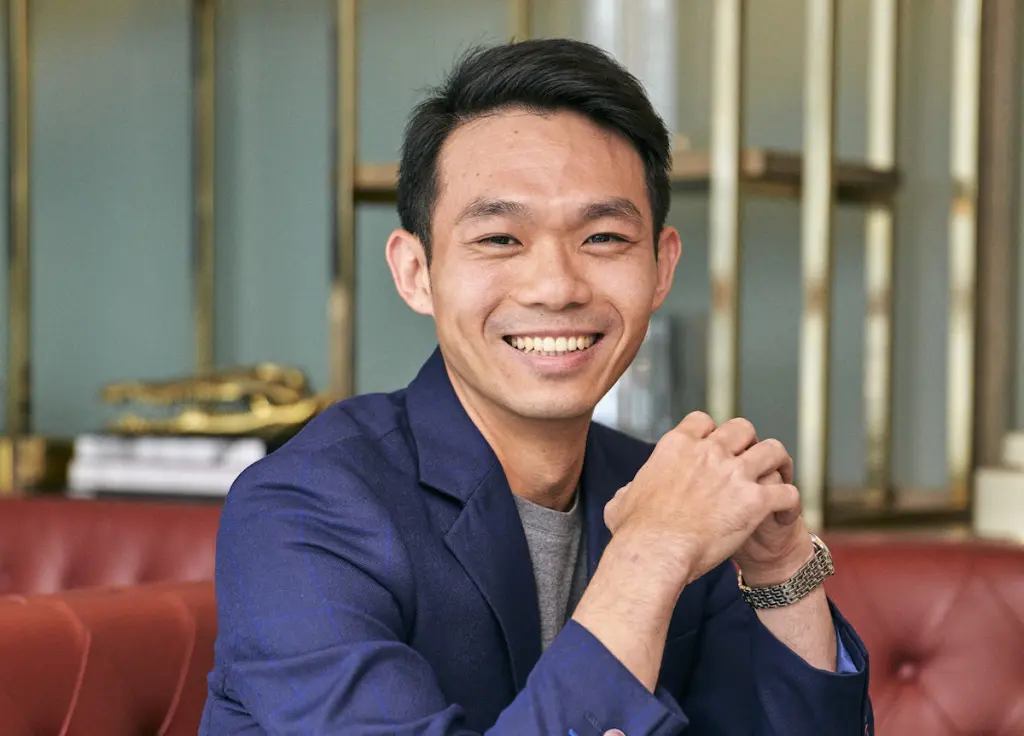
Willis Wee, founder and CEO of Tech in Asia / Photo credit: Willis Wee
As part of Tech in Asia School’s Aspiring Founders program, Wee sat down to share some best practices and guidance on product-building and creating an MVP. Here are four insights from his session.
1. Know thy users
Before you even begin building an MVP, you have to know the people who you’re building it for. Sure, you might already have some kind of solution in mind, but is it what your potential users really need?
It’s critical to sit down and consider who your customers will be as well as understand what challenges and pain points they’re facing – and how you can address these effectively. After all, there is no point in building something people have no use for.
To do this, you need to conduct user interviews. Wee suggested reaching out to people who could be your customers through your networks or through platforms like LinkedIn. He also proposed setting up a cafe where potential customers are patrons – for example, if you want to speak to bankers, the Starbucks on the ground floor of a bank’s office building is a great place to find them.
While the user interview process is important, it doesn’t have to take up a lot of time. If you speak to just one person a day, that’s already five people in a work week, and you can easily use those interviews to build up a pool of data around potential customers to help better inform your product development process.
2. Focus is key
When building your MVP, you need to be focused about its scope. Don’t try to do anything too complicated or solve too many problems at once – zoom in on a single use case and build a product to address it effectively.
“Focus, focus, focus,” said Wee. “If you start having too many use cases, it defeats the purpose.”
Think of your MVP like a science experiment. What’s the hypothesis that you’re testing? What exactly do you want to find out? What do you need to do in order to test this hypothesis?
By being focused, you can ensure that you’re building something that the market actually needs.
3. Build with the basics
There’s no need to go all-in with your MVP, coding something fancy or roping in developer help. After all, it’s just a minimum viable product, and there’s a good chance that you’ll be going back to the drawing board and revamping it as you go along on your journey.
When building your MVP, use low-code or even no-code solutions. After all, what you’re testing with an MVP is the solution itself, not the details around the way it looks or functions. There’s no need to be too ambitious – just keep it simple and focus on your main hypothesis.
Wee pointed to Gojek as an example of this in action.
When it first started out, Gojek didn’t have an app – it was just a call center with a spreadsheet and a handful of drivers. Still, this no-code solution was sufficient to prove that there was demand for a service that allowed users to call for ojeks (motorcycle taxis) instead of hailing one on the street – and Gojek has evolved tremendously since.
4. Success is not guaranteed, and that’s okay
Here’s a somewhat bitter pill to swallow: You can conduct the best research, follow all the textbook advice on product building, and launch an effective MVP – and then go out to the market and still have it end in failure.
The truth is that the MVP is an experiment, and sometimes, experiments fail.
“Success is not guaranteed, but you will be one step closer to the truth,” said Wee.
Even if an MVP isn’t successful, there’s a lot that can be taken away from the experience. What worked? What didn’t? What did people say about it? How did customers feel about it?
While you may not have gotten it right, you at least know what you got wrong – and it’s a great learning opportunity to go back to speak to users and improve your product.
Get content, community, and mentorship
Product development is a continuous journey and the MVP is just the first step. Even after you’ve successfully launched your MVP and gotten your first customers on board, you’ll need to keep making improvements and developing new products to tap into more opportunities and grow even further.
Along the way, you’ll encounter new challenges, and you might have questions about how to scale for growth and manage product development, along with all the other details of startup life.
If you’re looking for a place to get answers to your questions and connect with fellow founders on this journey, Tech in Asia School has got your back.

Having been around in the Southeast Asian tech and startup ecosystem for over 10 years, we’ve had the opportunity to connect with the region’s most successful tech leaders, and we’re bringing together all the resources we have to create content, community, and mentorship opportunities tailored to the most critical stages of the startup journey in order to help founders see success.
Whether you’re figuring out the best tools to build your MVP, trying to determine the use cases for your product, or contemplating expanding your product offerings, there’s something for everyone at Tech in Asia School.
Sign up for our newsletter to get founder tips, event invites, and exclusive resources from Tech in Asia School emailed to you monthly:
Stay updated on the go with our mobile app.
Get latest insights with smoother, more personalized experience through TIA mobile app.
Recommended reads
 If AI eats the world, what’s for dessert?
 What it takes to stand out as a product manager in the AI era
 The recipe for viral AI apps
 Funding Societies on the SME gap (and how to bridge it)
 The 3 biggest mistakes founders make with their business finance tool
 When streaming turns into shopping
 AI is shrinking SaaS moats, redefining sales
 Sam Altman: Why Google’s success saved OpenAI
 Inbound vs. Outbound: one is for AI, the other for humans
 Sequoia partner highlights Elon Musk’s hidden genius





Editing by Lorenzo Kyle Subido
(And yes, we’re serious about ethics and transparency. More information here.)