Elaine Ramirez · · 5 min read
Homejoy failed. But these two guys are making it work in Korea.
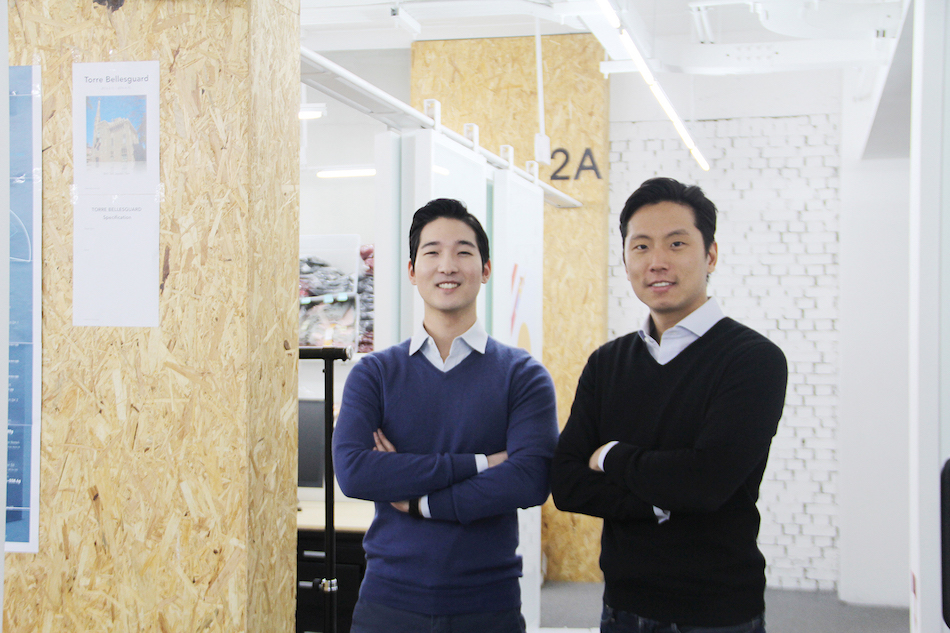
WaHome’s co-founders and co-CEOs John Lee (left) and Edward Hahn.
Six days a week for 15 years, Mihyang Won went to the local YWCA and sat there, waiting for the phone to ring. On a good day, she’d only sit there for an hour. On a bad day, she’d give up after four.
In that room, along with many like it strewn across South Korea, house cleaners, babysitters, and other gig workers cram into a room manned by an operator at a single table as customers phone in their requests. Those who wait there are given first dibs on the orders and scurry to the clients’ house.
Then they return to wait for the next order.
A good week for Mihyang meant working up to 12 hours a day, giving her about US$2,000 a month to make rent and support her husband and grown son. Last year, a fellow cleaner introduced her to a company that proposed a new way to get gigs – choose the jobs you want as they come up, from the comfort of your own home.
The app is called WaHome, which connects cleaners to clients across Seoul. It’s not a novel idea anymore, but it represents a microcosm of the service revolution that is beginning to upend traditional industries in mobile-savvy Korea. The past two years have seen an explosion of demand for mobile-based services, with Coupang, Baedal Minjok, KakaoTaxi, and WaHome connecting merchants, mom-and-pop restaurants, taxi drivers, and housekeepers with customers faster than ever before.
It has grown to over 1,000 transactions a week in Seoul.
And it’s not only the customers benefitting from the faster service. The added demand and time saved from not commuting to an agency has allowed Mihyang to more than double her monthly income to as much as US$5,000. And the flexibility of waiting for an alert pop up on her phone’s screen means that for the first time in a long while, she finally has time to herself.
“Now I watch TV, hang out at home, meet with friends … and I have more jobs than before,” Mihyang, 52, tells Tech in Asia. “Because I can choose the time and jobs, it gives me more freedom to choose what I want to do. That’s the best part.”
Since its April 2015 launch, WaHome’s demand has grown to over 1,000 transactions a week in Seoul. Now Mihyang trains other cleaners who are signing up to work through WaHome’s platform.
“The main reason we decided to do this business is to have some positive effect on the helpers’ [work] environment,” says John Lee, co-founder and CEO.
While they would face mistreatment by customers before, wearing the WaHome uniform helps the cleaners feel protected. The home helpers get injury insurance provided by the startup – but no other benefits since they’re independent contractors, just like how Uber classifies its drivers.

The startup is focusing on middle class families in Seoul, South Korea’s capital of 10 million people. Photo credit: HB Kang.
Startups struggle
Less Uber, more Amazon





Stay updated on the go with our mobile app.
Get latest insights with smoother, more personalized experience through TIA mobile app.