Samantha Cheh · · 7 min read
How 3 Singaporean businesses leverage IP to power growth

Intellectual property (IP) rights have a long history, dating back to ancient Greece when chefs were granted year-long “patents” for their culinary inventions.
Since then, IP rights have expanded and evolved to provide essential protections that incentivize innovation. Managing these rights is crucial for businesses of all sizes, allowing them to not just protect their ideas but also to leverage them as assets that fuel growth.
Three businesses from Singapore have done exactly that, turning their IP into engines of success. They are the winners of the 12th edition of the WIPO-IPOS IP for Innovation Awards, which recognizes Singaporean companies that have achieved outstanding growth through their successful use of IP.
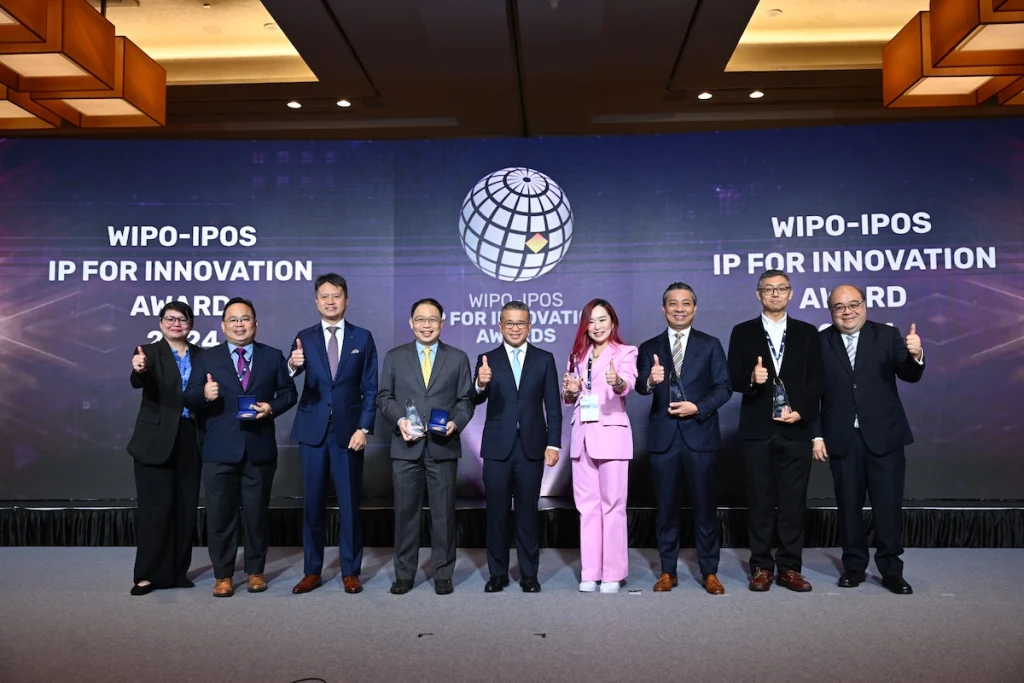
The winners of the 12th edition of the WIPO-IPOS IP for Innovation Awards / Photo credit: Intellectual Property Office of Singapore
Organized by IPOS International and supported by the Intellectual Property Office of Singapore (IPOS) and the World Intellectual Property Organization (WIPO), the IP Awards shine a spotlight on companies that have leveraged IP to develop innovative solutions.
From baby bottles to robotics, this year’s three winning companies showcase the full potential of strategic IP management.
Hegen: From bump to baby and beyond
Yvon Bock, founder and CEO of baby and toddler feeding firm Hegen, is a mother of four kids. As she breastfed her children over the years, she kept running into the same problems with traditional baby bottles around spillage and storage.
“We wanted to solve the problems with improper closure and help parents optimize freezer storage space,” she says.

Hegen co-founder and CEO Yvon Bock / Photo credit: Hegen
By leveraging her personal experiences, Bock and her husband, Leon, developed a new type of milk bottle that uses a Press-to-Close, Twist-to-Open (PCTO) design. These bottles can be closed with one hand and twisted off with zero spillage – the world’s first patented no-screw-thread closure.
Aside from the PCTO design, another key element of Hegen’s portfolio is its square-round (“Sqround”) bottles, which are easy for a baby to hold and stackable to help reduce storage space requirements. The unique shape of the bottle is protected as a registered design to prevent others from using it without permission.
To tackle copycats, Hegen developed a two-pronged approach to protect its intangible assets. It works closely with global watchdogs specializing in counterfeits and makes sure its IP is registered in the markets it wants to target.
“We prioritize early-stage IP registration, adhering to the ‘first-to-file’ or ‘first-to-use’ principles,” explains Bock. “This proactive approach ensures our brand is protected and discourages potential infringement as we establish ourselves in a new territory.”

Hegen’s PCTO bottles / Photo credit: Hegen
As a result of its strong IP management, Hegen plans to commercialize its intellectual property even further through a franchising and licensing model in overseas markets, opening up new opportunities for overseas expansion.
This approach to IP management emphasizes the company’s dedication to foster global brand credibility, attract overseas partners, and enhance collaboration opportunities. So far, Hegen has brought its products to 24 international markets, including China and the US.
“This emphasis on safeguarding our innovations incentivizes potential overseas partners, assuring them of the value and legitimacy associated with our brand,” says Bock. “This translates into increased opportunities for mutually beneficial collaborations. Our commitment goes beyond financial gain as we recognize our fundamental responsibility to uphold the highest quality standards in the motherhood and infant care space.”
Otsaw: Pushing the boundaries of robotics
It seems robots are everywhere nowadays: vacuuming floors, cleaning skyscrapers, and even delivering sushi orders. That’s exactly the future that robotics and AI firm Otsaw wants to build with its autonomous robots.
“We’re developing advanced autonomous robots that can be tailored to diverse applications, from security and cleaning to delivery and facility management,” says founder and CEO Ling Ting Ming.
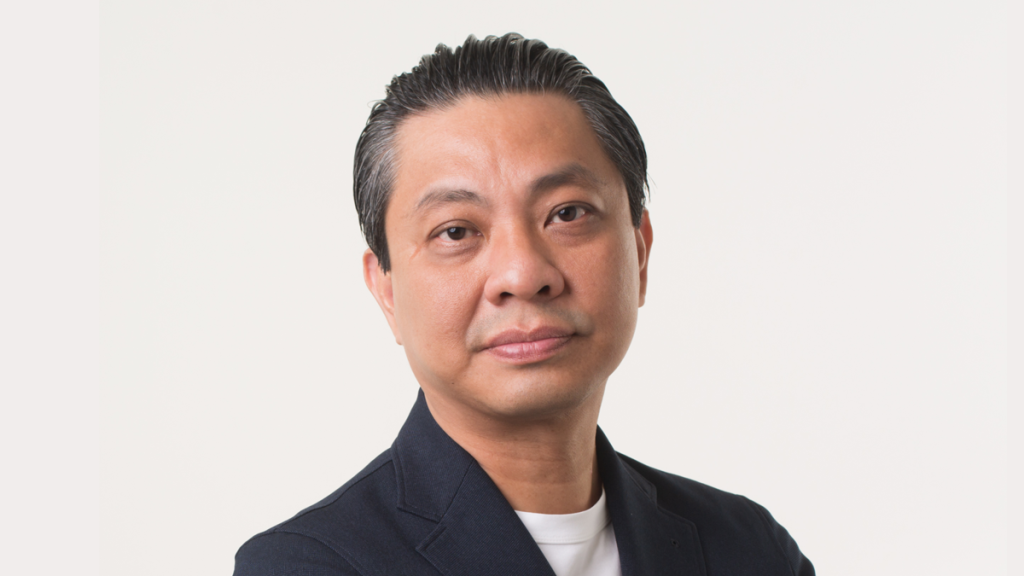
Otsaw founder and CEO Ling Ting Ming / Photo credit: Otsaw
Earlier this year, the startup unveiled the Camello+, a multi-purpose robot that can be adapted for different scenarios, be it office buildings or manufacturing plants. This marks a key innovation in the robotics sector, which usually builds robots for a single purpose.
At the heart of Otsaw’s technology is its proprietary mapping and localization software – an essential part of its IP portfolio. This software is what enables its robots to navigate complex environments, such as hallways and factories, and work more efficiently. According to Ling, effective IP management has led to significant cost savings during the firm’s commercialization journey.
“By maximizing the utility of our IP, we can efficiently allocate resources and accelerate our path to market, ensuring that we remain competitive in the robotics industry,” he says.
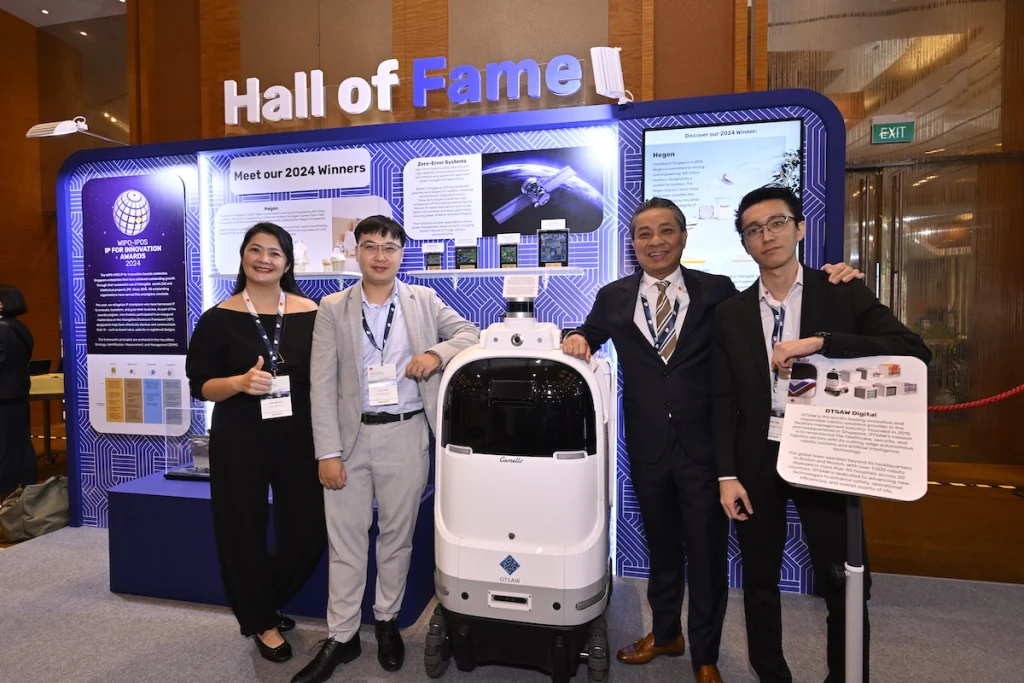
Ling (second from right) and his colleagues with the Camello+ at IP Week @ SG 2024 / Photo credit: Intellectual Property Office of Singapore
To date, Otsaw has over 1,000 robots deployed in more than 20 countries. Its meticulous approach towards managing its IP has earned it not just business success and accolades but also investor attention.
“When we secure funding, our IP gets closely examined as a key asset,” says Ling. “That scrutiny will be significant when we embark on our IPO journey. A strong IP portfolio can enhance our overall valuation, elevate our profile, and position us favorably in the market.”
Zero-Error Systems: Taking semiconductors to space
The semiconductor sector is going gangbusters in Asia Pacific, with billions of dollars flowing into the region’s players. While most semiconductor firms are focused on producing chips for AI or data science, Zero-Error Systems (ZES) is tackling a niche market: space, the final frontier.
According to ZES co-founder and CTO Shu Wei, the company develops commercial and cost-effective semiconductors that power space applications, such as low-Earth-orbit (LEO) satellites and deep-space rovers and landers. The startup’s chips are specifically designed to withstand the extreme conditions of space environments.

ZES co-founder and CEO Shu Wei / Photo credit: ZES
LEO satellites are critical for connecting remote and rural areas to the internet. With more commercial organizations like Elon Musk’s SpaceX looking to boost the number of satellites orbiting Earth, having access to high-performing, reliable, and affordable semiconductors is fundamental.
“Expensive satellite systems can experience failures because of harsh radiation effects in space,” Wei explains. To solve this problem, ZES developed and patented a radiation-resistant semiconductor that protects the satellites from these effects and prolongs their lifespan, increasing the return on investment for space companies up to 5x.
Wei points to its successful IP management as an important ingredient in the company’s successes.
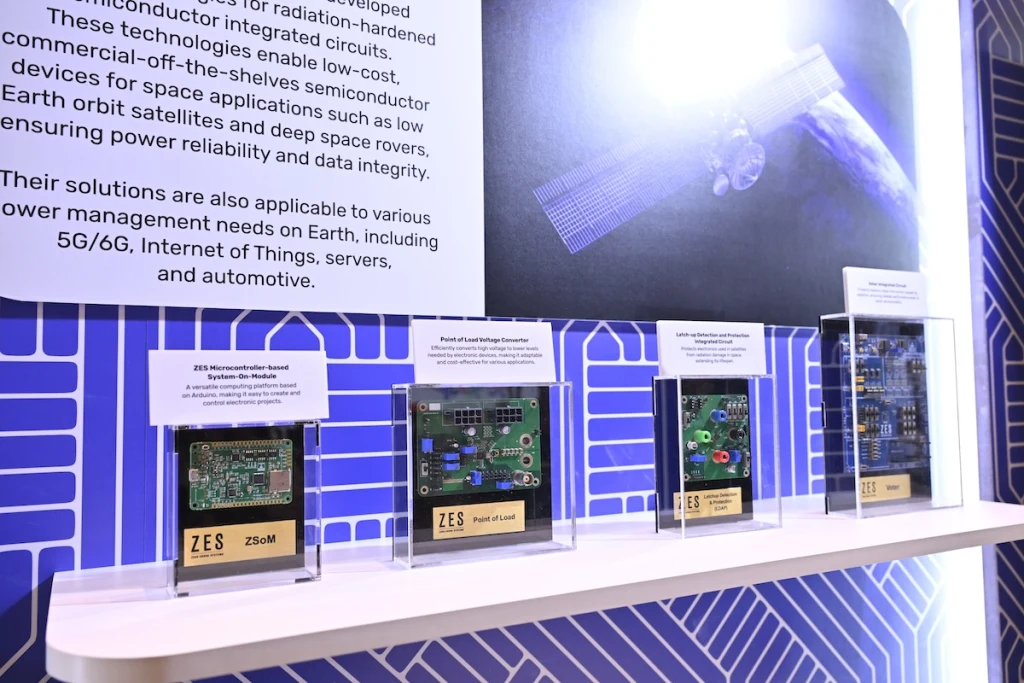
ZES’ solutions / Photo credit: Intellectual Property Office of Singapore
“Our patents are an important indicator of ZES’ success and valuation, helping our products become increasingly adopted in the market by major entities like NASA,” he says.
Given the costs of filing a patent, ZES has had to align its IP strategy with its business goals.
“We deliberately chose the US as our primary focus, even if it geographically limited our coverage,” he explains. “In a few years, we’ll file additional patents to expand our original scope and extend protection to a broader range of countries.”
Since ZES’ founding in 2019, the company has increased its patent applications by 5x, with 27 titles currently under its belt. As it looks to bolster its global distribution markets, ZES’ comprehensive IP portfolio has given it the opportunity to pursue licensing deals and collaborations internationally.
“Our marketing partnerships with satellite manufacturers will pave the way for the next generation of data centers and edge-computing in space,” Wei says. “These efforts will make it a cost-effective reality and contribute to a sustainable space ecosystem. Our vision is to be part of every satellite that is launched.”
IPOS International empowers enterprises, public agencies, and professionals in unlocking tangible value from their intangible assets and IP. It is a wholly owned subsidiary of the Intellectual Property Office of Singapore.
To learn more about the winners of the WIPO-IPOS IP for Innovation Awards 2024, watch this video.
This content was produced by Tech in Asia Studios, which connects brands with Asia’s tech community. Learn more about partnering with Tech in Asia Studios.
Stay updated on the go with our mobile app.
Get latest insights with smoother, more personalized experience through TIA mobile app.
Recommended reads
 Life’s a game, and AI agents are Animoca’s new play
 Indonesian AI startup goes global
 Forrest Li on scaling Sea, building smarter bots, and founder grit
 An AI assistant that joins sales calls and scores team skills
 Beyond the check: Why VCs need more than capital
 SGX’s CEO says it doesn’t need a unicorn to win
 SMEs want AI too, but not the kind Big Tech is selling
 Oatside’s alt-milk rise hits a profitable gear
 Alibaba’s financial health in 12 charts
 Asia’s telcos bundle AI into mobile plans. Will it pay off?





Editing by Stefanie Yeo, Winston Zhang, and Lorenzo Kyle Subido
(And yes, we’re serious about ethics and transparency. More information here.)