Malavika Velayanikal · · 4 min read
A VC-backed experiment in social commerce fails. Founder tells us why.
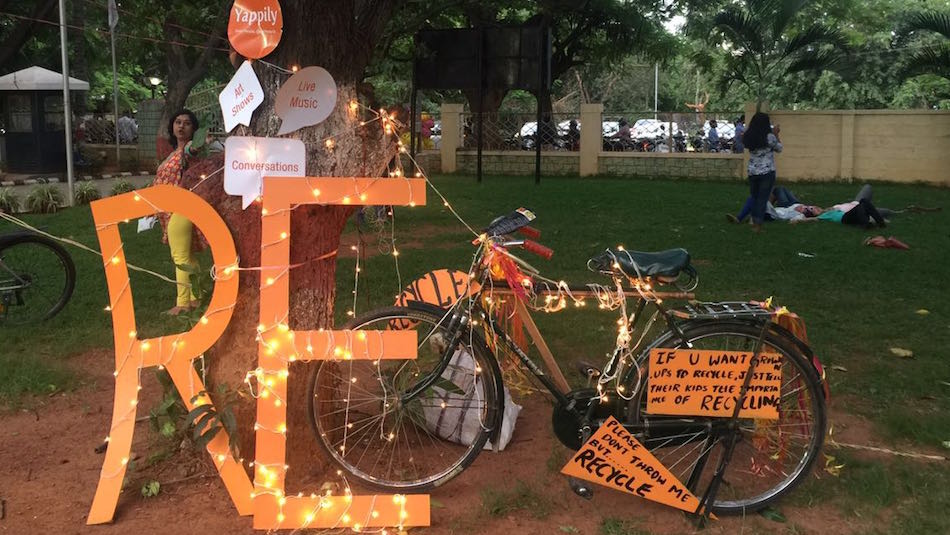
A Yappily declutter sale in Bangalore last year. Photo credit: Yappily.
This is probably another startup idea whose time hasn’t yet arrived. Today, Yappily – India’s first online flea market – announced that it was shutting down operations. “At this moment, we have dissolved our team, shut down our office, the application is running on an auto-pilot mode, and will continue to run so,” co-founder Rashmi Ranjan Padhy told Tech in Asia.
The startup had raised around US$1 million in a seed round of funding from Orios Venture Partners and a few angel investors last year. This round was not disclosed until now.
Rashmi took us through what led to the decision to shut shop when the startup still had “capital in the bank.”
Given the funding scenario and the mindset in India, we do not have the luxury of time anymore.
Yappily had started as Koove, a peer-to-peer used goods marketplace, in January 2015. It was modeled on Singapore’s Carousell, which is backed by top investors like Rakuten Ventures, Sequoia Capital, Golden Gate Ventures, and 500 Startups. At last count in the end of 2016, Carousell claimed to have over 57 million listings and over 23 million items sold in 19 major cities across 7 countries.
But India is a different ballgame, founders – Rashmi Ranjan Padhy, Rohit Kumar, and Kamonasish Aayush Mazumdar – found soon enough. “We had thought that in a couple of years we would be able to find product-market fit and scale up from there,” Rashmi told me.
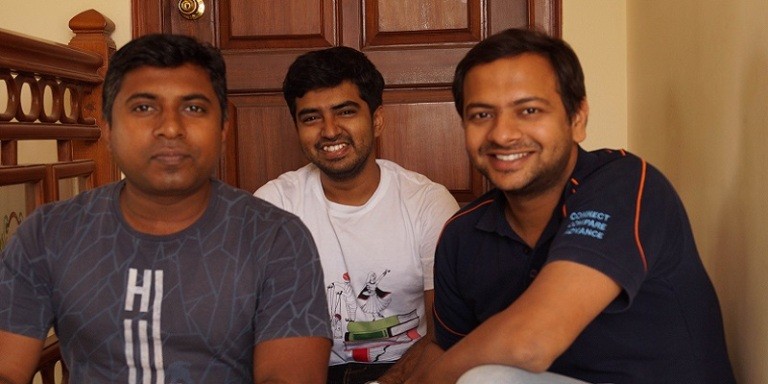
Yappily founders Rohit Kumar (left), Kamonasish Aayush Mazumdar (center), and Rashmi Ranjan Padhy. Photo credit: Yappily.
According to Rashmi, the advantage which Carousell has is probably the market. “When we started Koove, we were looking at Carousell in Singapore and built it around that. But the adoption curve in India for used goods is very different from what is there in Singapore or the US or Canada. In India, a used-goods-only application is very tough to sustain. This was the first hurdle we faced,” he explained.
“Used goods still carry a cultural stigma in India,” he added, giving the example of OLX and Quikr, which took about eight years to get a foothold in the market. “For a used goods segment to work in India, you would really have to be spending a lot of money and a lot of time to establish yourself in the market,” he said.
That’s why Koove pivoted to Yappily in July 2016.
See: Startups are nailing their own coffins with VC hammers. Here’s a way to escape that fate
The ticking clock and the elusive product-market fit
But Yappily was an entirely new domain for India: social-aided commerce. In other words, an online flea market, which has thousands of micro-sellers and small businesses interacting with buyers and selling niche, non-mass-produced products – from handmade glassware to natural lemongrass soap.





Stay updated on the go with our mobile app.
Get latest insights with smoother, more personalized experience through TIA mobile app.