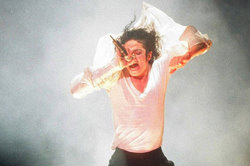
 Just 3 weeks prior, on the 25th of June, many around the world gathered to mark the one year death anniversary of the legendary singer who was the self-styled “King of Pop”. Whatever mud his name may have been dragged through in recent years because of his personal and very public eccentricities, what is undeniable is this: Michael Jackson was and continues to be a highly successful brand that has revolutionized the music industry in ways that no one has come close to doing in recent years.
Michael Jackson, the brand, also remains highly lucrative after his death. Billboard magazine estimates that Michael Jackson’s estate raised approximately $1 billion (£670 million) since his death one year ago.
So what’s all this talk about Michael Jackson again? Well, his succcessful singing career can teach us valuable lessons on brand management. Here are 3 key lessons that we oursevles have learnt.
(1) Build A Global Brand
To build a global brand, in entrepreneur speak, would mean to build a product/service that is replicable and scalable such that it can gain market traction rapidly. Think Michael Jackson’s worldwide phenomenon was a fluke? Wrong.
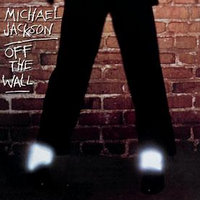 Before releasing his first solo album “Off the Wall”, record studio executives were already planning for it to be released on the global stage. “Our whole mind-set was that we were making music for the masses, and part of the big picture was to get the record company to turn around and market and promote to a mass market,” says Ron Weisner, who was co-managing Jackson with Freddy DeMann at the time. “Our attitude was, ‘Let the public decide — don’t just present it to a black market only.'”
Black artists were being sidelined during the 1970’s as a result of the Album Oriented Rock (AOR) format that radio stations across America adopted. AOR meant that program directors of radio stations discarded the wide range of musical genres embraced in earlier periods and focused almost entirely on a rock – centric sound. As such, folk, jazz and blues selections became rarer and program directors also blocked out black artists from having airtime.
This is why Michael Jackson elbowing himself into global consciousness is so phenomenal in itself because he was the first ever black artist to break down the racial and musical barriers and carve a place for himself as the “King Of Pop”.
How Michael Jackson and his team achieved that was to simultaneously release his singles across different platforms instead of carrying out promotion in a stepwise manner. After Epic Record’s (Michael Jackson’s recording label at that time) pop and R&B promotion teams heard “Don’t Stop ‘Til You Get Enough,” they knew that the record was going to be worldwide hit and the team therefore took the unprecedented step of promoting singles to R&B and pop radio at the same time. “It wasn’t the usual ‘Build up the artist at urban radio first and then go to pop,'” said Maurice Warfield (former West Coast regional urban promotion manager).
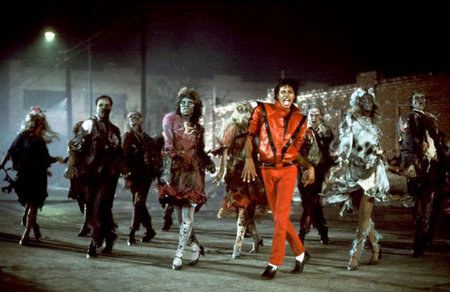
Moreover, when “Thriller” was released 1982, Epic’s then head of promotion, Frank Dielo (who grew so close to Jackson during “Thriller” that he later became his manager) decided to release two singles concurrently in order to broaden the album’s audience. Eventually, 7 of the album’s 9 tracks hit Billboard’s Top 10 and his hit song “Thriller”, his hit album, stayed at No. 1 for 37 nonconsecutive weeks. (Thanks Travis DeMaria for pointing out the mistake)
More than tactical strategizing, Michael Jackson made music which would appeal to a global audience. Who wouldn’t groove along to “Thriller” or be mesmerized by the magic of his James Brown inspired moonwalk? National, racial, age and gender boundaries ceased to exists with his music. And in 1985, We Are the World”, written by Jackson and Lionel Ritchie in 1985, cemented his global appeal.





Stay updated on the go with our mobile app.
Get latest insights with smoother, more personalized experience through TIA mobile app.










📅 Upcoming Events
22 October 2026
Payoneer x CSPN Summit 2026