This post is a part of our coverage of Startups in Asia (Singapore), Penn Olson’s first tech conference. Our full coverage of the event can be found here, for our RSS feed, click here.
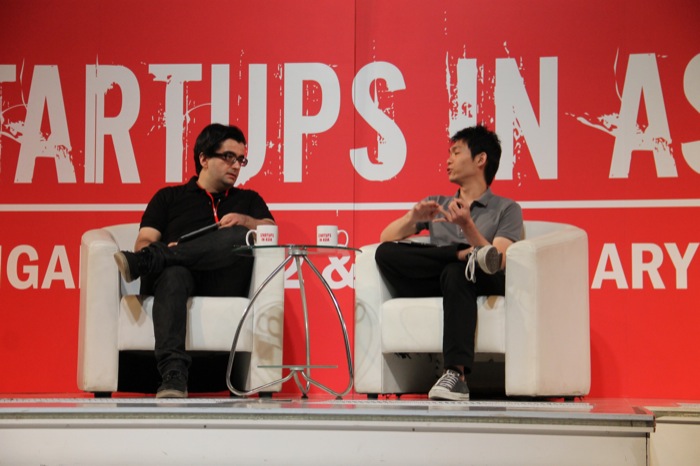
Dr. Serkan Toto, Independent Consultant, former Japan Correspondent For TechCrunch
Summary
This post will be updated with a summary once the session has concluded. Until then, check out our liveblog below.
Liveblog
#11:37: What I’m doing at the moment, I’m doing a lot of consulting work. I’m consulting one company in America right now. I’m not a permanent writer for Techcrunch anymore, but I’m still contribution on Asiajin and on my own website.
#11:35: It’s still good for VCs to come here to start exploring. And look now in the early stage and when a company emerges, then they are there. It is a very Japanese approach.
#11:34: Serkan notes that it is hard to name startups in the SEA region of an unbelievably high quality.
#11:32: Wills asks are southeast Asia entrepreneurs lazy? Serkan clarifies, they are not working hard enough. (He will not be tricked. The force is strong with this one)
#11:30: I think many Asian entrepreneurs, many southeast Asian entrepreneurs are not working hard enough. I spoke with an incubator, talking with head VC with startups in back. 6pm in evening, and people were starting to leave the office right before my eyes. I asked, where are they going? Dinner? No they are leaving. And that’s the disconnect. That’s comfortable, and that’s not how you do business. And you can’t beat entrepreneurs in Silicon Valley like that.
#11:26: On Asian mobile social startups bound to fail. The short answer is they are not good enough. [What about GREE, DeNA, and Mig33?]. Serkan says, it’s simple, they are not global companies. If you look at big Japanese companies, they still are very Japanese companies. If you look at the user base, it’s still very much a Japanese play. They are still not a global company definitely. But it’s still early. GREE has just opened their US office and it has only been 12 months. If you look back at history, where is the big mobile social gaming app from Asia? Nobody cares. [Willis says Pokemon, Tamagochi, with a laugh]. Serkan (with a smile) says, of course these are not web, and they don’t count in this industry that we are all a part of.
#11:25: There is not Southeast Asia company that I know of that has managed to crack the nut – that has managed to overcome the language barriers, cultural barries.
#11:23: Before mobile social gaming, social, the web, mobile were all seperate. Now they come together and they are like the best drug. [The business model is] [1] better than drugs, better than prostitution. This kind of phenomenon will take a while to replicate.





Stay updated on the go with our mobile app.
Get latest insights with smoother, more personalized experience through TIA mobile app.