Maria Li · · 5 min read
Here are 100+ Women in Power in Southeast Asia’s tech and startup community
In honor of International Women’s Day, Tech in Asia will be running content all week that celebrates and highlights some of the leading women in Southeast Asia’s tech and startup community. To kick things off, here is a list of 100 amazing women in the space, including founders, startup executives, and investors.
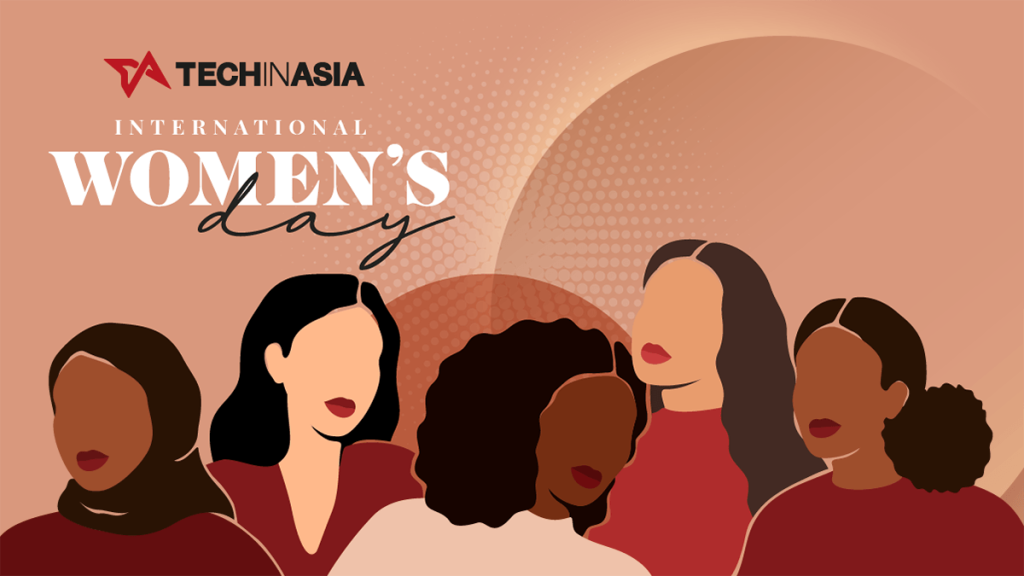
I’m starting this Women in Power List because women remain underrepresented in the tech community. Far too many founding teams, C-suite lineups, and events are still wildly imbalanced. Last year, women-only founding teams received just 2% of total funding, the lowest percentage since 2016, even as venture capital funding hit all-time highs. Yes, we can and should talk about change. But it’s 2022 – let’s go a bit further with action and representation.
Representation affects perception, and perception shapes our reality. Representation matters.
Collectively, we must eliminate the excuse of “I couldn’t think of any women for my team/event/board.” While we are a long way from achieving parity for women in tech, we should realize that there are many, many incredible women in our community already.
So the next time a leadership opportunity comes up, if you can’t think of highly qualified, capable women, use this list. Don’t let the excuse of not knowing enough women stop you from creating better representation in the ecosystem.
Some disclaimers: This list is neither comprehensive nor ranked. There are so many more fantastic women in Southeast Asia’s startup and tech community. And ranking is super subjective and I don’t believe in such nonsense. Finally, this list is my own, not that of Tech in Asia.
I will be updating this list monthly, as this is just a starting point. If you’d like to submit a name, please do so via this form.
The need for a list
I frequently find myself sourcing speakers for Tech in Asia’s various initiatives and events. While I’ve set the expectation for the team and myself to achieve gender parity in all our initiatives, we frequently fall short of our goal.
Why?
- Awareness. There are simply far more men in the tech and startup scene than women. For any given opportunity, once various prerequisites are applied, it’s not uncommon to end up with a list of men without thinking.
- Conversion. In absolute numbers, if not proportionally, there are many qualified women in our community. But with so many demands on their time, women must be more deliberate in picking their opportunities. As a result, representation can fall short.
Most recently for TIA School, I had to find eight founders to serve as guest lecturers for our course. By the numbers:
- 20 total invites
- 11 men, 9 women were invited
- 6 out of 11 men agreed to lecture (~55%)
- 2 out of 9 women agreed to lecture (~22% acceptance)
- Final result: 2 out of 8 lecturers are women, only 25% of the total group
I had a problem at both the top and the bottom of the funnel. I didn’t invite enough women in the first place and I also didn’t account for a lower conversion rate. My intentions were not enough. I needed to design parity into the process.
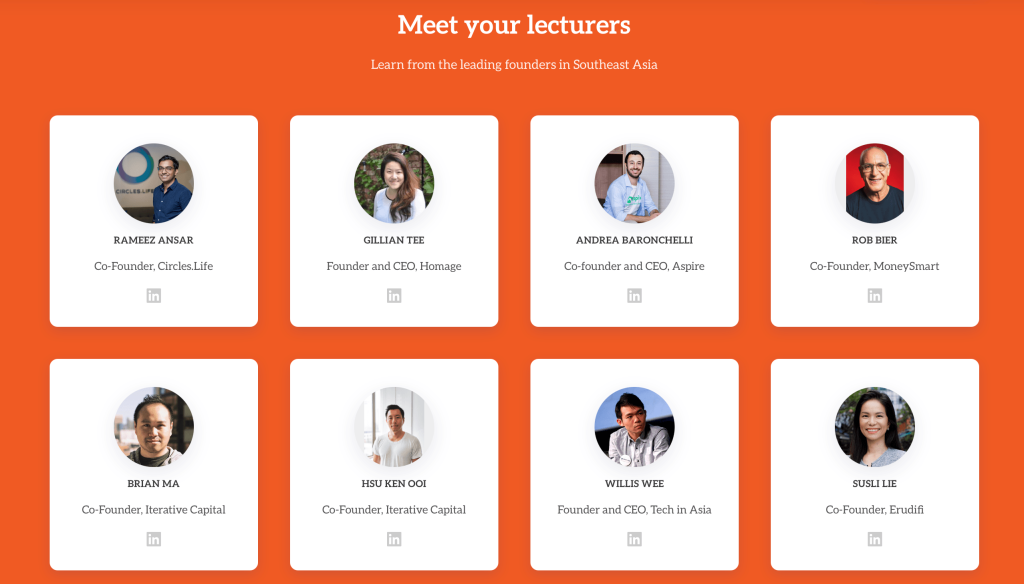
The final line-up of lecturers for TIA School.
Structurally, two small interventions would have gone a long way.
First, make sure to invite at least the same number of women as men, if not more, at the outset. It can be hard to think of all the qualified women at the drop of a hat, so start with this list or any other list!
Second, present great opportunities and persist in your offers. Because there are fewer women in the tech and startup scene overall, each female leader shoulders a heavier representation burden and has to be more selective in what she takes on. So don’t use a woman moderator as a band-aid for your “manel” – give her roles of substance and explain why she’s the best and most qualified person for that role. Make it worth her time.
Obviously, this issue is a complex one, and my speaker example has relatively low stakes. But it snowballs.
Fewer women being offered speaking opportunities means less of a platform for those women to be seen as leaders and leverage those opportunities for advancement. It means fewer female founders being seen as successful and potentially affecting their fundraising prospects. Fewer women in leadership roles means less role models for younger women. The problem stacks up, and even more so when we start talking about who to hire for the next fund, add to a board, or join a rocketship startup.
Break the Bias
This year’s International Women’s Day theme is Break the Bias. Biases are dangerous because they are rarely rooted in fact or logic and are based on emotion and anecdotes. Breaking those biases can be tough because it is an amorphous, shifting enemy.
One way to break the bias is to unearth, call out, and examine those biases when they are spotted. Another way is to design structures and processes to prevent biases from continuing.
The Women in Power List is my attempt to break the bias that there are not enough women leaders in our tech and startup community.
That’s simply not true.
There are many amazing female leaders already. Let’s keep highlighting and celebrating them as we work to raise more women into leadership ranks.
This week, Tech in Asia is tackling gender-based biases from different angles through think pieces, profiles, events, and surveys. Some highlights include a closed-door lunch with Love Bonito CEO Dione Song and Carsome CFO Juliet Zhu discussing how to bring more women into positions of leadership. We also had a conversation with two forward-thinking female leaders – Ayesha Khanna from Addo AI and Godelieve van Dooren of Mercer – about structural changes to address leadership and pay gaps. Plus, we’re releasing a qualitative survey that gives an intimate look at what it’s like being a female founder in their own words.
Finally, to really widen the top of the funnel for women in tech, we’re making a donation to Generation Girl, a non-profit organization in Indonesia that creates programs to educate and train young women in STEM disciplines.
International Women’s Day is just one day, and our content campaign is just one week, but the processes that we develop to contain biases can go a long way.
So my question back to the community is: What structures can you design to break biases?
Thanks to our sponsors Grab, Globalization Partners, and Infobip for helping us make this year’s International Women’s Day campaign and our donation to Generation Girl possible.
Stay updated on the go with our mobile app.
Get latest insights with smoother, more personalized experience through TIA mobile app.
Recommended reads
 Who pays for AI in your language?
 MoneySmart grows revenue by 26% in 2025, but AI threatens margins
 The truth about AI language models: No one wants to pay for them
 Tracking AI hiring in Singapore: OpenAI, Anthropic, and more
 Korea’s physical AI ambitions meet the factory’s bottom line
 SEA financials tracker: Moladin’s revenue rises 6% in 2025
 On‑demand services lift Line Man Wongnai’s 2025 revenue to $544m
 Flipkart’s costly late push into quick commerce and food delivery
 Inside Singapore’s government team that kills its own products
 Once an IPO hopeful, SCI Ecommerce nears collapse




Editing by Jaclyn Tiu
(And yes, we’re serious about ethics and transparency. More information here.)