Terence Lee · · 4 min read
Grab’s 2015 financial numbers revealed. How do they impact its rivalry with Uber?

Photo credit: Grab
Following Didi’s merger with Uber China, which many describe as a win for Didi, all eyes are now on how this earth-shaking move will affect on-demand transportation around the world.
Specifically, can Grab eke out a similar win in Southeast Asia against chief rival Uber? Tech in Asia obtained Grab’s 2015 financials to find out.
The documents we received covered GrabTaxi and GrabCar in Singapore (they’re two separate entities), as well as Singapore-registered GrabTaxi Holdings, the defunct holding company for Grab’s businesses in the region. Its shareholdings were transferred to Cayman-registered Grab Inc last year.
Here’s a look at GrabTaxi Singapore’s numbers:
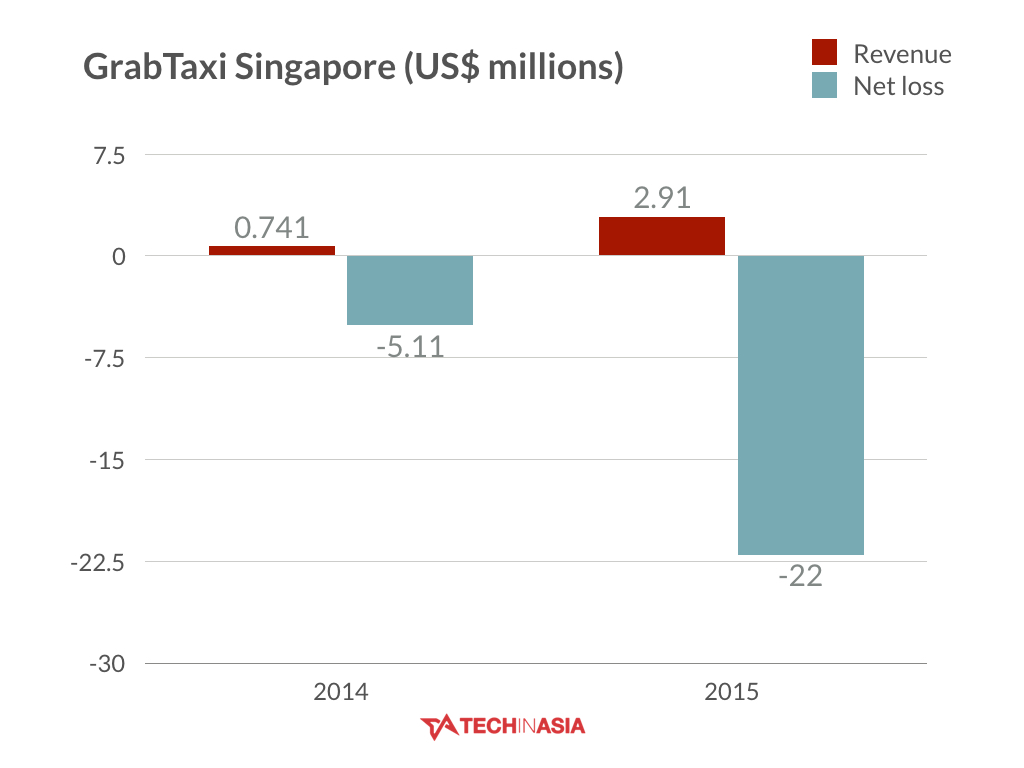
The picture isn’t rosy. Its net loss soared at a faster clip than its revenue, the bulk of it caused by operational costs. Its marketing expenses also grew rapidly, from US$119,000 to US$1.99 million.
Next, we look at GrabCar Singapore, which is a relatively new product, and that means year-on-year numbers aren’t available:
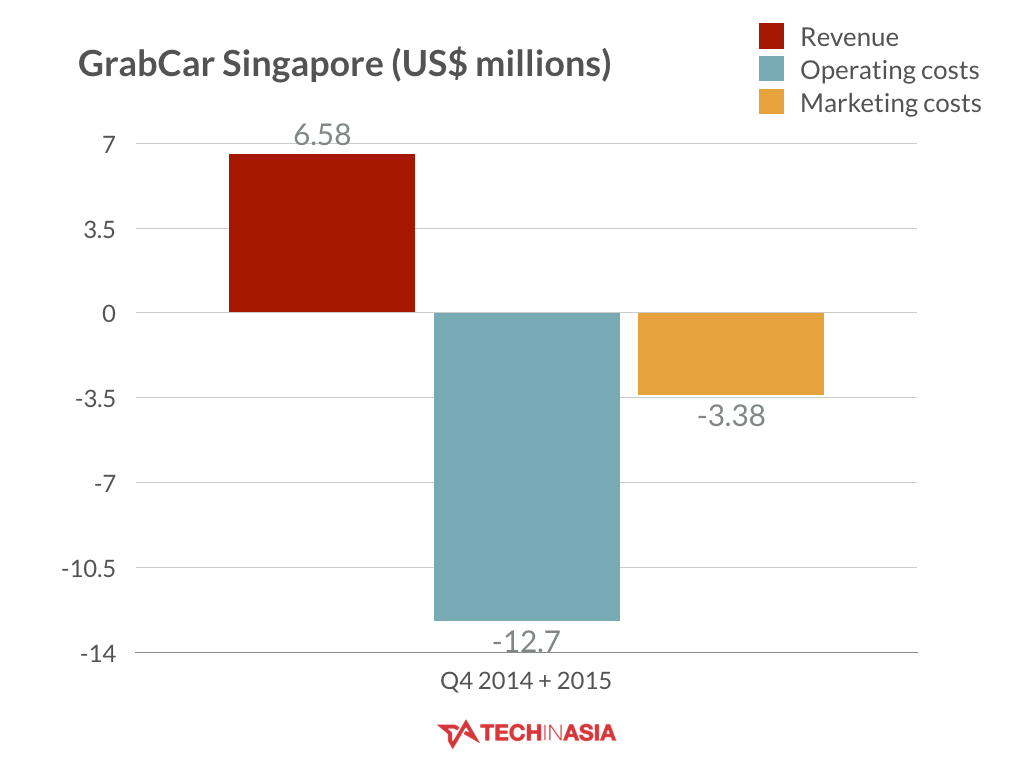
It’s tricky to draw conclusions from this. On the surface, GrabCar, which lets users hire private drivers rather than cabbies, looks like a far more lucrative business than GrabTaxi due to its healthier-looking margins. GrabCar’s revenue has already outpaced the taxi service.
That makes a lot of sense, because instead of sharing profits with taxi companies, GrabCar can get a bigger chunk of each ride fare for itself.
On the other hand, part of GrabCar’s expenses may be offset by GrabTaxi’s operational costs. The two do share the same app after all.





Stay updated on the go with our mobile app.
Get latest insights with smoother, more personalized experience through TIA mobile app.