- Premium Content It takes our newsroom weeks - if not months - to investigate and produce stories for our premium content. You can’t find them anywhere else.
 Melissa Goh · · 8 min read
Zalora’s no longer the fashion shopping site you used to know
Twelve football fields. That’s the approximate size of Zalora’s regional fulfillment hub in Shah Alam, a 90-minute drive from Kuala Lumpur’s city center, where several million items await shipment.
A majority will eventually be shipped to Zalora’s customers in the Philippines, Malaysia, Indonesia, Singapore, Taiwan, and Hong Kong. Many, however, will find their way to customers of third-party brands who purchased the goods from another ecommerce marketplace – like Shopee or Lazada – or directly from a brand.
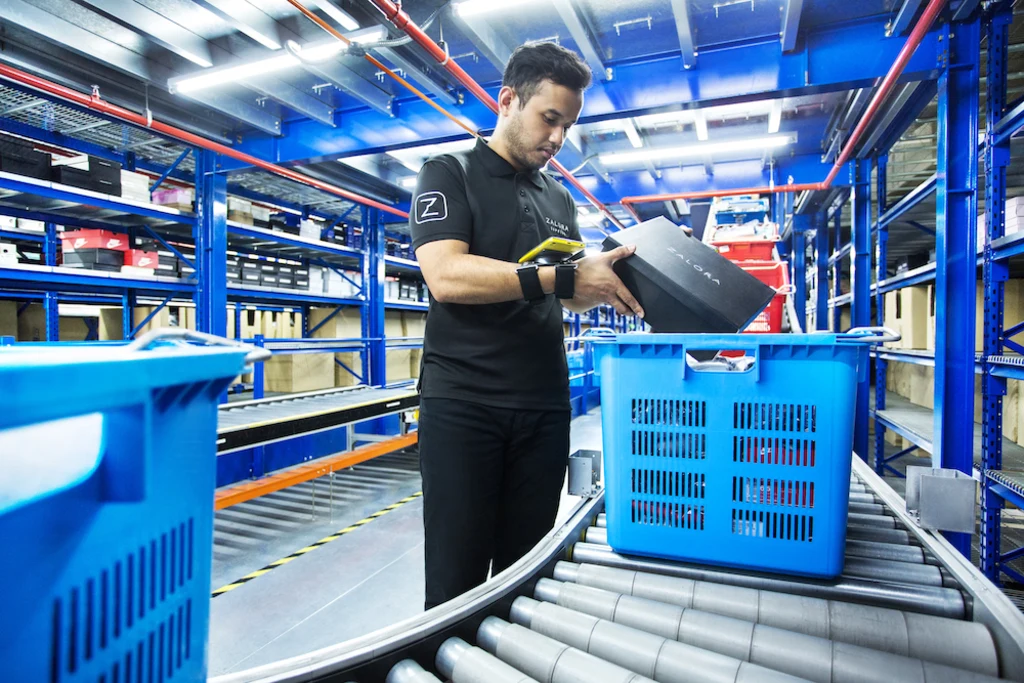
Zalora’s fulfillment center in Malaysia can process up to 150,000 items a day. / Photo credit: Zalora
Zalora is betting that its fashion and logistics know-how that it accumulated over a decade of operations, along with its active user base of 2.4 million customers as of Q4 2023, will make it the ecommerce enabler of choice for third-party fashion brands.
These brands may be looking to enter or scale up in Southeast Asia, a region expected to deliver some US$186 billion in gross merchandise value (GMV) by 2025.
For the Global Fashion Group-owned company, which sells a mix of goods from over 300 brands as well as its own, expanding platform services to third-party firms has been years in the making. Now, Zalora is turning things up a notch.
Here’s the pitch: Its three fulfillment centers in Malaysia, Indonesia, and the Philippines can hold inventory for brands no matter the digital channel they’re using – even competitors like Shopee and Lazada. Zalora’s over 70 logistics partners in six Asian markets gives brands access to a wide distribution network. It even offers same-day delivery in some markets.
So far, the company has signed up over 30 brands, including H&M, Mango, and Superdry, to its warehousing and logistics solution 1SS.
Speaking to Tech in Asia from Kuala Lumpur, Zalora’s regional director for platform services Matej Urban notes that the firm is “moving beyond the Zalora marketplace … We see ourselves a bit more as an enabler of fashion in the region.”
Already, platform services contributed 12% of Zalora’s revenue in 2023.
Returns – the big pain point
As a fashion-focused platform, Zalora does better than general marketplaces on several counts.
“Logistics is very special in fashion because you have such a high returns rate,” Simon Torring, co-founder of marketing intelligence platform Cube Asia, tells Tech in Asia.
On average, some 24% of online apparel orders are returned, according to research and advisory firm Coresight Research.
Zalora’s more than 10,000 return points across the region facilitate the swift handling of returned orders.
Partner or competitor?
High touch to profitability
Bigger ambitions
Stay ahead in Asia’s tech landscape
This is premium content. Subscribe to read the full story.
It’s quietly forging a new identity as a fashon ecommerce enabler.
We know this is not ideal. ⌛ Sign up in 20 seconds. Cancel anytime.
Our subscriber community includes professionals from these companies:





Stay updated on the go with our mobile app.
Get latest insights with smoother, more personalized experience through TIA mobile app.










📅 Upcoming Events
22 October 2026
Payoneer x CSPN Summit 2026