 Stefanie Yeo · · 5 min read
How this YC-backed startup is making it easier for businesses to manage payments

When Karthik Narayanan and his co-founder Anantharaman Pattabiraman expanded their mobile fitness startup Auro from the United Kingdom to the US, they hit an unexpected roadblock.
They saw a high rate of declined payments on their platform, with only 10% of payments actually going through.
After some digging, they figured out the reason. The payment processor they had been working with required that firms collect customer addresses in order for transactions to have a higher likelihood of pushing through in the US. This was something buried within the payment processor’s documentation and was unique only to the US.

Karthik Narayanan, co-founder and CTO of Inai / Photo credit: Inai
“This led us to realize that even for very similar markets, we had to tweak our payments stack to accommodate all these peculiarities,” explains Narayanan.
At the same time, as Auro looked to expand even further, its product managers needed new payment methods to be integrated into the platform, which took a toll on engineering resources.
Once the duo brought Auro to an exit, they turned their attention to addressing the problems they faced in payments, leading to the birth of payment integration platform Inai.
Putting payments in place
Inai, which was launched in 2021, aims to enable merchants to integrate and accept all payment methods with minimal need for code. The firm pulls together all the different payment gateways and methods into a single platform that can be easily integrated into a client’s tech stack.
The company also facilitates payouts, be it for refunds or payments to users, through the same platform. This allows businesses to offer payout options that best suit their customers’ preferences.
“‘Inai’ in Tamil means ‘connect,’” shares Narayanan. “We connect everything through a single integration.”
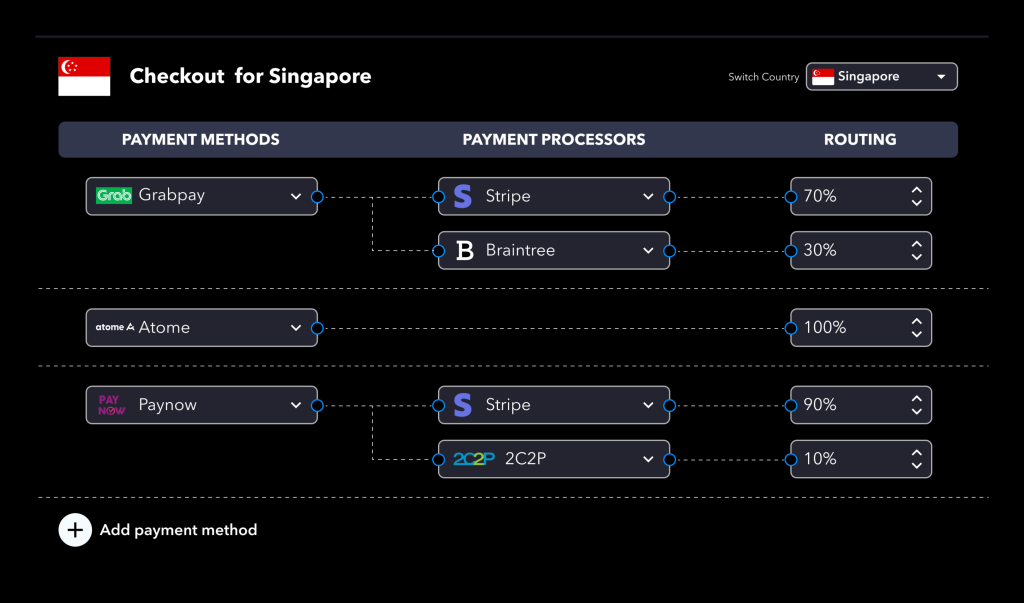
Photo credit: Inai
According to the co-founder, Inai’s key value lies in streamlining payments and helping firms expand quickly, even in areas with fragmented payment landscapes such as Asia. For example, instead of needing several weeks or months for engineers to integrate a new payment method into a company’s product, Inai’s customers can simply “turn on” the functionality within their dashboards.
The firm also enables businesses to manage their payment methods through a no-code platform, freeing up engineers to focus on critical technical problems and giving managers greater control over their products.
“Due to the challenges involved with payment integration, many business decisions would end up being made by the engineers,” explains Narayanan. “Inai helps companies move quickly and optimize for their customers.”
The company has grown rapidly in the year since it was founded. Besides being a part of Y Combinator’s Summer 2021 cohort and raising US$4 million in funding, the firm’s revenue has grown 25x in the last five months, according to Narayanan. It also counts major brands among its clients, such as live commerce enabler Upmesh and car-sharing platform Zoomcar. Inai has enabled payment integrations in markets across six continents.
Keeping up with the growth
“The challenge that every high-growth company has is that the rate at which you’re able to put your product out is going to be slower than the rate at which customers actually come in,” shares Narayanan. While he calls this “a good problem to have,” it was still something the team had to contend with in the first quarter of this year.
When Narayanan and Pattabiraman first started Inai, they knew that they would be addressing a significant need in the market, thanks to their own experiences and conversations with other founders and business owners. The main issue, then, was execution.
“We had to put the right momentum in place,” says Narayanan. “Pick any gateway, pick any payment method, and we should be able to integrate it much easier and roll it out way faster than any of the other options in the market.”
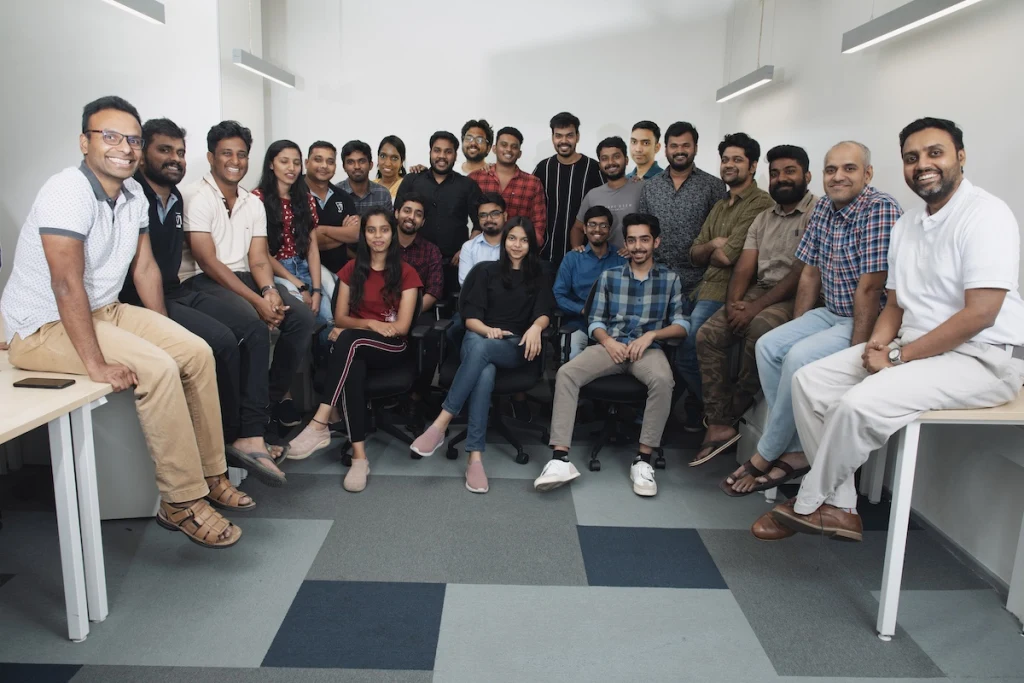
The team at Inai / Photo credit: Inai
However, this was much easier said than done. There are a variety of payment methods available all around the globe, and developing custom integrations for each one of them would be time-consuming.
That’s why the team at Inai decided to focus on their fundamentals, tasking their engineering team to sit down and develop a framework upon which new payment rails could be easily added and managed.
The firm has put together a playbook around its tech infrastructure and created a standard operating procedure that can be leveraged whenever a new payment method or gateway comes into the picture. To streamline the process even further, Inai also used “platformization” – the process of capturing core functionalities in abstractions that reduce the need for software engineers to build support for that functionality.
It has also developed a strong customer relationship management team, opening up different channels of communication with its customers and working closely with them to identify their problems and meet their needs.
“We got into customer success from day one,” explains Narayanan. “We blurred the lines between customer success, engineering, and product so that everybody could have the complete context of what happened, and we stayed very close to our customers.”
All of this, Narayanan says, would not have been possible without the team he and Pattabiraman built at Inai.
“We knew this was going to be a challenge, and we had the right team in place to help us out,” he says.
Powering payments for the future
While Inai has grown significantly in the year since its launch, Narayanan believes that it’s only just getting started.
“The pipeline looks very exciting – we are going to be going deep into Asia and expanding to even more parts of the world,” he says. “And if we keep up with even a fraction of the growth we’ve been seeing over the next couple of years, I believe we can be a unicorn.”
The firm is also looking at expanding what it can offer customers beyond just payments integration and saving on engineering resources.
“We will be going deeper in terms of driving significant outcomes for our customers, through data,” explains the co-founder. “We are sitting on a mound of anonymized data around payments, and we want to be able to support our customers through the use of dynamic routing and offering them the best solutions possible for their needs.”
And above all, Inai wants to become a key player in the payments world – on par with the likes of Stripe and PayPal.
“We want to be the de facto choice when it comes to payment integration,” says Narayanan. “Think payments, think Inai.”
Build a modern paystack with no code – Inai is a one-stop solution for payment integration.
Sign up for a demo of Inai on its website.
This content was produced by Tech in Asia Studios, which connects brands with Asia’s tech community. Learn more about partnering with Tech in Asia Studios.
Stay updated on the go with our mobile app.
Get latest insights with smoother, more personalized experience through TIA mobile app.
Recommended reads
 How financial infrastructure powers global startups
 Is the worst over for Shopee?
 Tiger Global-backed Ula lays off 134 employees
 This startup is optimizing the international returns process for sellers on Amazon, eBay
 Agritech startup raises $1.8m pre-seed, largest in Bangladesh
 How credit analysis can help Tokopedia score against ecommerce rivals
 Lessons from the demise of two Chinese grocery delivery pioneers
 Mortgage fintech: Indonesia’s next big consumer lending space
 GoTo takes a knife to costs, but market remains unconvinced
 Examining Alfamart’s and Indomaret’s digital moves





Editing by Nathaniel Fetalvero and Jaclyn Tiu
(And yes, we’re serious about ethics and transparency. More information here.)



📅 Upcoming Events
22 October 2026
Payoneer x CSPN Summit 2026