Stefanie Yeo · · 5 min read
Why Singapore needs to be more inclusive to realize its tech hub dream
Every day, 100k+ smart people read our newsletter. You can sign up here.
Hi readers,
Some time ago, I was scrolling through Facebook and saw that a former classmate, who had moved to the US for university and found a job there, had gotten married. At this point in my life, seeing news of nuptials on social media is a common occurrence. However, there was something slightly different about this announcement: She married a woman.
I was obviously delighted for her and sent her my heartiest congratulations. But I was also saddened by the fact that it’s extremely unlikely she will ever return to Singapore outside of social visits. Members of the lesbian, gay, bisexual, transgender, transsexual, and queer (LGBTQ) community face challenges in the city-state after all.
She’s just one of the many talented people in Singapore who have gone abroad, finding better prospects in more inclusive parts of the world where she can love freely and truly. This migration is a “brain drain” of sorts that might be hampering Singapore’s tech ambitions.
Today we look at,
- Whether Singapore’s challenges with LGBTQ acceptance are holding it back
- What fresh funding will do for this Australian spacetech startup
- Other newsy highlights such as Didi’s public market debut and MoMo’s first acquisition
PREMIUM SUMMARY
Not just about the rainbows
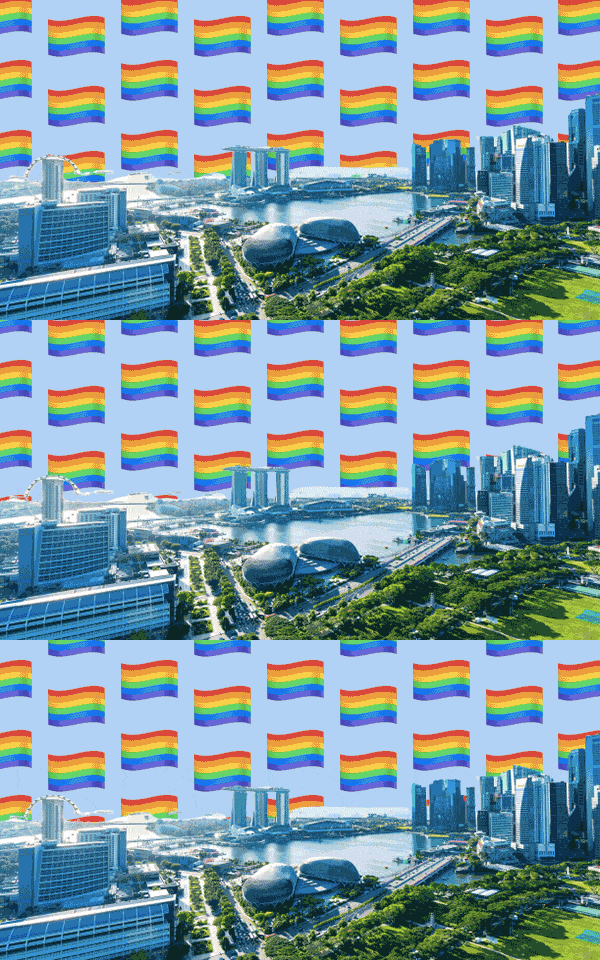
Singapore has long positioned itself as a thriving tech and startup ecosystem. However, its struggles with the acceptance – and broader rights – for LGBTQ individuals means that a part of the talent needed to fuel its tech hub ambitions may take their lives, and livelihoods, elsewhere.
- A lack of awareness: The root of Singapore’s struggle with LGBTQ acceptance is the lack of awareness that a problem exists in the first place. Civil society movements like Pink Dot, which aims to promote greater understanding, inclusion, and acceptance of the LGBTQ community in Singapore, try to address this issue, but restrictions on who gets to join and how such groups operate curb their visibility.
- Erring on the side of caution: The Singapore government is reluctant to enact any sweeping changes in terms of laws and practices surrounding LGBTQ rights and has taken a case-by-case approach on several fronts. However, addressing LGBTQ-related problems on a per case basis isn’t the same as saying that everyone is entitled to equal rights.
- Could tech open doors? With the government’s reluctance, some are looking to the private sector – and tech companies in particular – to take the lead. However, just because a company is in tech doesn’t mean it’s necessarily inclusive, and discriminatory laws and policies will continue to prevent the city-state from getting the best talent.
Read more: Is Singapore’s struggle with LGBTQ acceptance hampering its tech ambitions?
STARTUP SPOTLIGHT
Into the stratosphere 🚀
Everything you ever wanted to know about fintech





Stay updated on the go with our mobile app.
Get latest insights with smoother, more personalized experience through TIA mobile app.