What do maintaining medical records, managing a supply chain, and buying a house have in common?
In the near future, you could do all these with the help of smart contracts.
Though its terminology is synonymous with blockchain technology, the concept of a smart contract has actually been around for at least 24 years, predating the rise of blockchain technology by over a decade.

Photo credit: vadymvdrobot / 123RF Stock Photo.
“Smart contract” first appeared in a 1994 research paper by Nick Szabo, an American computer scientist and cryptographer. Regarded in the blockchain world as the forefather of cryptocurrency because of his research in digital tokens, Szabo – describes the term as “computerized transaction protocols that execute terms of a contract.”
Its applications in the mid ‘90s were limited because technology at the time could not accommodate a decentralized and incorruptible smart contract. But with the advancements in technology over the past couple of decades, Cam Pham, a researcher at blockchain company TomoChain, is optimistic that smart contracts will soon see large-scale development and applications.
“Smart contracts have a lot of applications in a lot of industries,” says Pham. “Wherever you need trust and you don’t need intermediaries, you can use smart contracts to build decentralized applications.”
Easier than you think
There’s a common notion that smart contracts are difficult to understand because of their association with blockchain technology, but it works fairly simply.
The confusion stems from its nomenclature. While standard contracts outline the terms of a relationship between different parties, smart contracts are programs that execute actions based on a pre-defined set of rules created by the contract’s developer. In some consortium blockchain technology like IBM’s Hyperledger Fabric, smart contracts are known as chaincodes.
Simply put, they work on an “if… then…” premise. This means that if a certain predetermined condition is met, then a command will be executed based on the contract’s programing.
To illustrate the point, imagine you’re buying a house and paying for it in cryptocurrency. A smart contract would complete a transaction of tokens from your crypto wallet to the sellers’, on the condition that they send you the digital key to your new home via the blockchain at an arranged date.

Photo credit: 123RF
In this case, the condition to be met for the smart contract to be executed is that the sellers send you a digital key to the house, while the action executed by the contract is a transfer of funds from you to the sellers. If the conditions set in the contract weren’t met, you’d be able to rest easy knowing that your funds are safe in your own wallet.
Smart contracts in action
Smart contracts’ applications aren’t limited to just trading – they can be used in areas like supply chain management as well.
According to Pham, information on purchases – such as which products are popular or how many of a certain product is purchased – can be “sent to a supply chain’s smart contract,” which will relay that information to merchants who can then make decisions to satisfy demand.
“You don’t need intermediaries. You don’t need a central service provider, and no one person can control it or make changes without authentication,” he adds.
Because of their secure nature, smart contracts can also be applied in the healthcare industry, specifically in storing medical information or other sensitive data.
“I can save my medical records, for example, to a smart contract, so that I can refer to it or share it with other people later,” says Pham.

Photo credit: Pixabay
A record can be encoded and stored with a private key on a blockchain, whose smart contract would then only give authorized individuals access to it. Similarly, medical receipts can be stored on the blockchain and automatically sent by smart contracts to insurance companies on patients’ behalf, without any risk of information being tampered or lost.
“Any change is detected and needs to be authenticated,” Pham adds.
The clause in smart contracts
However, smart contracts, along with blockchain technology, have still yet to see widespread adoption in the tech space.
Even though blockchain is becoming increasingly prevalent, the technology’s scalability is still a stumbling block to its applications.
“Currently, Ethereum supports only 15 transactions per second. If we have a decentralized application that is massively adopted by people, you can’t run it on Ethereum,” explains Pham. To stress his point, he cited the example of CryptoKitties, an Ethereum-based application that allowed users to breed and trade unique digital kittens. The app became a viral sensation in December 2017, congesting Ethereum’s blockchain for almost two days.
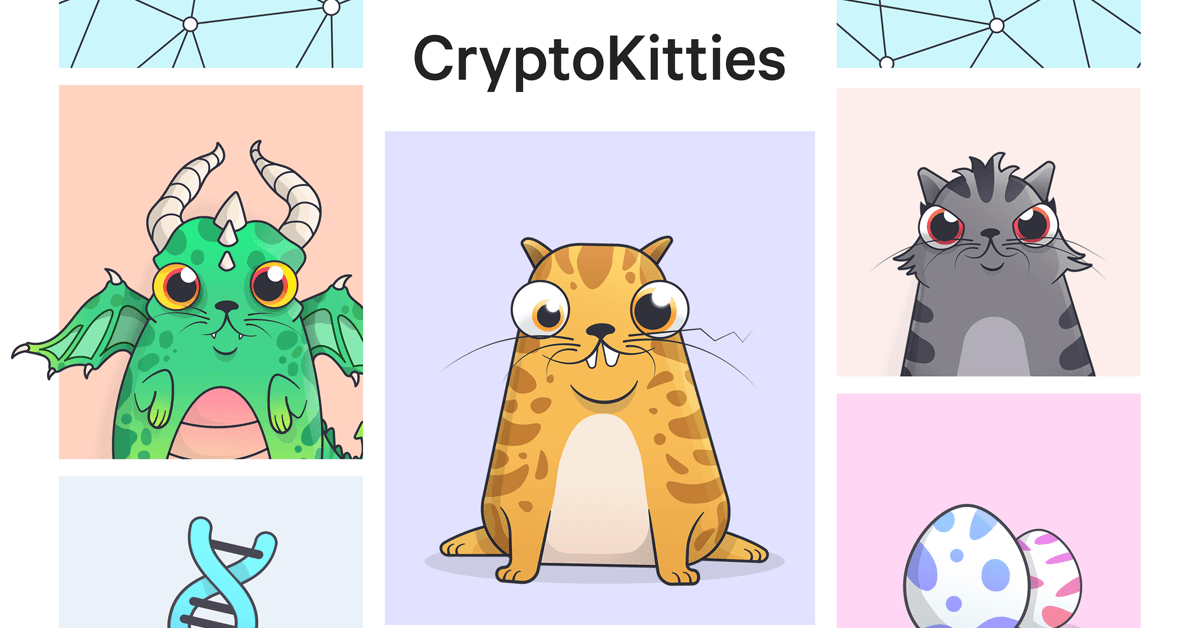
Photo credit: CryptoKitties
“Scalability as a blockchain is very, very important in order to support many people,” adds Pham.
In addition, smart contracts are not yet able to directly access information from outside of the blockchain. Pulling data from the internet will become very important for the commercial applications of smart contracts, notes Pham.
Some blockchain companies like Oraclize and Chainlink are working on ways to feed external data into the smart contracts. Pham contends that the development of these methods will definitely push the adoption of smart contracts to another level.
While blockchain projects like TomoChain work to solve the scalability issue, Pham emphasizes the importance that smart contracts play in the future of technology.
“If we can apply the efficiency of smart contracts into other technologies, we can create better systems,” he concludes.
TomoChain is a public blockchain that allows developers to create decentralized applications on its platform for global adoption.
To find out more or reach out for business partnerships, visit the TomoChain website.
Stay updated on the go with our mobile app.
Get latest insights with smoother, more personalized experience through TIA mobile app.
Recommended reads
 A Mythos quest? SEA fighting AI threats with obsolete security
 Is Dubai stealing Singapore’s thunder in crypto?
 Is crypto’s real-yield revolution here?
 How AI agents could blindside the banking industry
 Mission impossible: Recovering 3AC’s missing assets
 Ethereum’s ‘The Merge’ will cause chaotic grab-and-dump campaign
 Bank of Thailand partners with 2C2P, others to launch CBDC trial
 Indonesia’s OJK launches more stringent regulations for online lenders
 SG’s crypto brain drain and India’s new digital rupee
 This Singapore company is turning the tide of plastic pollution at scale





Editing by Eileen C. Ang and Steven Millward
(And yes, we’re serious about ethics and transparency. More information here.)