C. Custer · · 6 min read
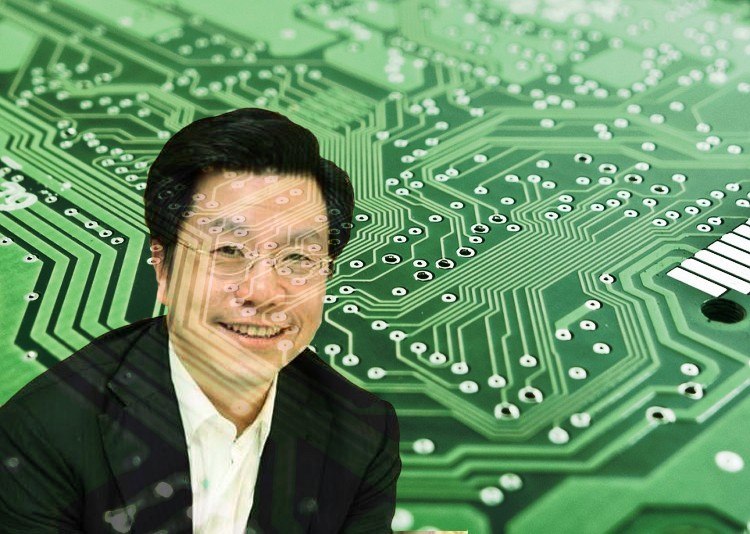
Kaifu Lee explains the real dangers of AI after AlphaGo’s historic victory
Just in case you’ve been living under a rock: a historic battle is playing out right now between man and machine. Google’s AlphaGo computer is up against South Korean Go champion Lee Sedol in a five-game match. It’s the first time a computer has ever played this level of Go master, and so far, the computer is winning.
Although this may not seem like a big deal, it is. IBM’s Deep Blue computer may have beaten world chess champion Garry Kasparov nearly 20 years ago, but Go and chess are pretty different. Go’s board is bigger, and way more moves are possible. There are a number of reasons why it’s far harder to teach computers Go. Go computers have only recently started beating skilled Go players, and that’s when the humans play with handicaps. So the fact that a computer is now two games up on one of the best Go players ever, with no handicap? That’s a big deal.
Needless to say, this match is getting a lot of attention in China’s tech circles, and some of the country’s most prominent tech influencers have already spoken out about it. Xiaomi CEO Lei Jun and Innovation Works founder and former Google China head Kaifu Lee have both gone so far as to publish essays about the match and artificial intelligence in Chinese on Sina Tech.
Both essays are both interesting in their own right and also a fascinating look into how these men view the future of artificial intelligence, so we’ve translated them both in full. Kaifu Lee’s essay is below, and Lei Jun’s can be found in a separate post here.
(Note: both of these articles were written after AlphaGo’s first win, before the second game – which AlphaGo also won – had been played).

Yesterday AlphaGo won its first match against [World Go champion] Lee Sedol, and it’s given rise to a lot of “machines surpass humanity, science fiction has become real” sort of talk. Especially interesting is that some have wondered whether AlphaGo will lose some of the next matches on purpose so as not to arouse humanity’s suspicion about its true desire to rule over humans. Actually, although machines are way more capable than humans when it comes to logical analysis, they’re still just a tool that’s being used by humans. The real danger of AI like AlphaGo is not that it will enslave humanity, it’s that it will cause humans to lose our fighting spirit and our sense of purpose.
Some people describe AlphaGo as thinking the way that humans do, just much faster. But that’s not really accurate. AlphaGo is far faster than humans, but AlphaGo’s thinking, though created by humans, is not the same as human thinking. AlphaGo is capable of deep logic, and after some tweaking by experts it can easily leave humans in its rearview on any pure logic problem. Machines are getting faster, their learning abilities are getting stronger, and they have access to more and more data.
These powerful machines will bring with them the first historic wave of joblessness
So what kind of changes can deep learning-based AI bring? In the future we’ll see a lot of commercial applications. AI will solve problems, save rise, and create tremendous value for both individuals and companies. [For example,] in the future AI trading will give rise to higher investment returns with lower risk. Automated diagnosis and gene sequencing will lead to personalized medical treatment. Recommendation engines will recommend precisely the products, food, and even friends that you want. With big data, powerful computing, and expert [human] adjustment, there will be no need for AI to compete with humans because humans will be so obviously inferior (in the same way that no human can compete with a search engine at finding what you want on the web).
These technologies may help experts, or they may replace experts. Non-expert workers will mostly be out of work. In the next ten years, a lot of jobs that exist today will be replaced by computers. Machines will replace many nurses, reporters, accountants, teachers, finance managers, etc. Any job that includes terms like “assistant,” “agent,” or “broker” is very likely to be replaced. The machines don’t need salaries, just electricity and the web, and they can work 24 hours a day, 365 days a year. These machines will help us generate most of the world’s wealth.
Although these machines are genuinely intelligent, efficient, hardworking, and cheap, they’re not very human. They’re just cold computers and tools. For example, when AlphaGo defeated Lee Sedol in the first Go game, it wasn’t happy, and it didn’t understand our discussions about it. It couldn’t even say how it had won the game. Its thinking is very advanced, but it can’t answer questions like “what does winning feel like?” or “why is Go fun to play?” or even “how do you plan to win today?” Today’s machines are completely incapable of understanding human emotions, values, and concepts like trust and respect. Art, beauty, love, humor – machines are baffled by them. One AI researcher working built a sense-of-humor system and then input a funny article, and the machine said “ha ha” after every single sentence. So today’s machines don’t even equal a two year old child [in that sense]. This is a major challenge for AI researchers.





Stay updated on the go with our mobile app.
Get latest insights with smoother, more personalized experience through TIA mobile app.