After hearing the stories of numerous startup founders during my time here at Tech in Asia, I’ve come to the conclusion that the entrepreneurial life isn’t for me. I’m just not capable of that kind of dedication to anything, so I’m always incredibly impressed by their tales.
Founders put so much of themselves into their company – their blood, sweat, tears, and cash – and it’s a long haul to the finish line. If you take a look at the Southeast Asian startup scene, quite a number of founders have been running their businesses for years, working tirelessly to build up their companies.
This got me thinking: After toiling for so long, what do they get out of it? There’s the joy of building a business, of course, and the knowledge that what you’re doing is making real change in the world. But as great as those are, there’s no denying that the tangible, material benefit of actually making money from your company would be pretty sweet.
And as exciting as it is to be the CEO of a rising startup, with a significant stake in a company, the brutal truth is that owning shares alone can’t pay the bills, and the inability to actually cash them out when needed can be pretty frustrating.
This is a pretty big concern for the startup world. With more companies staying private for longer, stakeholders in startups are finding that realizing their gains may be a long way off. Investors are looking for a return on their funds, which may be coming to the end of their life cycle, and founders would definitely appreciate seeing some reward not too long after they’ve put in the hard work.
That’s where the secondary market comes into the picture.
The secondary market serves as a mechanism for shares to be bought and sold in the private market. Secondary sales can happen in a variety of ways – direct on the cap table, indirectly, or through intermediaries, just to name a few – and for a variety of reasons.
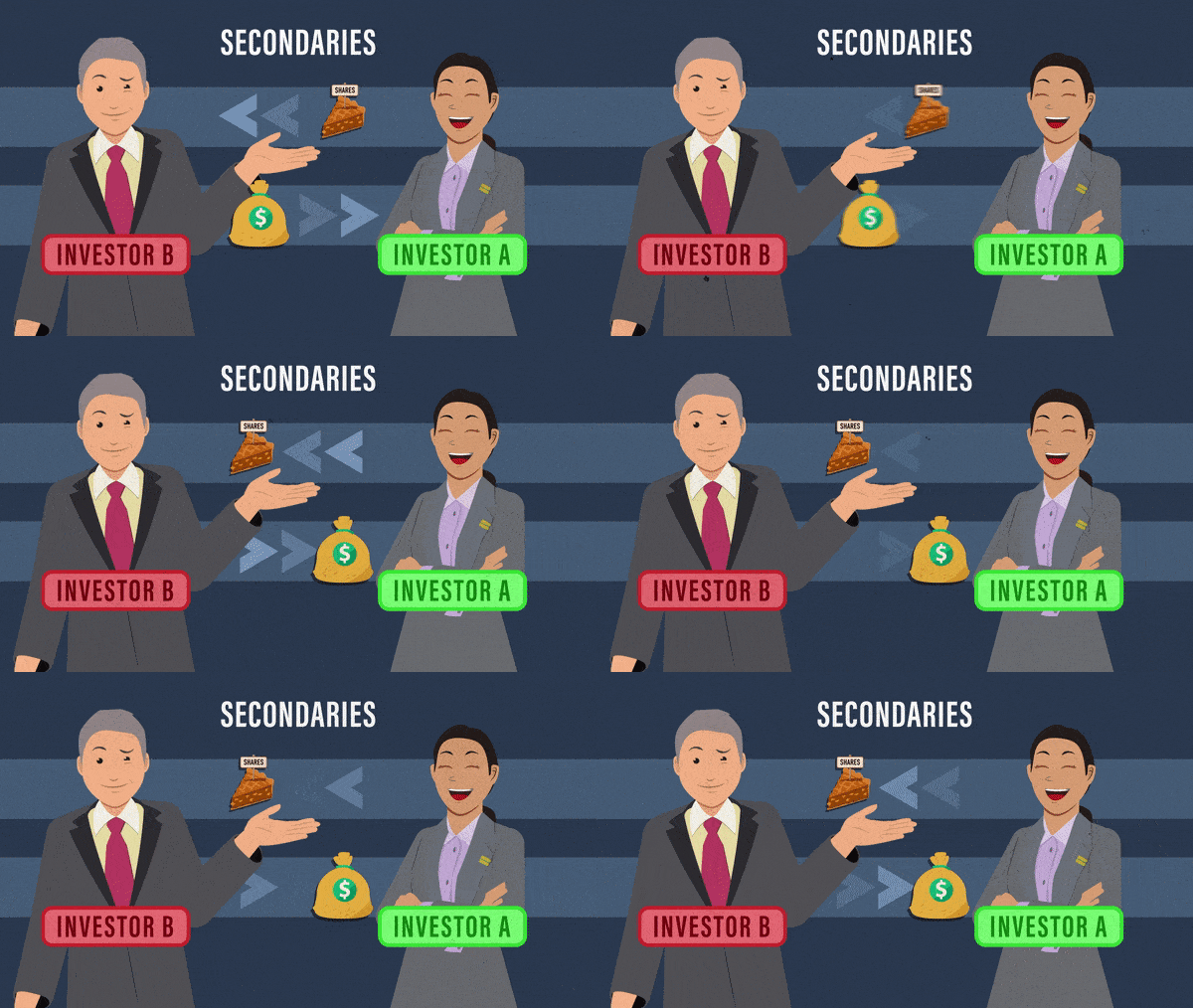
Secondaries, in a nutshell.
They typically take place ahead of a significant event, such as a public listing, or as part of a fundraising round. An example is what happened with Carousell, which received a US$500 million capital injection from South Korea’s Naver Corporation last year and saw investors and employees cashing out with sizable returns in a secondary sale.
Secondaries offer existing stakeholders an opportunity to cash out and get some return on their investment, and also enable new investors – who may not be eligible to come on board during traditional fundraising rounds – access to a slice of the pie.
Secondary markets are a pretty new phenomenon in the Southeast Asian startup world. Their newness means that they’re still quite unregulated in the region, and that most founders are navigating them for the first time.
That’s why in this episode of Tech in Asia Explains, we decided to dive into the Wild West of secondary markets.
With the help of Michael Lints, partner at Golden Gate Ventures, and Khai Lin Sng, chief financial officer of Fundnel, we explore the idea of the secondary market in more detail, navigate the mechanisms of how secondaries work, and lay out what founders – even the ones who are just starting out – need to keep in mind when it comes to the secondary market.
The truth is, secondaries are pretty significant for the Southeast Asian startup scene. After all, they enable money to go back into the ecosystem and allow early investors and employees to see some reward for their faith. And for founders, secondaries are a means of seeing some fruit from their labor, motivating them to keep on keeping on.





Stay updated on the go with our mobile app.
Get latest insights with smoother, more personalized experience through TIA mobile app.













📅 Upcoming Events
22 October 2026
Payoneer x CSPN Summit 2026